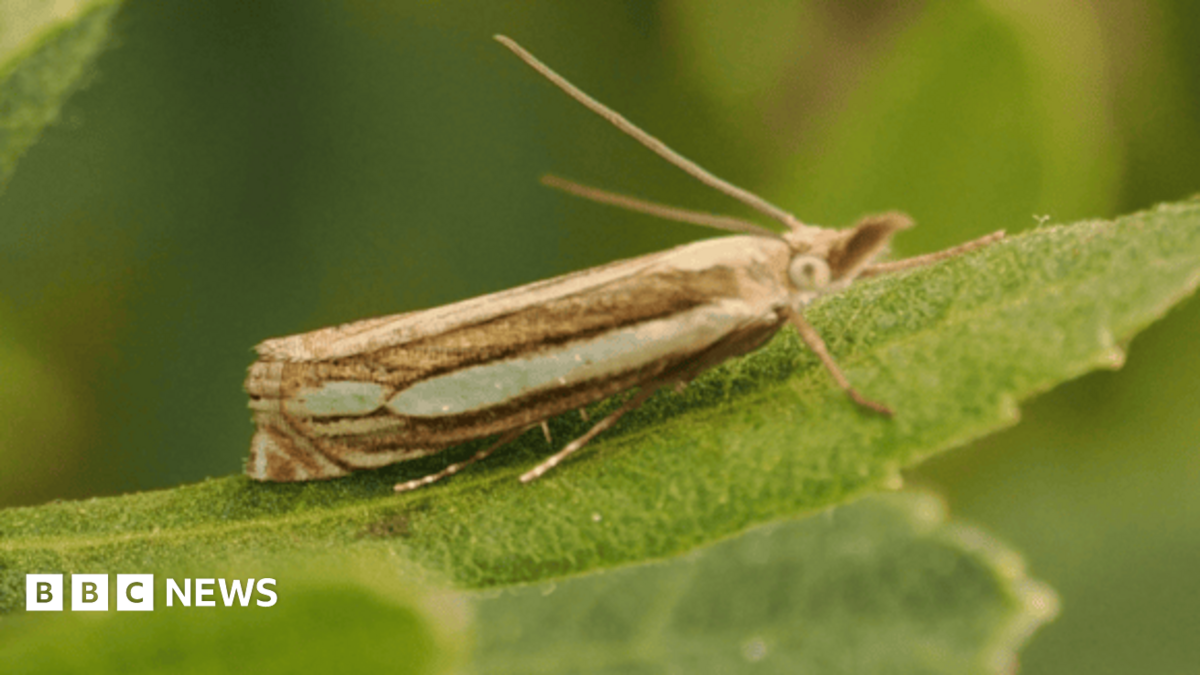
Conservationists surveying a north Wales nature reserve discovered 19 Bog Grass Moths in a single night of trapping, marking the first time the rare and sparse insect has been recorded in the area. Experts called the discovery a special surprise during fieldwork at the Cors Geirch National Nature Reserve.
Cors Geirch National Nature Reserve yields nineteen Bog Grass Moths
Fieldwork at the Cors Geirch National Nature Reserve on the Llŷn Peninsula in Gwynedd resulted in an unexpected entomological discovery.
Exact population figures for the Bog Grass Moth across the United Kingdom remain unknown. Prior to this survey, the species had only been documented in a limited number of English counties, such as Dorset.
Specialized fen habitats and wet sedge dependency
According to Natural Resources Wales, the wetland environment at Cors Geirch supports the growth of wet sedges, which serve as the only food source for the Bog Grass Moth’s larvae. Sedges rank among the largest plant families globally and thrive primarily in waterlogged terrain.
The monitoring work forms part of Natur am Byth’s Llŷn and Ynys Môn project, an initiative dedicated to safeguarding several of north Wales’ most at-risk species. Alongside the moths, surveyors documented other rare invertebrates at the reserve, including the Six Spotted Crane Fly and the Black Nightrunner Ground Beetle.
Lepidopterists and conservationists react to the north Wales discovery
Steve Palin and Charles Aron, both lepidopterists focusing on the study of moths, noted that field trapping always carries an element of unpredictability.
Clare Sampson, a project manager for RSPB Cymru, pointed out that the concerted efforts of staff, contractors, and volunteers actively opened up the wetland area, creating a suitable environment that remains home to these rare invertebrate species.
Broader ecological pressures facing UK peatlands
While the survey at Cors Geirch yielded positive results, conservation officials noted that wider environmental pressures continue to threaten similar habitats across the country. Sampson observed that approximately 80% of UK peatlands have suffered loss or damage, leaving species dependent on these specific ecosystems struggling to survive.
Damaged peatlands fail to maintain their role as major carbon stores, instead releasing greenhouse gases into the atmosphere. Despite many fens enduring severe stress during a hot, dry summer, the Cors Geirch reserve maintained healthy populations of the Black Nightrunner Ground Beetle and the Six Spotted Crane Fly alongside the newly discovered moth.
Keep reading

NASA and SpaceX Target Oct. 1 Launch for Crew-13 Mission to the ISS
NASA and SpaceX are targeting an 11:10 a.m. EDT liftoff on Thursday, Oct. 1, for the Crew-13 mission...

EDF Energy Chief Backs Rosebank and Jackdaw North Sea Projects
EDF Energy chief executive Simone Rossi has backed the development of the Rosebank and Jackdaw North Sea fields,...

Brentford Canal Polluted With Dead Animals And Sewage Amid Cleanup Efforts
Dead animals, including a pet cat, have been discovered in stagnant water along a Brentford canal amid growing...

Super El Niño Projected to Cause 451,000 Excess Heat Deaths Worldwide
A developing super El Niño in the Pacific is projected to cause 451,000 excess heat deaths worldwide by...