
Brunei Targets Net Exporter Status via Agro-Tech and Trade Shifts
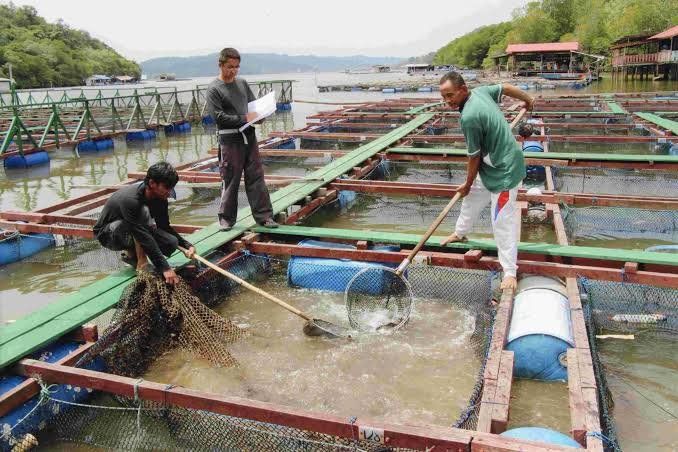
Brunei Darussalam is pivoting its economic strategy to transform from a domestic consumer into a regional net exporter of agri-food and aquaculture products. During the 48th ASEAN Ministers on Agriculture and Forestry (AMAF) Meeting in Singapore, Coordinating Minister for Economic Policies and Minister of Economy, Trade and Industry Dato Seri Setia Dr Haji Abdul Manaf bin Haji Metussin outlined a roadmap centered on modern agro-technology and strengthened trade partnerships to secure this transition, according to reports from Asia News Network and The Star.
The shift comes as the region faces intensifying economic, geopolitical, and climate-related pressures on global food systems. By leveraging advanced technology and expanding connectivity, Brunei aims to build a more inclusive and secure agricultural sector that can withstand these external shocks.
Regional Food Security and the Blue Economy Framework
The ministerial discussions in Singapore, chaired by Singapore’s Minister of Sustainability and the Environment Grace Fu Hai Yien, focused heavily on collective resilience. Brunei reaffirmed its commitment to regional food security and sustainable agriculture during several high-level sessions, including the 26th AMAF Plus Three Meeting and the Asia Pacific Agri-Food Summit. A central component of this commitment involves the “Blue Economy,” specifically under the Resolution and plan of Action on Sustainable Fisheries for Food Security for ASEAN Region Toward 2030 (RES&POA-2030) framework. This initiative seeks to bolster biosecurity and improve traceability for small-scale fishery operators.
Beyond maritime security, the 48th AMAF Meeting adopted a formal implementation plan for Regenerative and Resilient Agriculture. This plan is designed to restore soil health, mitigate emissions, and scale climate-smart agricultural practices. To achieve these goals, the meeting highlighted partnerships with international organizations, including:
- The Asian Development Bank (ADB)
- The US ASEAN Business Council (USABC)
- The Economic Research Institute for ASEAN and East Asia (ERIA)
Brunei is also aligning its environmental targets with regional reforestation efforts. The nation has pledged 50,000 trees toward One Billion Trees Growing Initiative, a move that contributes to Brunei’s broader national goal of planting 500,000 trees by 2035.
Bilateral Cooperation and Supply Chain Resilience
The strategic focus extends to Brunei’s relationship with Singapore, where the two nations are advancing a joint Agri-Tech Food Zone. This collaboration is supported by a recent Memorandum of Understanding (MoU) on Supply Chain Resilience, which is intended to ensure the unimpeded flow of goods under the upgraded ASEAN Trade in Goods Agreement (ATIGA). This bilateral synergy is critical for maintaining stable food corridors in Southeast Asia.
On a broader scale, the 26th AMAF Plus Three Meeting strengthened ties between ASEAN and the People’s Republic of China, Japan, and the Republic of Korea. These discussions prioritized digital innovation, scaled technology adoption, and emergency preparedness. The effectiveness of regional emergency measures was noted by ministers, who commended the ASEAN Plus Three Emergency Rice Reserve (APTERR) for its recent operations. Per the 48th AMAF Secretariat, the reserve successfully distributed 15,405 metric tonnes of emergency rice to two million people across ASEAN Member States.
The Economic Stakes of Domestic Production
Speaking at the Asia-Pacific Agri-food Summit 2026, held alongside Singapore International Agri-Food Week (SIAW), Dato Seri Setia Dr Haji Abdul Manaf emphasized that food resilience is not merely a matter of availability, but of sustained investment. He argued that turning shared regional challenges into long-term strengths requires a combination of reliable trade, collective action, and robust domestic production.
For the broader global economy, these moves in the ASEAN region signal a growing trend toward localized, technology-driven food sovereignty. As nations attempt to insulate themselves from geopolitical volatility, the success of Brunei’s transition to an agri-food exporter will depend on how effectively it can integrate modern technology with its existing trade frameworks.
Whether these technological shifts and bilateral agreements can move fast enough to outpace the accelerating pressures of climate change remains the defining question for the region’s agricultural stability.
Keep reading

Two Men on Trial for Sexual Assault of Autistic Teenager on London Train
Two men face 20 charges following alleged sexual assault of autistic teenager on commuter train Two Afghan migrants...

Multiple Bomb Threats Target Passenger Flights Across Europe
A Wave of Malicious Bomb Hoaxes Disrupts European Aviation A series of suspected bomb threats targeted at least...

Spain’s Transport Minister Resigns After Deadly High-Speed Train Crash Kills 69
Spain's Transport Minister Resigns Following Deadly High-Speed Rail Collision Spain's Transport Minister Oscar Puente has announced his resignation...

Laudato Si’ Movement Asia-Pacific Leaders Adopt 2030 Ecological Roadmap
Regional Climate Strategy Takes Root in Tagaytay City Environmental leaders from five Asian nations gathered in the Philippines...