Canada and Southeast Asia announced the substantial conclusion of negotiations for their first free-trade agreement after five years of talks, a deal Ottawa hopes will chip away at a U.S. trading relationship that still accounts for more than three-quarters of Canadian exports.
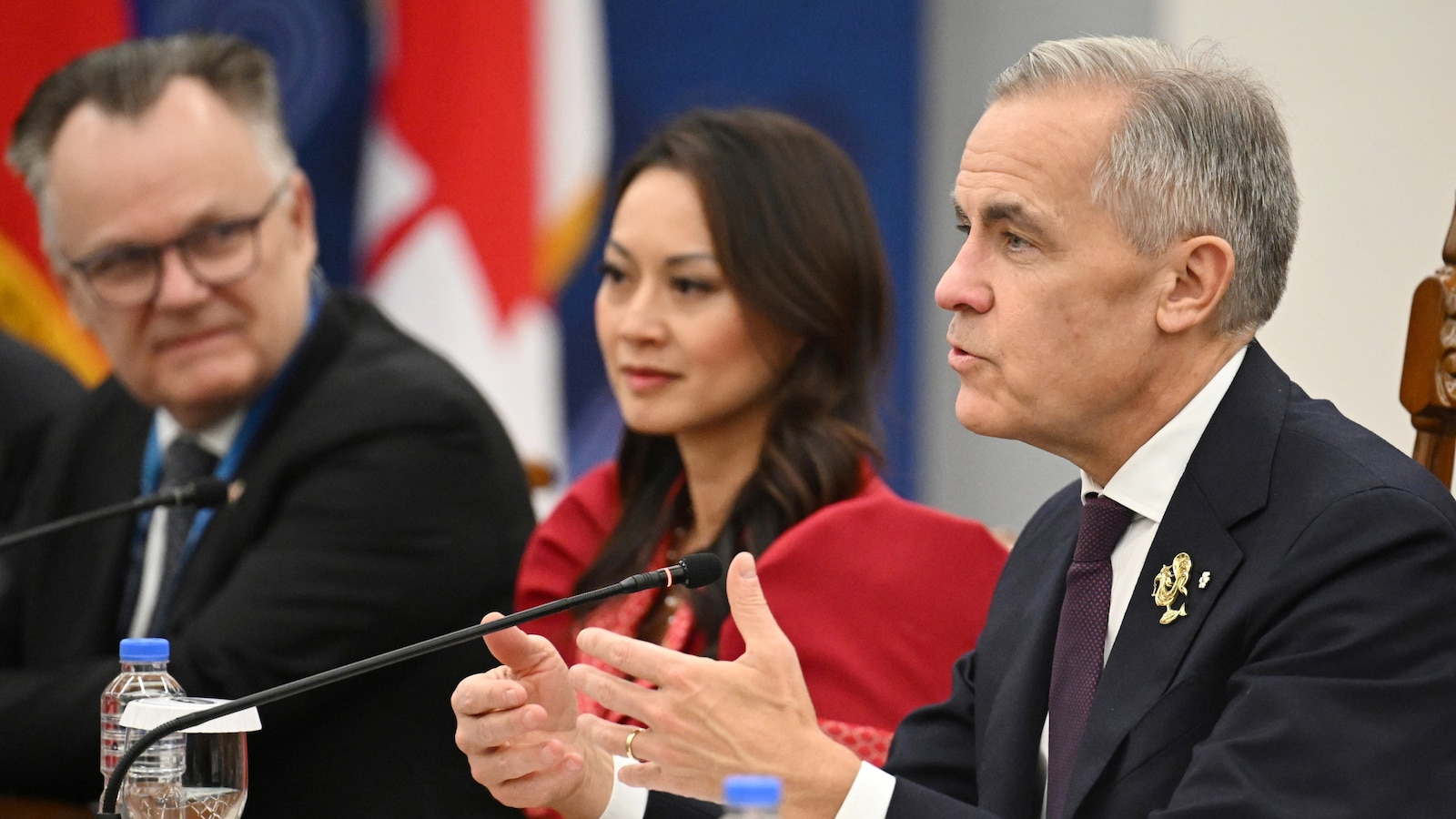
Prime Minister Mark Carney announced the “substantial conclusion” of negotiations for the Asean-Canada Free Trade Agreement (ACAFTA) on Sunday at the 49th Asean Summit in Manila. The bloc’s ten members represent nearly 700 million consumers and a combined GDP exceeding $3.8 trillion.
“You could say that President Trump has accelerated the conclusion of the ACAFTA … with his effective attacks on the trade architecture of both Asean and Canada,” said Barrett Bingley, Asia regional director of the Asia Pacific Foundation of Canada. The Trump administration imposed 50% tariffs on roughly $20 billion in Canadian goods last year after talks collapsed in August, ABC News reported, prompting retaliatory duties from Ottawa.
“Broader trade relationships can reduce exposure to American tariffs and policy changes.”
Ahmed Albayrak
Ahmed Albayrak, a research associate at the Lowy Institute’s Indo-Pacific Development Centre, spoke about the agreement.
Canada concludes negotiations for two new free trade agreements with the Philippines and ASEAN – unlocking greater access to a market of more than 700 million people for Canadian businesses: https://t.co/NvWNSflxb0 pic.twitter.com/lrU8jnYISj
The numbers, however, tell a sobering story. Robert Walker, a research fellow at the Lowy Institute, said the pact’s impact on diversification away from the United States would be “marginal.”
What is notable, Walker added, is that this would be Asean’s first trade agreement with a North American economy.
The CPTPP Overlap
Four Asean members — Brunei, Malaysia, Singapore and Vietnam — already enjoy tariff-free access to Canada through the Comprehensive and Progressive Agreement for Trans-Pacific Partnership (CPTPP). Ottawa has also finalised bilateral trade agreements with the Philippines and Indonesia, with the Indonesian deal scheduled to come into force on December 1.
So why negotiate ACAFTA? The answer lies in rules of origin. The new pact would allow manufacturers to cumulate inputs from across the bloc — say, semiconductors from Malaysia, assembly in Vietnam, packaging in Thailand — and still qualify for preferential tariffs. That flexibility matters as companies shift production out of China deeper into Southeast Asian supply chains.
“Asean is already quite a substantial exporter into Canada,” Bingley said. “So I suspect there’ll be even more of that, especially as certain types of manufacturing move out of China and deeper into Asean supply chains.”
ACAFTA Could Add Billions and Thousands of Jobs
Canadian officials estimate ACAFTA could add nearly 2 billion Canadian dollars (US$1.4 billion) to the economy and create almost 14,000 jobs, primarily in agriculture and manufacturing, according to ABC News. Sanitary and phytosanitary measures governing food exports are a priority, as are services and energy cooperation — including Canadian technical support for the Asean Power Grid.
But trade deals only create optionality. Converting it into cargo requires physical infrastructure Canada and Southeast Asia largely lack.
“At the moment, Asean is buying very, very little Canadian oil. Brunei is buying some. Singapore is buying a little bit, because the refineries are not in the right configuration or metallurgy to take large amounts of Canadian oil.”
Bingley said. “So the trade deals are great. They’ve laid down excellent optionality. And now it’s for both sides to put in place the hard infrastructure.”
Ratification Timeline Extends to 2027
Outstanding provisions on trade and investment still need concessions before the text can be finalized. Albayrak expects the process to extend through next year under Singapore’s chairmanship. Bingley sees a more realistic signing moment in 2027 — the 50th anniversary of Asean-Canada dialogue relations — possibly at the leaders’ summit that November.
“How soon the FTA is concluded and then ratified is totally dependent on the willingness of both sides to make further concessions on the areas of trade and investment that have not been concluded,” Walker said.
Carney Discusses Bilateral Deal with Trump
Carney’s Manila announcement came hours after he disclosed a “lengthy, substantive conversation” with President Trump involving U.S. Trade Representative Jamieson Greer and White House Chief of Staff Stephen Miller. “We are making progress. There is the possibility of a deal, a bilateral deal. But we’re not yet there,” Carney told reporters in Manila, per ABC News.
Canada suspended talks in August over last-minute U.S. demands Ottawa deemed unacceptable. Washington responded with the 50% tariffs; Canada retaliated in September. Talks have since resumed. Ahead of the midterms Trump stated the countries were “very close” to an agreement, while Carney said Washington had backed away from demands involving Canada’s cultural protections, French-language rights and freedom to negotiate other trade deals.
The dilemma remains: accept a U.S. deal that reduces but preserves some tariffs, or hold out for full free trade as a Democratic-led Congress prepares to challenge the levies.
Carney has set a target of doubling Canadian exports to non-U.S. markets by 2035. ACAFTA is a pillar of that strategy — but the math is unforgiving.
The agreement could be signed next year under Singapore’s chairmanship, officials hope.
Worth a look

UNHCR Launches Protection at Sea 2.0 as Maritime Route Deaths Rise Nearly 20%
Deaths and disappearances on the central Mediterranean route remained above 1,000 in the first nine months of 2026...

Ford Unveils 2028 Mustang GTD 1901 Edition Honoring 1901 Sweepstakes Victory
Ford unveiled the 2028 Mustang GTD 1901 on Monday, a special edition replacing the Spirit of America to...

Gulf States Intercept Iranian Missiles, Drones After Reported US Strike on Qeshm
Gulf nations intercepted a wave of hostile missiles and drones on Tuesday following an American military strike on...

Cambodia Targets 70% Clean Energy by 2030 With 1,100MW Solar Farm and ADB-Supported Grid Expansion
Cambodia targets 70 percent renewable energy by 2030 as construction begins on a 1,100-megawatt solar farm in Pursat...