
Wyoming’s Best Hike Starts with a Boat Ride and Ends in a Glacier-Carved Canyon
Imagine standing on the shore of a pristine mountain lake, the air crisp and clean. Now, instead of walking for miles to reach the trailhead, you step onto a boat. The water ripples as you cross, and within minutes, you’re deposited at the base of a granite-walled canyon. This isn’t a fantasy; it’s the reality of the Cascade Canyon Trail in Wyoming’s Grand Teton National Park, a journey that perfectly mar convenience with profound natural beauty.
For decades, Grand Teton has drawn visitors with its dramatic, jagged peaks that seem to erupt from the valley floor. But the Cascade Canyon trail offers an experience that feels both epic and accessible. It's a place where the grandeur of the Teton Range is not just observed, but felt, as you walk through an area shaped by immense, ancient forces.
The trail’s journey begins on the shores of Jenny Lake. Hikers face a classic choice: add four miles to their day by walking around the lake’s southern shore or take the Jenny Lake shuttle boat directly across to the west shore. Most people, and for good reason, choose the boat. The short ride is a treat in itself, with the Tetons’ sharp reflections dancing on the water and the dark mouth of Cascade Canyon opening up before you. It’s a practical start to an unforgettable adventure.
A Canyon Forged by Ice, Not by Time
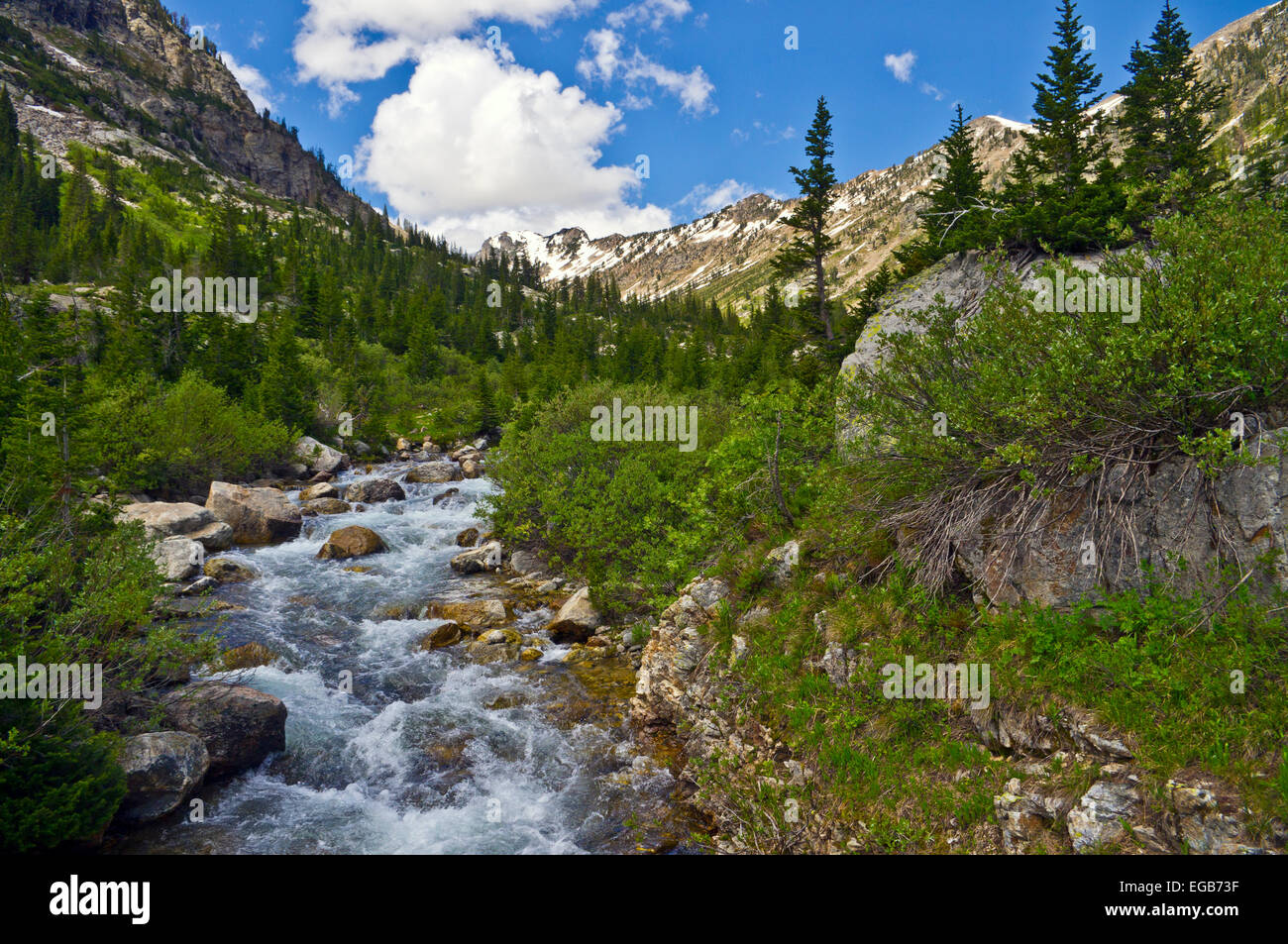
Once you step off the boat and onto the trail, the first thing you notice is the scale of the place. Granite walls rise hundreds of feet on both sides, and Cascade Creek rushes by, a clear, cold torrent fed by the lingering snow of the high peaks. This wide, flat valley floor is a masterwork of geology. It wasn’t carved by a river, but by a glacier. A massive, slow-moving river of ice once filled this entire valley, grinding the ancient rock below into the U-shaped channel you walk through today. The evidence of this glacial past is everywhere, from the polished boulders to the sheer, vertical walls.
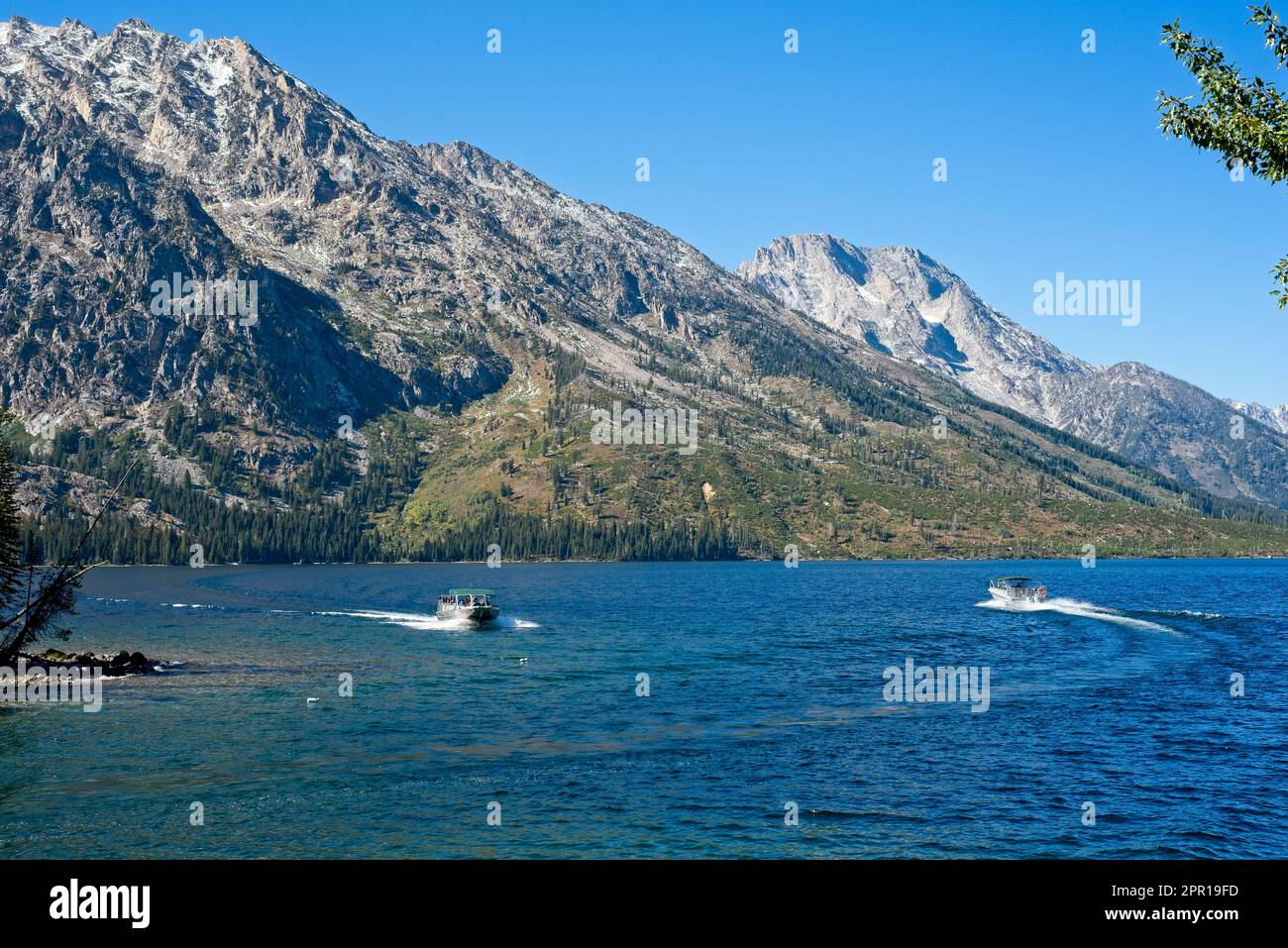
The Teton Range itself is a geological marvel. The mountains rose dramatically along a fault line, pushing some of the oldest rock on Earth thousands of feet into the sky. The glacier that carved Cascade Canyon was simply the last artist in a long line, sculpting the raw power created by the fault into a more intimate, walkable form. The creeks and waterfalls you’ll encounter all day long are the glacier’s long, lingering echo, the lifeblood of the canyon.
Hikers Feel Mist from Hidden Falls
The trail pulls you deeper into the canyon with every step. About a half-mile from the boat dock, the sound of Hidden Falls announces its presence long before you see it. The roar is constant, and you can feel the cool mist on your face as the waterfall drops roughly 100 feet down a staircase of rock. For many families and first-time visitors, this is the turnaround point. It’s an iconic park highlight that requires minimal effort, making it a perfect reward for a short hike.

But the trail doesn’t stop there. It climbs above the falls, offering a new perspective as it winds its way up to Inspiration Point. This granite ledge, perched at about 7,200 feet, provides one of the most breathtaking views in the entire park. Below, Jenny Lake lies flat and serene, while to the east, the Gros Ventre Mountains roll across the horizon. The path to the point runs along a rocky section built into the cliff face, lending a thrilling sense of exposure that the valley floor lacks. It’s a place to catch your breath, take in the view, and do the math on how much more adventure the day holds.
Deeper into the Canyon: Where the Crowds Fade
Past Inspiration Point, the character of the hike changes completely. Most day visitors turn back here, so the trail begins to empty. The path rolls gently, never straying far from Cascade Creek. You move through patches of fragrant pine forest and out into open stretches where the canyon walls tower above. The creek is a constant companion, clear and cold, tumbling over smooth rock. You can easily walk for an hour without seeing another person.
The canyon opens up, and the peaks of the Cathedral Group—Teewinot Mountain, Mount Owen, and the Grand Teton itself—dominate the southern skyline. Grand Teton, at 13,770 feet, is an ever-present sentinel, a jagged tooth on the horizon that demands your attention. This stretch of the trail is where the park starts to feel like it belongs to you alone. The sheer scale of the place humbles you, and the quiet is broken only by the wind, the creek, and the occasional rustle in the brush.
Wildlife is a constant presence. Moose are known to graze in the willows along Cascade Creek, and park rangers always recommend carrying bear spray and knowing how to use it, as black and grizzly bears also move through this area. Keep your eyes on the rocky boulder fields too; you might spot pikas, those tiny, round mammals that squeak from the crevices, or marmots sprawling on the sun-warmed rocks.
The Final Destination: The Forks
As the trail continues, the pine forest begins to thin, giving way to alpine meadows that, in summer, explode with color. Lupine and balsamroot paint the area in shades of purple and gold, a sharp contrast to the permanent snow patches that cling to the highest peaks. Small stands of aspen and willow line the path, and several smaller creeks cross your way. It’s a distinct and beautiful section of the hike, a perfect blend of open sky and rugged rock.
Side waterfalls spill down the canyon walls from high valleys like Valhalla Canyon, and along Cascade Creek, beaver dams create still, reflective ponds where you can pause and look straight up at the towering peaks. The canyon finally splits at a quiet junction known simply as The Forks. This is the end of the main trail, a forested spot where the canyon divides into the North Fork (leading toward Lake Solitude) and the South Fork (climbing toward Hurricane Pass). Most hikers who make it this far stop for lunch by the creek, soak in the profound quiet, and turn around. The sounds of the park’s busier areas don’t follow you here. It’s the perfect place to feel the full weight of the journey you’ve taken.
The Cascade Canyon Trail offers a rare flexibility. Families can easily reach Hidden Falls and Inspiration Point and have a complete, rewarding day. More serious hikers can push past The Forks into the upper canyon, adding significant mileage and elevation gain. Every section of the route has its own mood, its own view, its own reason to stop. This range of experiences is what keeps people coming back to the same canyon, year after year. It’s more than just a hike; it’s a journey through the very heart of the Tetons.
The Cascade Canyon Trailhead is located at Jenny Lake’s south shore, off Teton Park Road in Moose, Wyoming. The park is open year-round, 24 hours a day. Entrance costs $35 per vehicle, valid for seven days. To cut down on mileage, you can pick up the Jenny Lake shuttle boat at the East Shore Boat Dock near the Jenny Lake Visitor Center. Be sure to check the official National Park Service website for current shuttle schedules and seasonal hours before you go.
Keep reading

Minnesota advocates confront Senate push for 20-week abortion ban
Minnesota Senate Debates 20-Week Abortion Ban Minnesota legislators and reproductive health advocates gathered at the State Office Building...

November 2026 City Council Meeting Schedule: Lincoln City, OR
Lincoln City Council to Meet November 9th, Cancel November 23rd Session The Lincoln City Council will convene on...

Peter Bunting Unveils Three-Part Development Plan for Manchester Southern
Bunting’s Three-Part Plan to Reshape Manchester Southern On Tuesday, November 11, 2025, Member of Parliament for Manchester Southern...

Nevada Democrats clinch Assembly supermajority, sweep constitutional offices
Nevada Democrats Sweep to Supermajority, Ending Era of Vetoes In a seismic political shift, Nevada Democrats have captured...