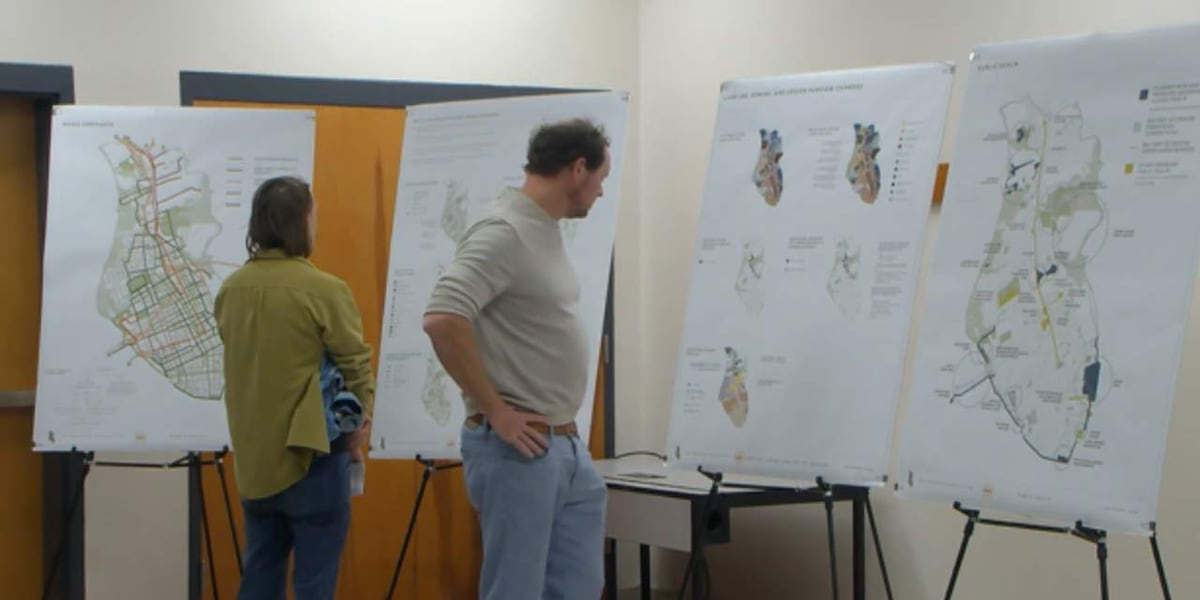
Charleston released its first peninsula plan draft in 27 years, a 20-year strategic playbook connecting projects like Project 3500 housing and Lowcountry Rapid Transit with 20 mph limits and burial ground protections.
Charleston residents have until December 13 to weigh in on the first comprehensive roadmap for the peninsula in 27 years, a draft plan that proposes lowering speed limits to 20 mph, building a transit hub on Mount Pleasant Street, and legally protecting burial grounds across the historic core.
The Peninsula Plan, finalized as a first draft this week, covers the stretch from the Battery wall to the Neck and aims to solve the crisis that defines daily life downtown: the people who keep the peninsula running — line cooks, nurses, teachers, hospitality staff — can no longer afford to live there.
“One of the problems that we look at in this plan is that a lot of people that work on the peninsula can’t actually live on the peninsula,” Chloe Stuber, senior planner with the City of Charleston, told Live 5 News WCSC. “And so, when we were putting residents first, we’re also thinking about who gets to live here and making more options available for more people.”
The plan arrives as a 20-year “strategic playbook,” Stuber told WCBD, connecting disjointed megaprojects — Union Pier, the Lowcountry Lowline, Project 3500 affordable housing, the Ashley River Crossing, Lowcountry Rapid Transit, and a potential Battery extension — into a single framework. The last comprehensive effort, the 1999 Downtown Plan, stopped at the historic core; this one reaches the city limits.
Housing the workforce
Project 3500 anchors the affordability strategy: 3,500 units targeted at peninsula workers, built to quality design standards, with explicit no-displacement guardrails. The draft leans on the Bailey Bill for tax incentives, tighter demolition-by-neglect penalties, and joint ventures with housing authorities and major employers. It also calls for modernizing zoning standards and cleaning up the Upper Peninsula Zoning District, which has long been a patchwork of industrial nonconformities.

Commercial affordability gets equal billing. The plan proposes updating land-use policies to encourage diverse employment and protecting affordable commercial space so local businesses aren’t pushed out by rising rents — a direct response to the tourist-facing retail monoculture that has hollowed out King and Meeting streets.
Streets designed for people, not just throughput
The peninsula’s narrow, historic grid is the plan’s central constraint. “There’s only so much we can do on the peninsula to reduce traffic from, like, signal timing or road; we can’t do any more road widening. We don’t have the space,” Stuber told Live 5 News WCSC. “And so, really, the focus is on if we want to reduce traffic, we need to give people other options.”
“There was one slide specifically about how our narrow, historic streets are part of the charm. There’s an idea going forward to have more tree cover and more pedestrian space on sidewalks, potentially with parks. One way to do that is to map out certain corridors that will be more pedestrian-focused,”
The draft assigns every street a priority: transit lanes here, bike corridors there, parking preserved on specific blocks, bioswales and street trees where flooding risk is highest.
A peninsula-wide design speed of 20 mph — floated by Mayor William Cogswell — would require state enabling legislation and enforcement technology the city doesn’t yet own. Targeted intersection fixes, curb-management strategies for delivery trucks, and a push to take ownership of key state-maintained streets round out the mobility toolkit.
Transit and the missing links
Expanding the HOP shuttle, reinstating the airport express, and supporting the Lowcountry Rapid Transit bus rapid transit line are near-term wins. The plan also backs water ferry facilities and a “state-of-the-art transit hub at Mount Pleasant Street” — a nod to the peninsula’s northern gateway where commuters, freight, and future rail converge.
Residents at the Thursday forum at Burke High School pressed for safer walking and biking routes; the draft responds with a mapped network of commuter and visitor bike corridors.
Resilience integrated through Battery extension and nature-based solutions
Resilience isn’t a separate chapter; it’s baked into every public investment. The Battery extension tackles tidal and inland flooding simultaneously. Nature-based stormwater solutions — bioswales, rain gardens, permeable pavement — replace gray infrastructure where possible. More canopy trees cool streets and absorb runoff. Undergrounding power lines hardens the grid against hurricanes and clears sidewalks for pedestrians. Public water access and public art are required components of every waterfront project.
Tourism guardrails
The plan draws a hard line: no expansion of the Accommodations Overlay district, stricter short-term rental enforcement, and implementation of the Charleston Standard tourism management plan. Tourists would pay more for parking; residents would pay less. It’s a bet that the peninsula’s economic future depends on livability, not visitor volume.
Public comment period open through December 13
The draft is online for public comment through December 13. City staff will revise based on feedback and send a final version to City Council for adoption early next year. The plan's six strategy areas — balanced growth, affordable housing, resilient public spaces, mobility, safe streets, local-first economy — will then guide capital budgets, zoning rewrites, and interagency agreements for two decades.
“This is going to be a 20-year vision and strategic playbook for the peninsula for the coming decades, starting as soon as it’s adopted,” Stuber told WCBD.
Related reading
- Maricopa County Health Inspections Flag Phoenix-Area Restaurants for Violations
- Heavy Rain Left the Formula 1 Field Sidelined on Thursday Evening
- Trump's Beef Quota Filled About 37% in Month One; Ground Beef Fell 13 Cents (daybreakwire.com)
- Susan Smith denied parole again 32 years after drowning her sons in a South Carolina lake (newsarchyuk.com)

Maricopa County Health Inspections Flag Phoenix-Area Restaurants for Violations
Public health inspectors in Maricopa County have flagged several Phoenix-area restaurants for significant food safety violations, including reports...

Heavy Rain Left the Formula 1 Field Sidelined on Thursday Evening
Heavy rain left the Formula 1 field sidelined on Thursday evening, resulting in a bizarre opening practice session...

Melania Trump Debuts Melania The Series Docuseries at Lincoln Center Premiere
First lady Melania Trump arrived at Lincoln Center’s Alice Tully Hall on Thursday, Nov. 19, marking the premiere...

Providence Barber Justin Pinheiro Brings Cuts to Brown University Main Green
Justin Pinheiro, a Providence-based barber known to his clients as “Justin Styles,” has been operating a mobile haircutting...