The chances of a white Christmas in Illinois are looking uncertain as the Farmer’s Almanac releases its 2026 outlook. While western Illinois faces low expectations for holiday snow, the central portion of the state holds a better possibility, alongside neighboring Indiana and Ohio, according to regional forecasts.
What does the Farmer’s Almanac predict for Illinois?
If you are hoping for fresh powder on the ground this December, the latest outlook brings mixed news. The Farmer’s Almanac released its 2026 predictions for a white Christmas, showing that results vary significantly even within the Midwest. The prediction shows “there’s a chance” for the Chicago area, while in the upper Midwest and “Heartland” regions, there’s “not a chance.” The almanac places western Illinois in a region where a white Christmas is not expected, while the central portion of the state holds an increased possibility alongside parts of Michigan, Indiana, and Ohio.
The predictions do not specify exact snowfall amounts. Nationally, the almanac forecasts a white Christmas for the Northeast, Intermountain, and Alaska regions, while several other U.S. regions have a chance.
How does NOAA define a white Christmas, and what does history show for Illinois?
According to the National Oceanic and Atmospheric Administration, at least 1 inch of snow must be on the ground on December 25 to consider it a white Christmas. It does not necessarily have to snow on Christmas Day itself.
Historical data from the National Weather Service indicates that the Chicago area and northern Illinois have a promising chance of at least one inch of snow on Christmas. However, recent winters tell a different story. Only three of the last 10 years have seen at least 1 to 3 inches of snowfall on the ground for the holiday. Looking back further, the region has reported only 18 white Christmases in the past 50 years, encompassing years such as 2022, 2017, 2016, 2010, 2009, 2008, 2003, 2002, 2000, 1998, 1993, 1989, 1984, 1983, 1980, 1978, and 1977.
Using climate data between 1991 and 2020, NOAA maps show that Illinois has around a 10-25% chance every year of receiving a white Christmas.
Could shifting weather patterns change the outcome?
Larger atmospheric drivers are currently at play across the Pacific and high in the stratosphere. Forecasters are tracking a strengthening El Niño pattern, which the Climate Prediction Center indicates has a greater than 90% chance of a very strong event during the Northern Hemisphere fall and winter 2026-27. Historically, the University of Illinois notes that El Niño patterns link to warmer and drier winters in the Midwest, which can translate to above-average temperatures and less snowfall.
At the same time, Kevin Jeanes pointed out that some forecast models suggest an unusually early disruption of the polar vortex. NOAA has acknowledged the potential for an unusually early warming event. While such a disruption can eventually lead to colder weather in Illinois, meteorologists emphasize that it can take weeks for changes roughly 20 miles above the ground to influence weather at the surface, leaving the ultimate holiday weather profile genuinely up in the air.
Keep reading

Midwestern State beats LCU volleyball to win Lone Star Conference match
Thirty-one ties across four fiercely contested sets can wear down even the most resilient volleyball squad, and for...

Frankfort beats Keyser 41-19 in Mineral Bowl
Falcons Roll Past Keyser 41-19 in Mineral Bowl to Claim Sixth Straight Victory Short Gap, W.Va. knew it...

Finding Joy in Simple Traditions: A Halloween Memory
Halloween Evening in Des Moines Brings a Simple Tradition In a column published by The Waterland Blog, life-long...
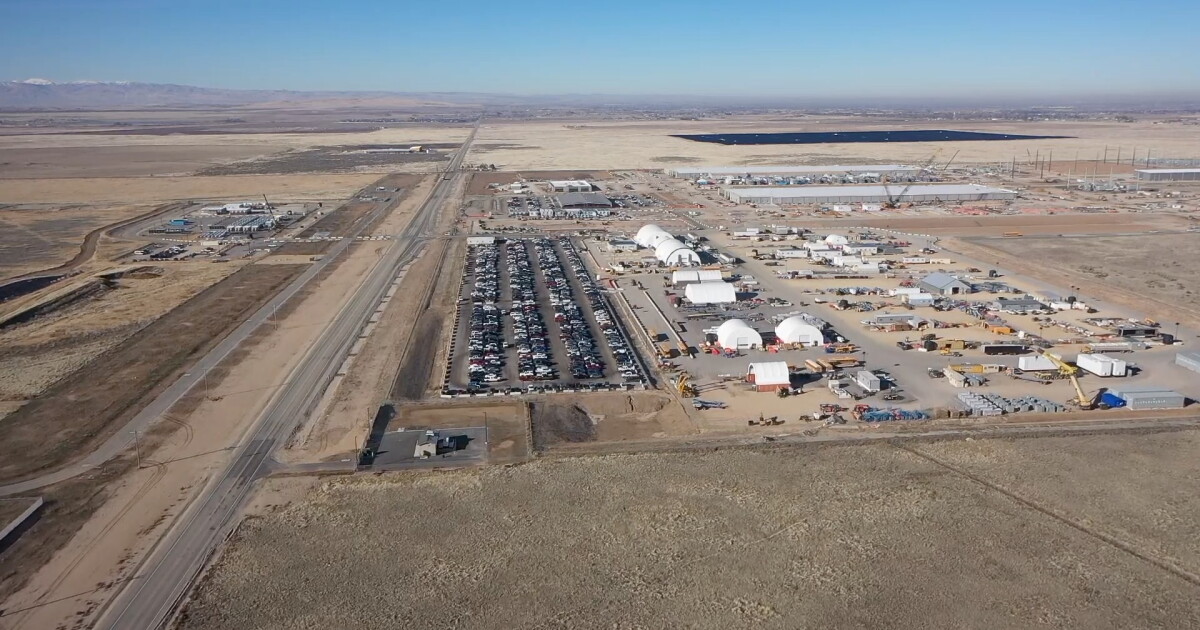
Boise Mayor Proposes Moratorium on Mega Data Center Development
Boise Mayor Lauren McLean Proposes Immediate City Limits Moratorium on Mega Data Centers Boise Mayor Lauren McLean has...