China released about 128,000 short-dramas in the first quarter of 2026, over 95% of which were AI, according to estimates published by China’s Netcasting Services Association. Surging artificial-intelligence capabilities and declining attention spans have Chinese producers flooding the zone with short-drama films to see which ones take off.
The numbers behind China’s vertical entertainment surge reflect an industry expanding at a breakneck pace.
AI Production Cuts Costs While Distribution Expenses Climb
Generative artificial intelligence has radically altered the economics of short-form entertainment. CNSA estimated China’s microdrama and manju market at about 100 billion yuan (US$15 billion) in 2025. The format overtook long-form video in average daily use, ranking second among audiovisual categories.
JIAXING, CHINA – JULY 21: Staff members work on script refinement, on-location filming, AI post-production, and overseas translation and distribution at a micro drama production company on July 21, 2026 in Jiaxing, Zhejiang Province of China. Jiaxing has gathered dozens of micro drama-related enterprises and established multiple professional industry platforms to support the sector’s growth.
Generative AI has accelerated this high-volume production strategy by reducing the time and cost required to make new titles. Vertical-title producers gauge audience interest before committing heavily to distribution and audience acquisition. Compared with traditional entertainment models, which commit much more capital to production, short-drama firms can test demand with less money at risk.
"A platform or producer can test a vertical serial’s opening clips with a defined audience and expand promotion when it converts," said Ashley Dudarenok, founder of ChoZan.
That allows companies to put more money behind titles that drive engagement and quickly pivot away from those that do not — a fail-fast approach. Yet cheap production does not guarantee commercial profitability. While making a short drama may cost only a few hundred thousand yuan, "making the right audience see it can cost far more," Dudarenok said.
Promotional ad costs have climbed steeply. She estimated that the cost of buying 1,000 promotional ad impressions rose from 50–80 yuan in 2023 to around 150–200 yuan in 2025, sometimes exceeding 300 yuan during competitive periods. High volume and low production costs do not necessarily translate to commercial success. While a few stellar hits can generate substantial revenue, most still fail to produce meaningful returns on investment, Dudarenok said. Competition for viewers is also intensifying, with short drama campaigns paying an average 2.3 times Mintegral’s Android benchmark per app install, while the number of active advertisers and advertising creatives more than doubled, according to the report.
Aggressive User Acquisition and the Battle for Attention
Because organic app discovery is exceptionally rare in the vertical market, paid acquisition has become the core distribution strategy. Industry experts point out that distribution relies heavily on aggressive advertising and viral social amplification rather than traditional discovery channels.
James Haslam, head of marketing at Mintegral
Haslam described short-drama distribution as part viral, part pure social, and then just really aggressive user acquisition. Vertical titles can generate strong advertising revenue, with opt-in video ads earning about 11 times Mintegral’s Android benchmark in the first half of the year, according to the report. However, heavy distribution and audience-acquisition spending can erode some of the margins created by cheap production.
Competition for viewers is also intensifying, with short drama campaigns paying an average 2.3 times Mintegral’s Android benchmark per app install, while the number of active advertisers and advertising creatives more than doubled, according to the report. All entertainment platforms are competing for time, "a finite resource," Sensor Tower Vice President Seema Shah said, noting that daily active users and time spent on platform are among the most important metrics.
The Viral Anomaly of Low-Budget Animation
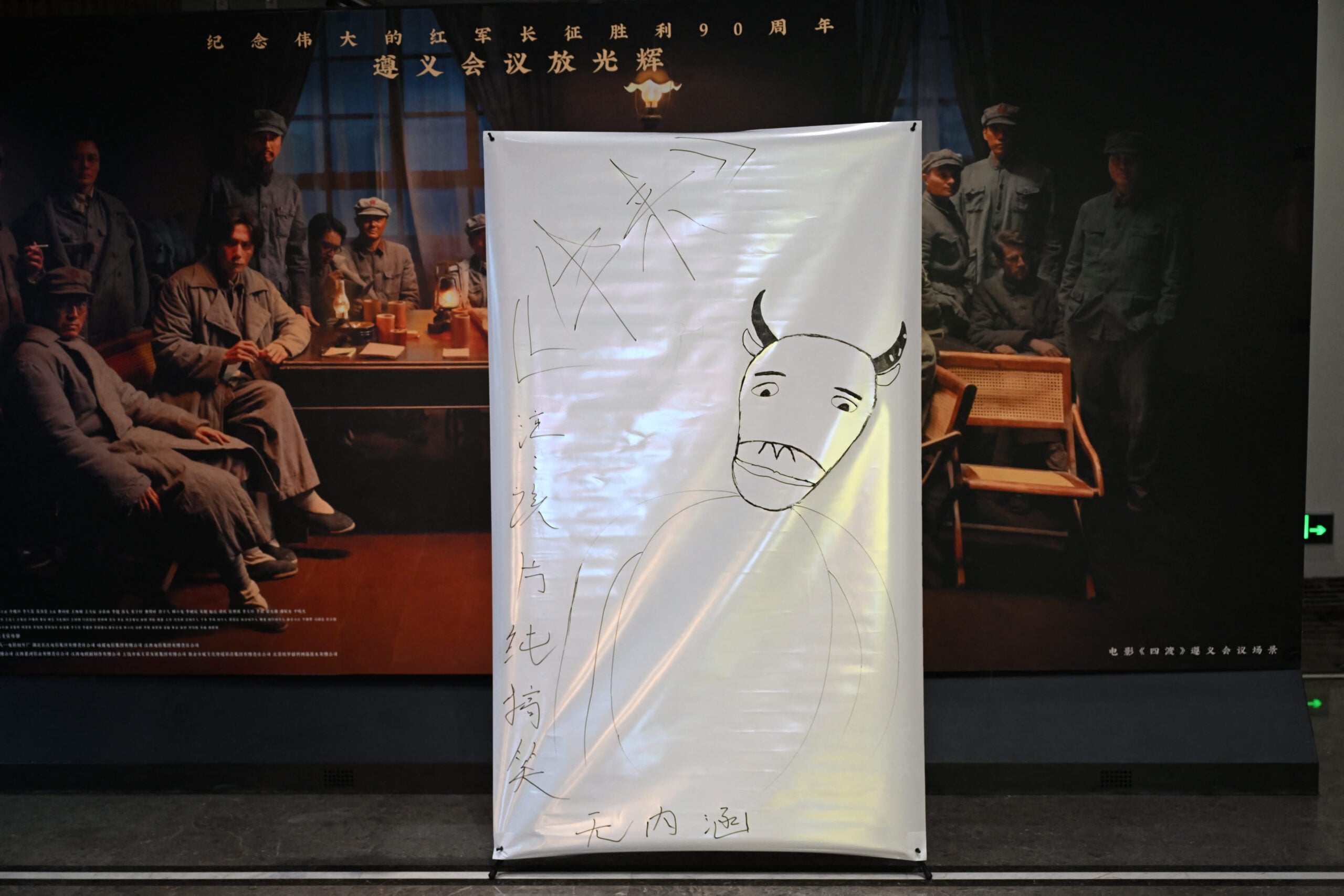
The market’s unpredictable nature is illustrated by low-budget animation projects that defy standard industry economics. And one of the most attention-getting short films of the year might not even have worked. According to official China Film Box Office figures, "Niu Lai" grossed 45.5 million yuan (US$6.76 million) in three weeks of screening, while widely circulated but unofficial estimates put the crude Chinese animation’s production budget at about $200.
A hand-drawn poster advertising the film "Niu Lai", which translates to "Here Comes the Cow", is seen at a cinema in Beijing on August 21, 2026. "Niu Lai", a low-budget Chinese animated film that was widely mocked for its crude visuals became a viral hit, with people packing cinemas to see just how bad it is.
The project initially struggled to attract viewers. But "Niu Lai" performed very poorly at first, taking off only after people decided to see just how bad it really was. It may not have survived long enough to succeed with the fail-fast approach.
Specialist Agility Versus Incumbent Distribution Scale
As the sector matures, analysts are divided over whether nimble short-drama specialists or established entertainment giants hold the stronger competitive advantage.

Specialist short-drama companies retain an edge in agility, performance marketing, and familiarity with emerging acquisition channels. Meanwhile, traditional streaming incumbents possess powerful advantages in global distribution, customer retention, and overall scale, with platforms like Netflix frequently cited as best-positioned among legacy players.
Keep reading

Treasure Island and New Crime Dramas Hit Streaming Services Oct 9-11
Streaming platforms roll out major international premieres, film adaptations, and long-running franchise returns from October 9 to 11,...

Shane Gillis dropped an F-bomb during a Dr. Seuss skit
During his return to Saturday Night Live, comedian Shane Gillis accidentally dropped an unscripted F-bomb during a Dr.

Four Travelers Tour Tuscany to View Piero della Francesca Frescoes
Four travelers spent an all-day excursion touring Tuscany to view masterpiece frescoes by Piero della Francesca, covering a...
Other Mommy Leads Box Office While The Social Reckoning Struggles
Universal Pictures horror release Other Mommy led the North American box office with an estimated $28 million opening...