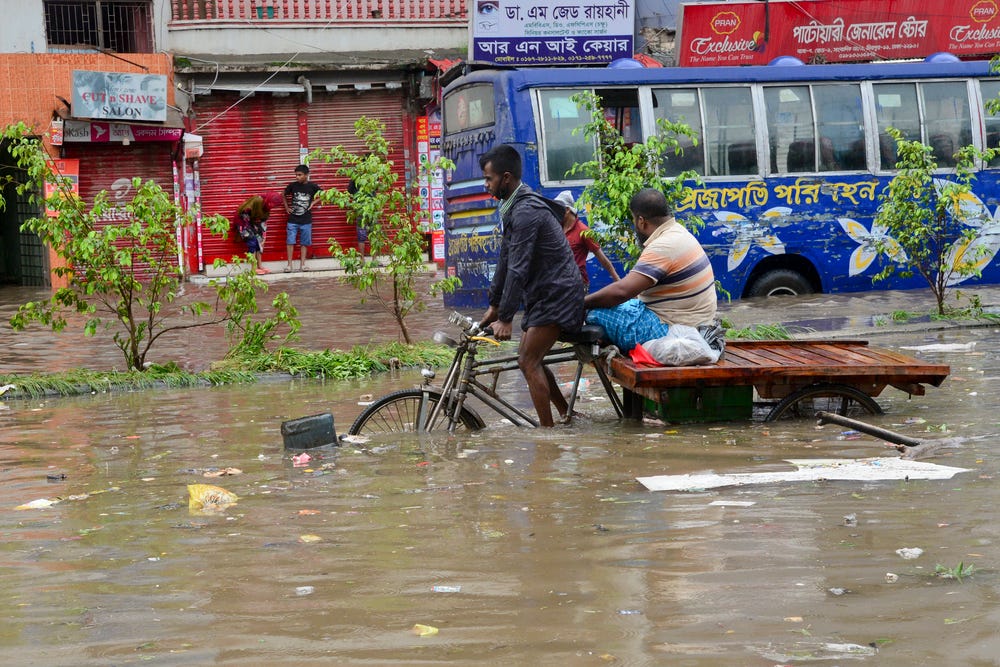
The Historical Roots of Global Climate Vulnerability
The negative effects of climate change in developing countries cannot be examined in isolation, according to a recent analysis published by E-International Relations. The modern divide separating the developed global north from the reeling-under-its-problems global south traces directly back through history. Years of colonial exploitation stripped developing nations of basic health, education, and food infrastructures, while simultaneously destroying indigenous techniques that allowed communities to live in harmony with nature.
Monoculture, Commodities, and Industrial Extraction
Understanding current global warming levels requires examining how colonial powers engineered atmospheric changes through resource extraction. As Weizman and Sheikh noted in 2015, the climate has long served as a project for colonial powers seeking to expand industrial might. During the height of colonial expansion, approximately 100 million kilograms of silver were mined globally between the sixteenth and nineteenth centuries. Attention eventually shifted toward plant-based commodities such as cotton, sugar, spices, and coffee.
This insatiable demand for profit fundamentally reorganized traditional landscapes. Montgomery (2012) documented how agricultural systems shifted toward monocultures, replacing diverse food crops with export-driven cash crops.
Pandemic Parallels and Asymmetrical Crises
The COVID-19 pandemic laid bare the deep structural inequalities that continue to compromise global crisis management. Oxfam’s inequality reports highlighted that while the world’s richest 1,000 billionaires recovered their pre-pandemic wealth in just nine months, the poorest populations face nearly a decade of economic recovery. In Brazil and the United States, Latinx and Black communities suffered disproportionately higher mortality rates.

One-size-fits-all containment measures frequently backfired in developing regions. When India imposed a nationwide lockdown, it triggered an unprecedented exodus of migrant workers from tier-one cities back to rural villages, creating one of the largest humanitarian crises in the country’s modern history. School closures exposed a similar digital divide: while children in impoverished nations lost four months of schooling due to a lack of online infrastructure, students in developed countries averaged just six weeks away from classrooms.
Social Development as a Prerequisite for Climate Resilience
Climate adaptation in the global south cannot succeed without foundational investments in human capital and institutional strength. In India, where legacy issues such as low baseline literacy and poverty cast long shadows, “climate change” remains a politically complex term. When the British departed in 1947, India’s literacy rate sat at 16%—with female literacy at just 8%—while average life expectancy stood at 27 years, according to data cited by Tharoor (2016). Over the subsequent seven decades, the nation raised literacy to 72% and lifted 280 million people out of poverty.
| Historical Indicator (1947 India) | Recorded Metric | Source Reference |
|---|---|---|
| National Literacy Rate | 16% | Tharoor (2016, 227) |
| Female Literacy Rate | 8% | Tharoor (2016, 227) |
| Average Life Expectancy | 27 Years | Tharoor (2016, 264) |
| Population Below Poverty Line | 90% | Tharoor (2016, 264) |
Mitigation strategies must simultaneously address social injustice and greenhouse gas emissions. Effective solutions often overlap with basic developmental needs: expanding education for young girls ranks among the top global climate strategies, alongside energy transitions and securing legal land rights for indigenous peoples.
Keep reading

Dorit Kemsley and PK Reach Partial Financial Settlement in Divorce Case
Reality television stars Dorit Kemsley and Paul “PK” Kemsley reached a partial financial settlement in their ongoing divorce...

Beyond the Diagnosis: Embracing Neurodiversity and Needs-Led Support in Families
Rethinking Neurodiversity Labels Beyond the Clinical Framework It’s the space between the bars that holds the tiger, and...

How Asia’s Economic Clusters Are Evolving Amid the AI Boom
Clustering Asia's Industrial Divides Amid Persistent Structural Gaps As the global economy navigates a complex monetary landscape, a...

All Nine Killed After Private Jet Crashes Near Florida Neighborhood
Nine Killed as Learjet 60 Nosedives Into Palm Beach County Neighborhood A private Learjet 60 carrying nine people...