
President Donald Trump ordered the Commerce Department on Monday to close a loophole that let Chinese firms lease Nvidia’s advanced computing power from data centers in third countries, a rule written by the Treasury Department and the National Security Council after weeks of internal pressure to blacklist the Singapore company Megaspeed.
The interim final rule, issued by Commerce’s Bureau of Industry and Security, marked the first policy response to the scandal that forced Nvidia chief executive Jensen Huang to resign last week over his affair with Alice Huang, a Megaspeed executive whom U.S. intelligence suspected of working for Chinese intelligence.
Treasury Secretary Scott Bessent said Friday that the Treasury, Defense and State departments and the U.S. Trade Representative had pushed for months to put Megaspeed on the entity list, but Commerce has the pen and did not act.
Divisions over China policy will likely endure; President Trump’s successor will face a stronger China, greater anxiety among allies and partners over U. S. reliability, and a marked gap between Beltway and public views on managing tensions with Beijing.https://t.co/2rtRJP4jdV
“I am frustrated when President Trump made it very clear that China should not receive any Nvidia chips above H100s,” Bessent told CNBC. “Any leakage is very frustrating because it hurts our great companies in the AI race, gives the Chinese an advantage.”
Trump, traveling to Asia with both cabinet secretaries aboard Air Force One, described the split as “two different views” — one side not wanting to insult China, the other wanting to “go down and dirty.” He said Lutnick “might have delayed it” to avoid a blowup with Beijing ahead of a Thursday meeting with President Xi Jinping at the APEC summit in Shenzhen.
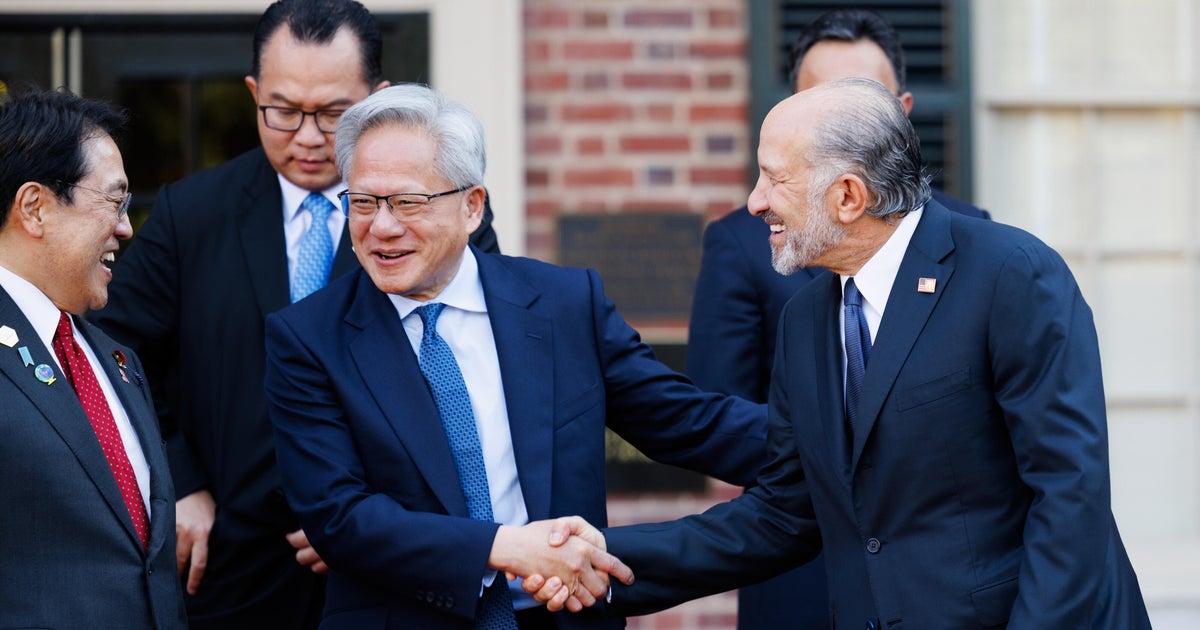
Megaspeed Case Escalates
Megaspeed bought more than $4.8 billion of Nvidia chips in roughly two years, catering to Chinese clients. U.S. authorities suspect many of those chips were smuggled into China rather than used in Megaspeed’s own data centers, a charge the company denies. The New York Times reported that American investigators opened a probe in 2024 after Megaspeed began importing billions of dollars’ worth of advanced Nvidia AI chips.
In early 2025, the Biden administration finalized regulations requiring most foreign companies to obtain Commerce permission to buy advanced chips. Two days before the rules were to take effect in May 2025, the Commerce Department said it would not enforce them. Had it done so, Megaspeed would not have been able to get chips without a U.S. government green light.
"Calls for a full-scale removal of tariffs would provoke a heated debate in both parties, & even if legislation was passed to roll back the levies, it would likely provoke a presidential veto that would be hard to override," Jeff Schott says. https://t.co/FErgyZnmBX
By November 7, 2026, The New York Times reported that Commerce had approved about two dozen Chinese companies to buy or handle the newer H200 chips, some with ties to sanctioned firms. Those approvals now look shakier after Monday’s rule, though Bessent did not say they had been pulled.
Lutnick’s Ties and Huang Resignation
Before Trump nominated him, Lutnick was chairman and CEO of Cantor Fitzgerald, a New York investment bank that held about $1.2 billion in Nvidia stock at the time. In July 2026, Lutnick posted a photo of Huang in the Oval Office next to Trump on the day Nvidia crossed $4 trillion in market capitalization.

Huang resigned Thursday after reports of his affair with Alice Huang and allegations of two additional affairs with subordinates. The Commerce Department referred the Megaspeed probe to the Justice Department over concerns about Under Secretary Jeffrey Kessler’s handling of the investigation, according to Axios. Neither agency confirmed the referral and the DOJ declined to comment.
Congress and China React
Senator Elizabeth Warren, the ranking Democrat on the Senate Banking Committee, called on Lutnick and Kessler to “explain why they have not closed export control loopholes” and to “act today to ensure our advanced technology is not fueling China’s military.”
Trump’s lax enforcement of Biden’s ban on chip sales to China is enormously damaging to our national security. Congress must act—pass legislation to close all the loopholes. https://t.co/Wgodw0sb3b via @NYTimes
Senator Deb Fischer, Republican of Nebraska, asked Lutnick at his confirmation hearing, “How will you address different threats that we see coming from the CCP within these information and technology markets?” Lutnick replied, “I take a very jaundiced view of China.”
Senator Tom Cotton, the Republican chair of the Senate Intelligence Committee, urged Lutnick to ban Chinese memory manufacturer CXMT from operating in the United States and block its access to American technology. Lutnick has agreed to testify before the Senate Banking Committee on December 10.
China’s Foreign Ministry spokeswoman Mao Ning said on November 13 that Beijing “opposes abuse of export control measures” and urged both sides to uphold the momentum of their trade relationship. The U.S.-China trade truce, extended in September to January 10, 2027, keeps tariffs on Chinese goods over fentanyl at 10 percent, half their original 20 percent rate.
Trump meets Xi in Shenzhen on November 18–19. The new Commerce rule takes effect immediately, targeting the third-country data-center pathway that Chinese companies have used to access advanced American computing power.
To me, it’s a clear conflict of interest when Secretary Lutnick’s sons run the tech company that’s supplying China with AI computing power. ⁰⁰If we’re going to protect our most advanced technology from our competitors and adversaries, we need strong export controls and…
Ian Bremmer, founder of GZERO Media, warned that stricter export controls in response to the scandal would spark Chinese retaliation and put pressure on the Trump–Xi relationship, which he described as “reasonably warmly managed and very engaged” but now uncertain to continue through the remainder of the administration.

Federal Order Keeps Orlando Coal Plant Running Past Planned 2026 Shutdown, Health Experts Warn of Risks
"In my office, I can prescribe an inhaler, and I can help the parents have an asthma action...

NCCU Volleyball Earns 5 Seed, Faces Delaware State in Quarterfinal
North Carolina Central enters the MEAC Volleyball Championships as the No. 5 seed and faces fourth-seeded Delaware State...

Senate Confirms Daniel Domenico to 10th Circuit Court of Appeals
The Senate confirmed Daniel Domenico to the 10th U.S. Circuit Court of Appeals on Monday by a 51-46...

Bethel Man Faces Attempted Murder Charge in Danbury Utility Knife Stabbing
A utility knife. That was the weapon a Bethel man allegedly used Friday morning to "stab, slash and...