
DOJ Deploys Historic Monitor Force
“If they see problems, they’re largely there to make notes for future enforcement. They can’t ask voters if you are an American citizen. They can’t demand ID. They’re not to interfere with the work that election workers are doing with voters.”
Minnesota voters will encounter federal election monitors at polling locations across the state on Tuesday, though local election officials have confirmed that monitors will not be permitted inside the actual voting rooms, according to KSTP.
For the midterm elections on Tuesday, all 50 states are receiving 1,000 election monitors dispatched by the Department of Justice to watch for and document potential breaches of federal law. This nationwide deployment stands as the largest such effort in the history of the department, building on a practice utilized by both Democratic and Republican administrations since the passage of the Voting Rights Act of 1965.
Strict Statutory Limitations on Federal Observers
Federal election monitors operate under rigid statutory rules. Anna Baldwin with the Campaign Legal Center explained to KSTP that monitors can only watch and document possible violations.
A nationwide bipartisan group of former federal and state judges released a letter Monday, calling on an Eighth Circuit judge to dismiss the Department of Justice's (DOJ) complaint against two Minnesota federal judges. READ MORE at the link in bio. pic.twitter.com/lGp5RMrf1r
The Department of Justice issued a statement to KSTP regarding the scope of the operation, noting, “We will be in all 50 states, including Minnesota, doing the routine election monitoring the department has done for decades,” which aligns with the mission of the Department of Justice to uphold the rule of law and protect civil rights.
Hennepin and Ramsey Counties Draw the Line
While federal officials plan to be present outside polling locations, election administrators in Minnesota’s most populous counties have drawn a firm line at the door. Department of Justice monitors are barred from observing from the interior of polling places pursuant to state regulations, according to announcements from Hennepin and Ramsey counties.
Instead, local authorities confirmed that monitors will be subject to the exact same polling place access and distance requirements that apply to ordinary members of the public.
Weighing Local Control Against Federal Presence
“We’re confident what is going to determine this election is the voice of the voters and not any kind of federal interference,” Baldwin told KSTP, emphasizing the resilience of local election infrastructure.
Concerns over public perception also remain a central theme as voting gets underway.
“The thing that voters should have confidence at bottom is that American elections are safe, secure and fair. So is some of these notions that the Department of Justice is going to send 1,000 monitors out. Some of this is political theater,” Baldwin said, framing an operation that builds on a practice utilized by both Democratic and Republican administrations since the passage of the Voting Rights Act of 1965.
Worth a look

Chelby Hinton Sweeps Bridgeport Sprint Car Extravaganza as Steven Drevicki Claims Sixth Title
In the world of regional sprint car racing, timing is everything—both on the track and in the logistics...

Foraging for knowledge: Mushroom clubs search for overlooked species – Bay Journal
The Vast, Unmapped Fungi Kingdom Professional mycologists face a daunting ratio in the field. Scientists estimate there are...

Oregon Zoo elephant calf is being treated for dangerous disease – OPB
Veterinary teams at the Oregon Zoo are fighting to save a young Asian elephant calf named Tula-Tu, who...
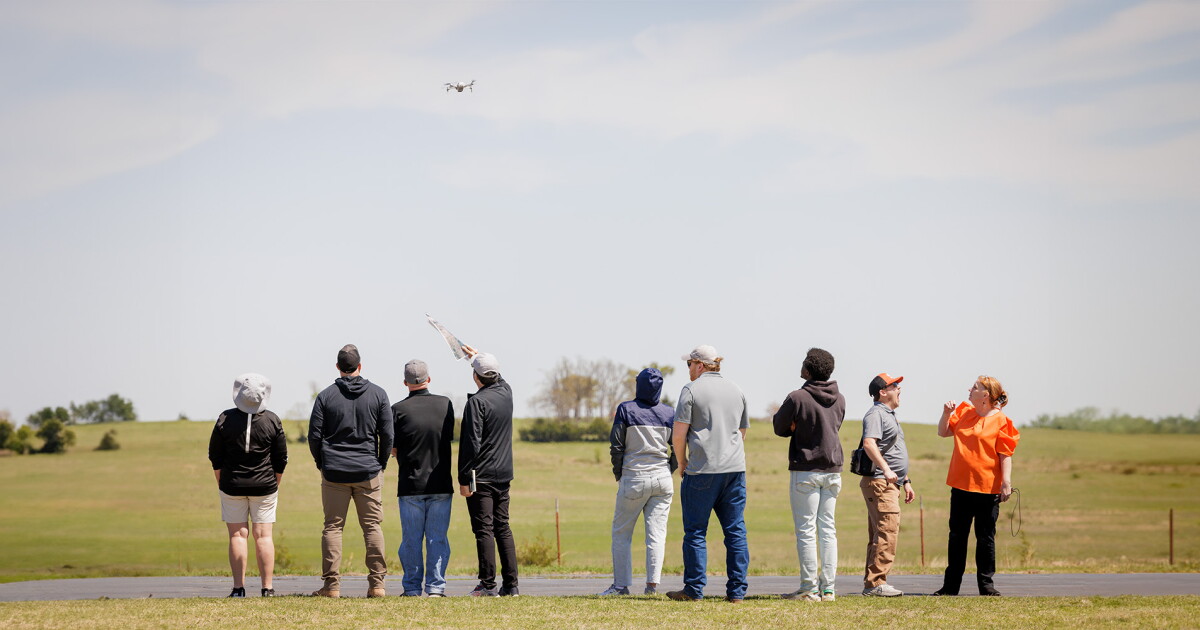
Oklahoma State University hosts second annual drone search and rescue championship
Stillwater Skies Host Student Rescue Drones High school teams from across Oklahoma are gathering at Lake Carl Blackwell...