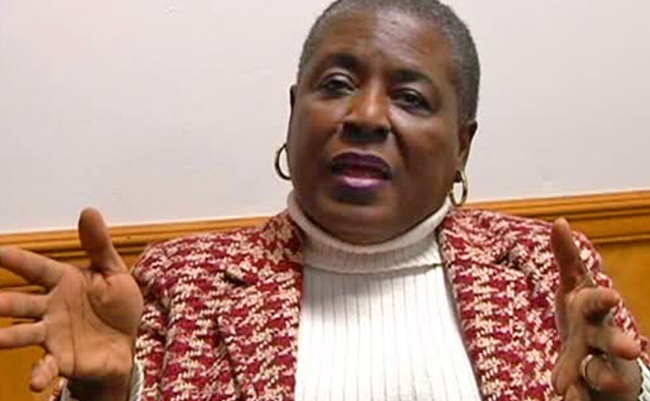
Tallahassee City Commission candidate Dot Inman-Johnson has frequently pointed to a poverty rate of roughly 25% as a defining crisis for the city. While that figure aligns with broad U.S. Census Bureau data, a deeper dive into the numbers reveals that Tallahassee’s massive college population creates a statistical distortion, masking a lower poverty rate for non-students while still leaving the city significantly poorer than the rest of Florida.
The tension here isn’t about whether poverty exists—it clearly does—but about how we measure it and what those measurements tell us about the city’s actual economic health. When you strip away the students, the numbers shift, but the gap between Tallahassee and the state average remains a stubborn reality.
The Student Effect on Poverty Data
The 25% figure cited by Inman-Johnson is rooted in the U.S. Census Bureau American Community Survey. For the 2020-2024 five-year estimate, the official poverty rate for Tallahassee sits at 23.6%. On the surface, Inman-Johnson’s claim is reasonably accurate. However, Tallahassee is a college town, and college students—who often report near-zero income—tend to spike poverty statistics in any city with a large university presence.
A housing analysis conducted by the City of Tallahassee used a special Census calculation to see what happens when off-campus students are removed from the equation. Using data from 2019-2023, the analysis found that while the conventional poverty rate was 23.2%, it plummeted to 16.5% once students were excluded. That is a reduction of 6.7 percentage points.

The scale of this impact is massive because students make up about 20.7% of the population analyzed. By including them, the city’s poverty rate appears significantly higher than it is for the permanent, working-age resident population.
Tallahassee vs. Florida
Even after removing the “student effect,” Tallahassee doesn’t suddenly look like a land of plenty. The student-adjusted rate of 16.5% is still 4.2 percentage points higher than the overall poverty rate for the state of Florida. In relative terms, Tallahassee’s adjusted poverty rate is about 34% higher than the state average.
This suggests a dual reality: the 25% figure may be inflated by the presence of students, but the underlying economic struggle for non-students is still far more acute in the capital than in other parts of the state. The “so what” for residents is clear—the city faces a structural poverty issue that isn’t just a byproduct of having a large student body.
The data shows a clear trend of improvement over the last fifteen years, though. According to research reported by Tallahassee Reports, the city’s conventional poverty rate has been on a steady decline:
| Census Period | Conventional Poverty Rate |
|---|---|
| 2009-2011 | 32.4% |
| 2012-2016 | 28.4% |
| 2020-2024 | 23.6% |
The Debate Over Economic Narrative
If a policymaker views the problem as a roughly 25% poverty rate, they might prioritize different interventions than if they view it as 16.5%.
Ultimately, the data provides a nuanced correction to the campaign trail rhetoric. Inman-Johnson is using a standard federal metric, but that metric fails to account for the unique demographic makeup of a university city. The reality is a city that is getting better, but is still struggling significantly more than its neighbors in the Sunshine State.

Maine Department of Labor reports 4,720 approved paid leave claims
Thousands of Maine workers are now accessing paid time off for childbirth, serious illness, and family care thanks...
Odenton MARC Station Breaks Ground on $56M Commuter Garage
Governor Wes Moore, County Executive Steuart Pittman, and regional transit leaders broke ground on October 28, 2026, for...

Frankfort vs. Independence: Win Streak Meets Stout Defense
The Class AA No. 1 Frankfort Falcons enter Friday night's matchup against the No. 6 Independence Patriots. With...

Masterson and Holscher battle over property tax relief in Kansas race
Kansas voters will decide between different approaches to addressing surging property taxes across the state. Republican gubernatorial nominee...