
Dublin Tattoo Convention Turns RDS into a Living Gallery
“Every now and again I get an itch. I need new ink,” says Timmy Hajster, a 50-year-old South African living in Dublin.
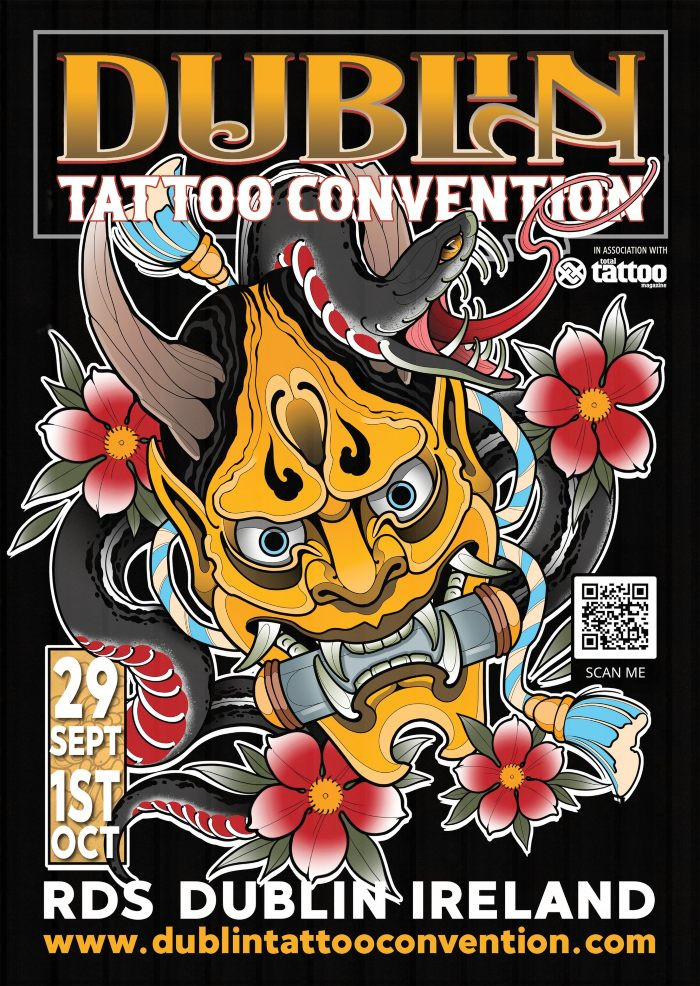
The buzz of electric needles was constant on Sunday, the final day of this year’s Dublin Tattoo Convention at the RDS, The Irish Times reported. The event featured 300 tattoo artists from both home and abroad, turning the venue into a massive, living gallery of skin and ink.
While the RDS often hosts high-stakes political counts or massive exhibitions, the atmosphere this weekend was defined by a different kind of intensity. At almost every stall, artists were etching everything from flowers and Pokémon to skulls and Disney princesses.
The convention shows how body art has moved from the fringes of society into the mainstream. This transition is reflected in the diverse range of designs on display, which spanned from lighthearted characters like Mr. Bean to more intense imagery involving demonic children.
A Therapeutic Ritual
For many attendees, the motivation for getting tattooed transcends mere aesthetics. The process often serves as a form of mindfulness or emotional release.
Ben O’Reilly, 36, from Co Kilkenny, described the experience as “therapeutic.”
“I enjoy the whole process. Like, I feel really good now. I feel really uplifted. It’s a special thing for some people, getting tattooed. The whole process and stuff makes me feel like I’m in the now. I’m in the moment, and I don’t think about anything else. I think it’s really hard to find that in life.”
Others, like 27-year-old Stephen Dagger from Navan, view the body as a literal medium for fine art. Dagger, who was being tattooed with a skull and dagger, noted that the client is essentially “the canvas.”
However, the physical reality of the art form remains a point of contention for some. Fernando Villanueva, a 27-year-old from Mexico, expressed immediate regret during his first tattoo session while receiving a sleeve. He told reporters he was “starting to think maybe it wasn’t a good idea,” while simultaneously grinding his teeth against the pain.
High-end body art requires a large financial investment. Maksym Yakubchyk, a Ukrainian artist, noted that a full arm sleeve would generally cost between €3,000 and €4,000, describing the transaction as “a lot of money and pain.”
Tattooed Professionals Challenge Traditional Perceptions
The industry is reaching more people across different age groups and backgrounds. Martin McIver, an organizer of the convention and owner of the Wildcat Electric Temple studio on South William Street, believes the traditional perception of tattooed individuals is effectively obsolete.
McIver noted that the art form is becoming “far more acceptable” in professional environments. He shared that throughout his career, he has encountered tattooed judges, politicians, and even chiefs of police.
“You don’t know what’s underneath here,” McIver said, gesturing to his collar.
This normalization mirrors broader trends seen in global media and consumer culture, where individual expression through permanent modification is increasingly decoupled from social stigma. As the demographic quadrants of the tattoo market expand, the industry moves closer to a standardized luxury service model.
Generative AI Challenges Human Craftsmanship and Creativity
Despite the growth, the industry is facing a modern existential threat: artificial intelligence. The rise of generative AI has introduced a tension between human craftsmanship and digital convenience.
McIver identified AI as a “big challenge” and a “very divisive subject” within the community. He observed that customers are increasingly arriving at studios with AI-generated designs, expecting artists to replicate them exactly.
For many professionals, this practice touches on fundamental questions of intellectual property and the value of human creativity. “We’re obviously not fans,” McIver said, “we think art should be drawn by people.”
As the technology evolves, the tattoo industry finds itself at a crossroads, forced to defend the value of the “hand-drawn” in an increasingly automated world.
Disclaimer: The cultural analyses and financial data presented in this article are based on available public records and industry metrics at the time of publication.
Related reading

Patrick Graham Wins Inaugural Francis Bacon Lifetime Achievement Award
Dublin city centre is currently hosting the Dublin Gallery Weekend, a multi-day event that spans streets and venues...

StyleCaster: Harry and Meghan Send Message by Bypassing Royal Christmas
The Sussex Holiday Strategy: A Quiet Pivot from Sandringham The annual guest list at Sandringham has long served...

The Galway Bay Murders: Cast Profiles and Everything to Know About the New RTÉ Crime Drama
The Irish television landscape shifts tonight as The Galway Bay Murders premieres on RTÉ One and RTÉ Player...

King Charles and Royal Family Lead Solemn Remembrance Sunday Service at Cenotaph
The Weight of Memory at the Cenotaph The annual Remembrance Sunday service in London remains one of the...