
European policymakers are racing to finalize the “DiversifyEU” package, a sweeping regulatory framework set to debut in December 2026.
Designed to insulate the bloc from the kind of coercive economic pressure seen during the 2022 energy crisis, the initiative aims to force companies in strategic sectors—including chemicals and industrial machinery—to break their reliance on single-source suppliers.
The core objective, as outlined by European Commission President Ursula von der Leyen in her 16 September State of the Union address, is straightforward: “The principle is simple – no critical dependence on a single supplier.” While specific mandates remain in flux, reports suggest the Commission may require firms to maintain at least three suppliers for critical components, with no single vendor accounting for more than 30–40% of the total supply.
This shift represents a fundamental pivot from the ad-hoc “just-in-time” supply chain models that have long dominated European industrial strategy.
“If no viable alternative exists, they raise input costs for European industry without reducing dependence, and they invite retaliation, including restrictions on critical inputs,” BusinessEurope said in October. Nokia echoed this concern, noting that imposing tariffs or strict thresholds before the market can supply alternatives “merely penalises trusted vendors and inflates costs for critical digital infrastructure.”

The urgency of this policy is highlighted by the uneven success of Europe’s post-2022 energy decoupling. While the EU successfully slashed its reliance on Russian gas from 45% in 2022 to 12% by 2025, the transition has often resulted in a simple swap of dependencies rather than true resilience.
By October 2026, nearly 58% of all European liquefied natural gas (LNG) imports originated in the United States. The European Court of Auditors has flagged that decoupling from Russia is stalling; as of October 2026, the EU’s gas storage levels stood at just 74% of capacity, with Germany and Austria hovering near 60%.
The transition toward decarbonization has inadvertently created a new, more structural dependency on China. China now produces around 80% of the world’s solar panels, 80% of lithium-ion battery cells and 70% of electric vehicles, all of which are necessary for a green transition.
Unlike energy commodities, where trade flows can be rerouted with relative speed, this dependence on Chinese midstream refining and processing is deeply entrenched and will likely take at least a decade to unwind.
The U.S. approach to similar challenges serves as a cautionary tale. Starting 1 January 2027, the U.S. Department of War will prohibit the procurement of certain materials—including neodymium-iron-boron magnets and tungsten—if they are processed or produced in China, Iran, North Korea, or Russia.
Yet, the U.S. Aerospace Industries Association has already warned that domestic supply chains cannot meet these requirements in the near term, with significant capacity not expected until at least 2028.
| Strategic Dependency | Chinese Global Market Share |
|---|---|
| Solar Panels | 80% |
| Lithium-ion Battery Cells | 80% |
| Electric Vehicles | 70% |
As the EU debates how to operationalize its “solidarity mechanism”—a system intended to provide public guarantees and shared risk-taking—the central question remains whether governments can effectively partner with private firms to build capacity without stifling the very innovation they aim to protect.
Stéphane Séjourné, Executive Vice-President of the European Commission, argued in May 2026 that "too few businesses in Europe integrate the geopolitical risks, the supply chain risks into their thinking." Whether the upcoming DiversifyEU package successfully bridges the gap between government-led intelligence and private-sector operational reality, or merely forces a, "box-ticking exercise," is unclear.
The ultimate test will be whether the EU can transition from simply identifying vulnerabilities to systematically financing the domestic and partner-country infrastructure needed to close them.
Worth a look

Titanic Passenger’s Letter From Coat to Auction With £80,000 Estimate
A water-stained letter recovered from the body of a first-class passenger will go under the hammer in Devizes,...

Fossil Teeth Show Homo Erectus Lived in Rainforests 180,000 Years Ago
Fossil teeth pulled from limestone caves in southern China show that Homo erectus lived in dense rainforests as...

Cork Man Appears in Irish Court on New Shannon Airport Security Charge Replacing Trespass
A Cork man indicted in New York for destroying a $60 million U.S. military transport plane at Shannon...
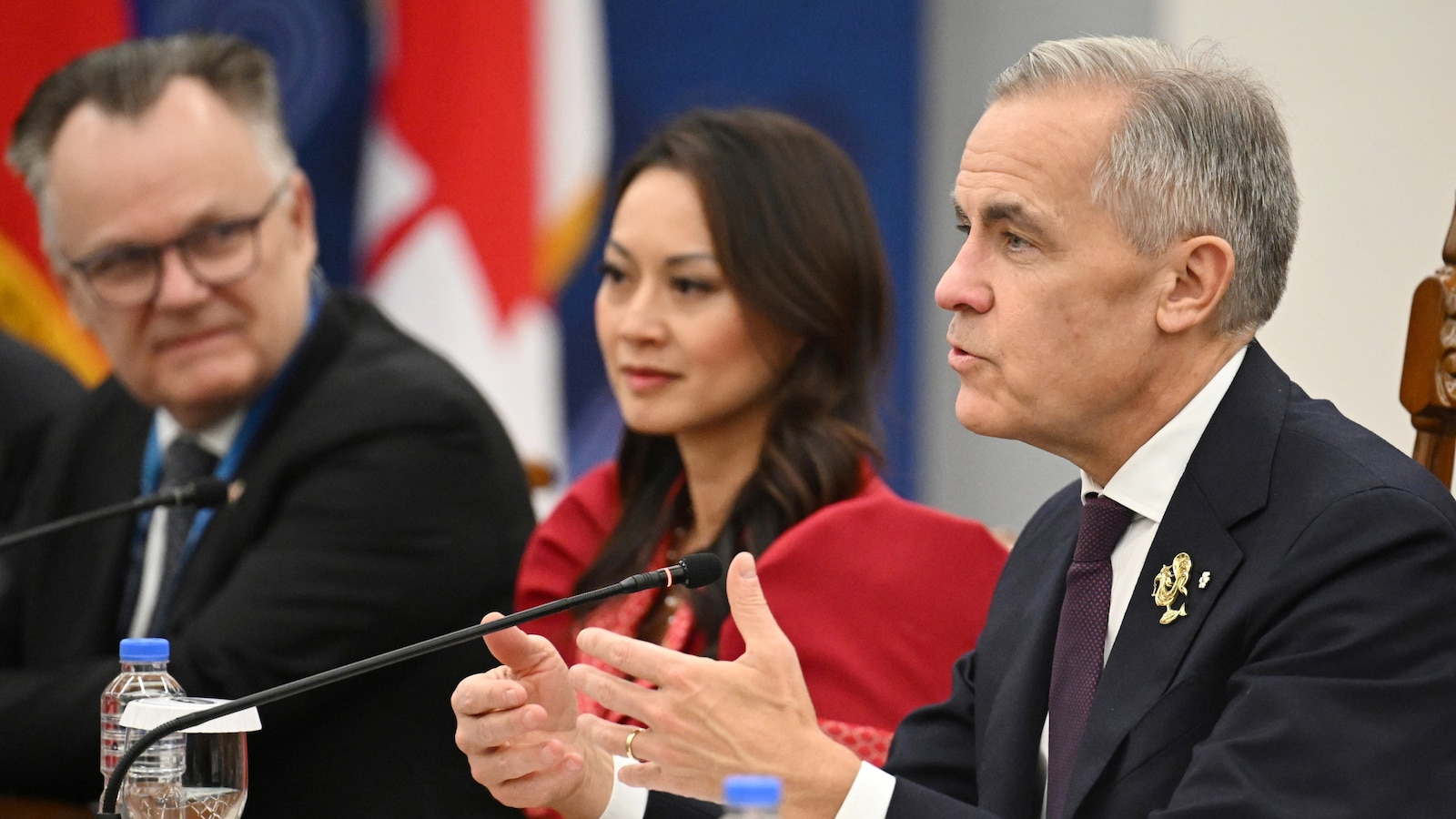
Canada, ASEAN Announce Substantial Conclusion of Free-Trade Talks After Five Years
Canada and Southeast Asia announced the substantial conclusion of negotiations for their first free-trade agreement after five years...