
Thousands of students across Europe planned coordinated demonstrations on Friday to protest war, social-welfare cuts, and economic hardship Thousands of students plan coordinated protests.
This wave of youth mobilization reflects a broader disillusionment among young voters who feel economic opportunity slipping away. Analysts and organizers point to a decade defined by pandemic disruptions, armed conflict, rising temperatures, and fiscal tightening as the root causes of widespread anxiety Organizers and experts say the connective tissue.
Ahead of Friday’s events, the German organizer group “Gen Z Regelt”—translating roughly to “Gen Z Gets Things Done”—published a list of demands In a list of demands published ahead of Friday’s protests.
The group called for the resignation of Chancellor Friedrich Merz over his leadership in increasing military spending, alongside a demand of “not one person, not one cent, for the German armed forces” called for the resignation of Chancellor Friedrich Merz.
Organizers emphasize that the youth uprising is framed as a struggle between workers and the wealthy rather than a generational conflict. Hannah Ponting, a 20-year-old Socialist Students coordinator at Liverpool University, said that older generations are not to blame for controlling the flow of funds Neither of those groups are controlling where this money’s going.
“It’s not a battle of the young versus the old,” said Hannah Ponting, age 20, who participates in Liverpool University’s Socialist Students branch and aids in organizing local demonstrations. “Neither of those groups are controlling where this money’s going.”
Frustration with traditional power structures has driven young voters toward ideological extremes on both sides of the political spectrum The beneficiaries of this youth anger are ideologically diffuse. In Berlin city elections in September, a surge of voters as young as 16 helped the far-left party Die Linke secure an upset victory helped the far-left party Die Linke score an upset victory.
Experts note that the rapid ascent of parties like AfD and Die Linke demonstrates how quickly young electorates abandon political entities that fail to deliver rapid change illustrates how quickly young voters are willing to turn on political parties.
Mr. Hurrelmann of the Hertie School said, They are completely free to promise everything, because they are not now in a position to deliver.
Mainstream parties face limited incentives to satisfy youth demands because doing so risks alienating older voters who constitute the majority of their political coalitions, according to Oxford University Tim Vlandas Mainstream parties have few incentives to meet young people’s demands. Vlandas warned that even if fringe parties attained power, they would encounter similar constraints requiring them to appease older generations to maintain governance.
Founded in 2007 through the merger of the Party of Democratic Socialism and Labour and Social Justice – The Electoral Alternative, Die Linke traces its lineage back to the Marxist–Leninist ruling party of former East Germany. The democratic socialist party promotes antimilitarism and recorded 123,126 registered members in December 2025.
“When you don’t influence politics, you can protest. You can become alienated and stop voting,” he said. Or, he added, “you can radicalize.”
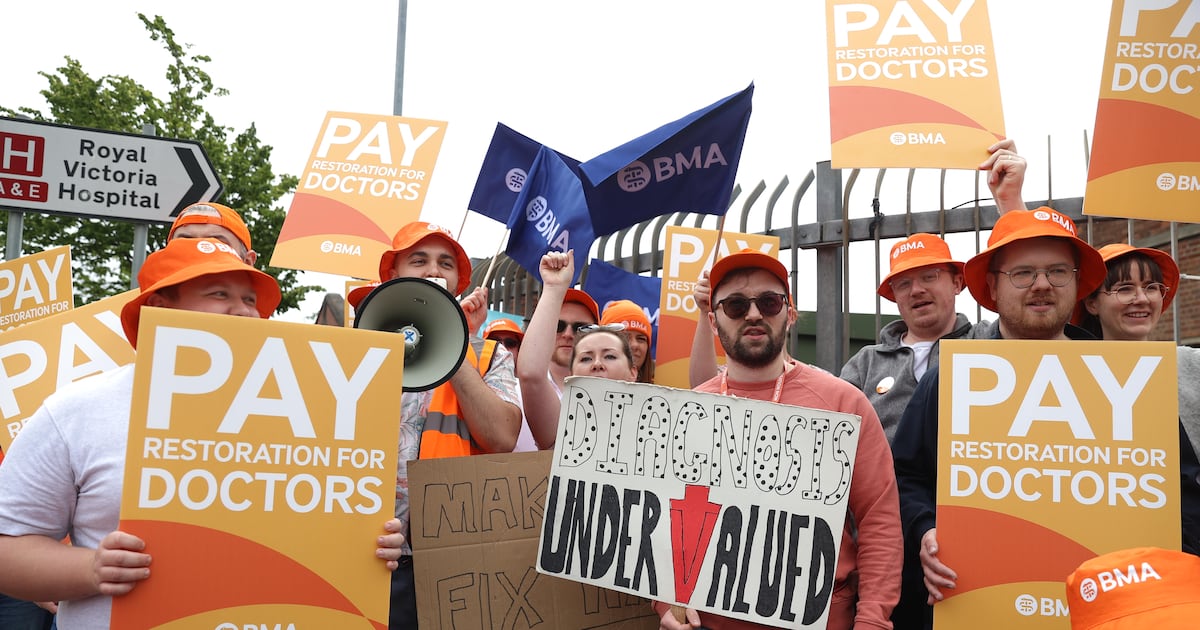
NI Resident Doctors Strike Over Pay Erosion
Resident doctors in Northern Ireland walked off the job at 7am for a 24-hour strike over pay erosion,...

Houthi Missile Damages PIF Tower, Saudi Authorities Say
A Houthi missile strike damaged the tallest tower in Riyadh on Thursday, shattering windows across multiple floors of...

30-Year-Old Tottenham Man Arrested in Dublin Over Thomas Oduro Murder
A 30-year-old Tottenham man was arrested in Dublin on Monday on a UK warrant for the murder of...

Putin Rules Out Limited Ceasefire After Kerch Bridge Strike
What I can tell you is that our systems have been involved for many months, if not years,...