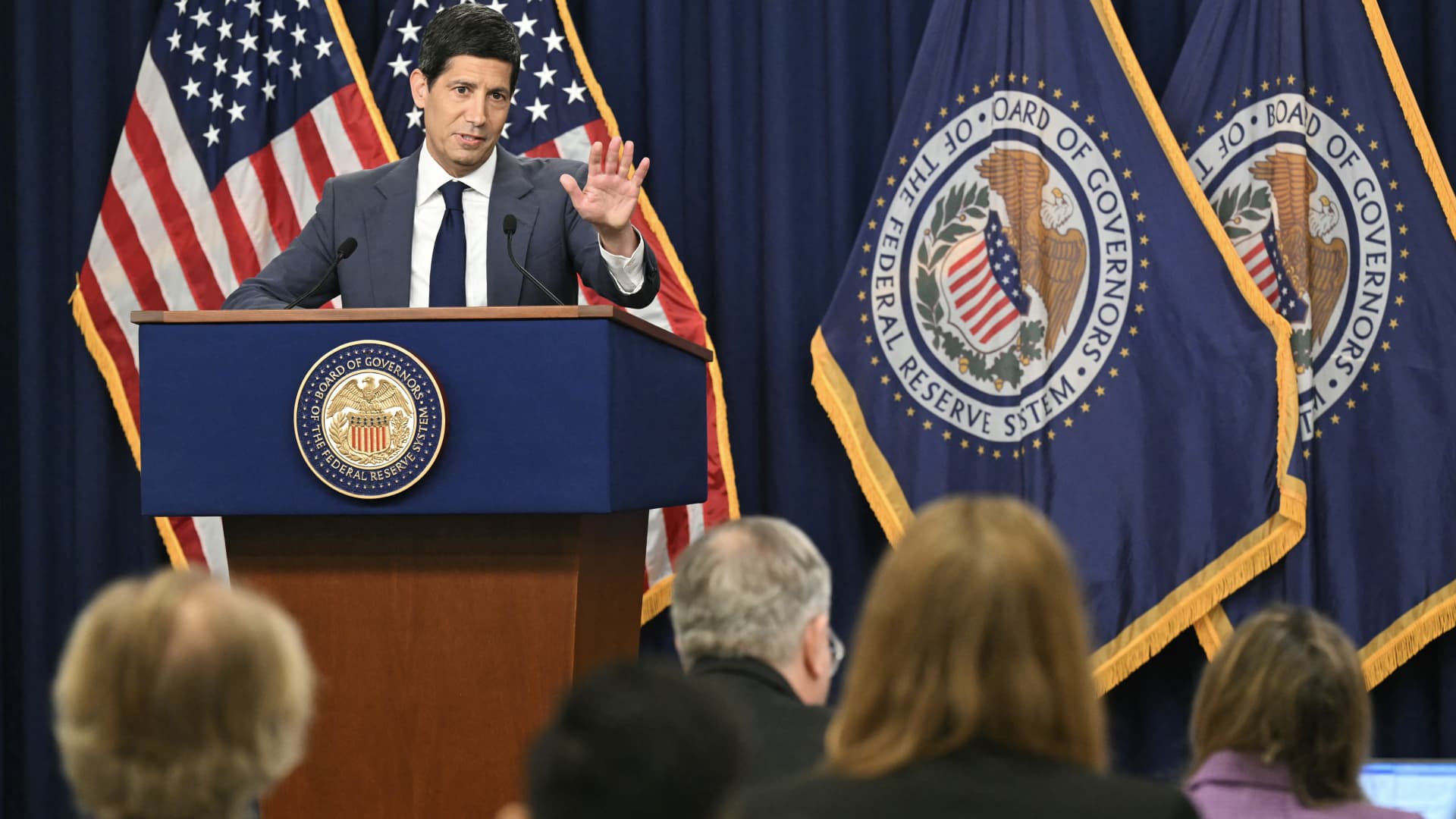
Federal Reserve Chairman Kevin Warsh announced October 28, 2026, that the central bank will reduce the number of annual interest-rate setting meetings starting next year. While the FOMC will maintain eight total meetings per year, the frequency of formal rate decisions will drop to seven in 2027 and six in 2028.
Federal Reserve Chairman Kevin Warsh announced the schedule change on October 28, 2026, following a Federal Open Market Committee decision to leave borrowing costs steady at a target range of 3.75% to 4%.
The FOMC voted 10-2 to maintain the range. Governors Lisa Cook and Beth Hammack both dissented in favor of a quarter-percentage-point increase.
Warsh Cuts Rate-Decision Meetings
The Fed will keep its eight-meeting annual cadence—a practice held since 1981—but will designate specific sessions for strategic deliberations
rather than voting on the federal funds rate.
- 2027: Seven rate-decision meetings and one meeting dedicated exclusively to broad monetary policy strategy. Warsh noted that for this specific session, neither a policy statement nor a vote on the federal funds rate is anticipated.
- 2028: Six rate-decision meetings and two meetings reserved for strategic evaluations.
Warsh first raised the idea of reducing the annual number of policy meetings to six from eight during the July gathering. According to meeting minutes, he argued then that cutting the frequency of meetings would allow more information and data to accumulate between them.
I don’t believe in forward guidance.
Kevin Warsh, Federal Reserve Chairman
Warsh has not contributed a dot
to the central bank’s quarterly chart of individual policymaker expectations for short-term interest rates and does not plan to do so.
Two-Year Yields Hit 4.7%
Short-dated yields fell as much as four basis points to 4.7% once Warsh detailed the calendar restructuring. This followed a sharp reaction where two-year yields climbed by as many as five basis points immediately after the Fed opted to pause rates as investors absorbed the 10-2 vote.
Long-term bond yields remained higher by five basis points. Gennadiy Goldberg, head of US interest rate strategy at TD Securities, noted that because market contracts trade on all currently scheduled meetings, the Fed will likely notify the market well in advance to avoid pricing issues.
Treasury market returns, as measured by a Bloomberg index, were up 1.9% in October through Tuesday’s close, marking its best monthly performance since early 2025.
Economic Growth Outpaces Policy
Warsh reported that the estimate for GDP growth in the first half of 2026 was revised up to 2.4 percent from an earlier 1.8 percent estimate. He also described the labor market as positive, citing faster employment growth, a lower unemployment rate, and low levels of unemployment benefit claims.

Gundlach argued that the Fed is a little bit behind the curve
and suggested the central bank should have increased rates by 50 basis points rather than moving gradually.
I think the Fed should be raising interest rates, based upon the 2-year Treasury being at 4 and three-quarters percent, and now the yield curve in the wake of this news conference is steepening again.
Jeffrey Gundlach, DoubleLine
The Fed statement noted that the committee is focusing its attention on inflation amid resilient job markets and energy price fluctuations stemming from the conflict in Iran.
Traders Expect December Hike
CME’s FedWatch tool showed an 85% chance of a quarter-point rate increase at the December gathering. Kay Haigh, global head and CIO of Fixed Income and Liquidity Solutions at Goldman Sachs Asset Management, stated, We expect the Fed to resume rate hikes in December,
citing recent data showing an acceleration of inflation.
Some projections suggest three quarter-point increases between now and mid-2027 to combat persistent inflation. The current target range of 3.75% to 4% continues as the market looks toward the December gathering.
Related reading
Hayden Panettiere’s Death Ruled Accidental; Police Close Investigation
The Greenville Police Department officially ruled the death of actor Hayden Panettiere accidental on Wednesday, closing the investigation...

Jennifer Lawrence and Original Cast Return for Sunrise On The Reaping
Jennifer Lawrence has confirmed she will return as Katniss Everdeen in The Hunger Games: Sunrise On The Reaping,...

Fed Projected to Hold Rates as Investors Monitor Kevin Warsh
Markets expect the Federal Reserve to leave interest rates unchanged at its upcoming meeting.

Peter Medak, Director of The Changeling and The Krays, Dies Aged 88
Peter Medak, the Hungarian-born director whose career spanned the psychological dread of The Changeling and the gritty underworld...