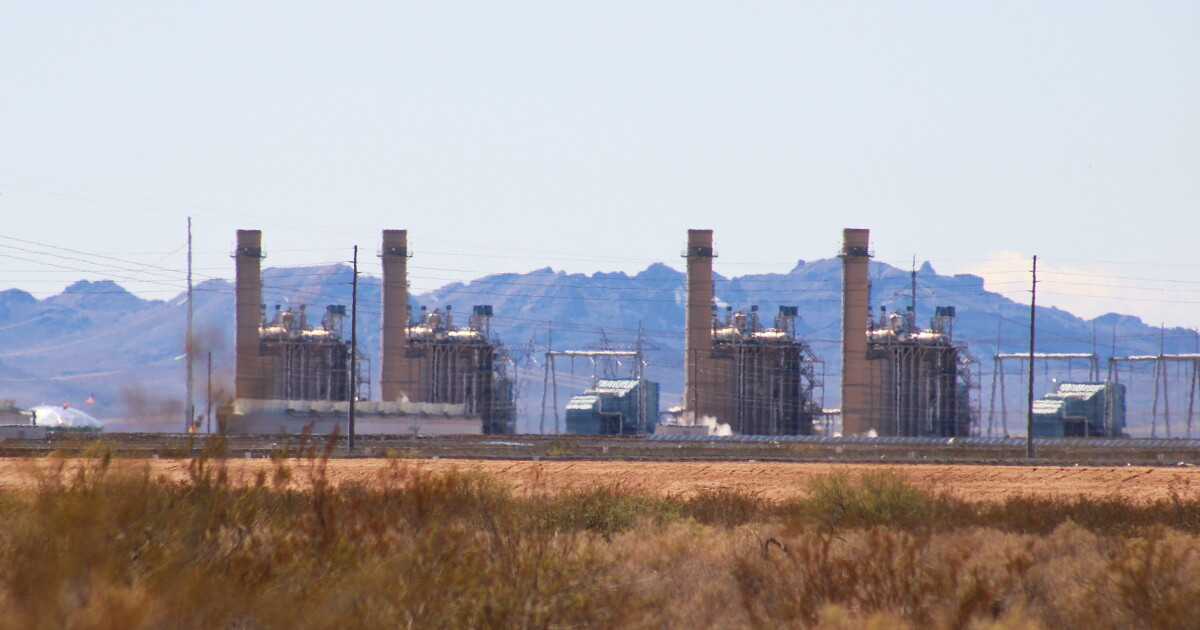
Arizona’s surge in data center construction is driving a massive increase in water demand, but the thirst isn’t happening inside the server rooms. While these nondescript buildings often use closed-loop cooling systems to minimize their direct footprint, the staggering amount of electricity they require forces power plants to consume billions of gallons of water to keep the grid stable, KJZZ reported.
This creates a dangerous paradox for the Southwest. Local governments have successfully built “guardrails” to stop data centers from draining city taps, but they have little to no oversight over the water used by the utilities providing the power. As AI demand scales, the water cost is simply shifting from the municipal pipe to the power plant’s cooling tower.
The illusion of the low-water data center
If you drive through north Phoenix, you’ll see buildings like the Aligned Data Centers facility—stout, windowless, and gray. From the outside, they look like any other warehouse. Inside, they house rows of servers that generate immense heat. To manage this, some facilities use chilled water pathways, while others, like Aligned, claim to use closed-loop systems that require zero water for operational cooling.
Social media often simplifies this with viral claims that every AI prompt “drinks a bottle of water.” Sarah Porter, director of Arizona State University’s Kyl Center for Water Policy, notes that while these estimates encourage people to think about the issue, they aren’t precise. On-site water use is often modest because cities have a vested interest in preventing their taps from running dry.
In Phoenix, a “large water user ordinance” passed in 2024 requires anyone wanting 250,000 gallons or more per day to submit a special application. The city’s water director has the absolute discretion to block projects that threaten the broader supply. As of 2025, nine Arizona water utilities have adopted similar rules.
“An existential threat for the Phoenix area is depletion of groundwater,” says Kathryn Sorensen, the Kyl Center’s director of research and former head of the Phoenix water department. “So to the extent we can avoid that, that’s a really good thing.”
Electricity demand is water demand
The real environmental cost is hidden an hour west of the city, where the Redhawk Power Plant is undergoing a massive expansion to add 397 megawatts to the grid. Power plants—whether natural gas, nuclear, or coal—rely on water to create steam and cool turbines. When a data center demands more power, the power plant must draw more water.
The scale of this demand is immense. One APS official compared the electricity needs of an average data center to the power required for 400 Costco warehouses. According to a study by the nonprofit Ceres, water use associated with data center electricity could increase by 400% if planned facilities are built. That totals roughly 14.5 billion gallons per year—enough to supply a city the size of Scottsdale for over two years.
Want to dig into the numbers yourself? Start here:Estimated direct data center water use (Bluefield Research via The Arizona Republic):https://t.co/3K5NDXPX3bGolf course water use: 119,478 acre-feet reported by 219 courses in 2019 (ADWR via The Arizona Republic):…
Natural gas remains the primary driver of this trend. According to the U.S. Energy Information Administration, natural gas provided 45.6% of Arizona’s electricity in 2024. As the number of natural gas plants in the state is set to go up, the pressure on water resources is accelerating.
Arizona utilities avoid reporting water usage data
Despite the stakes, there is a glaring lack of data regarding exactly how much water these power plants use. The Arizona Corporation Commission does not require utilities to report water usage at generating facilities. This opacity leaves the public and policymakers relying on “ballpark estimates” rather than hard data.
Keriann Conroy, a research associate at the Energy and Policy Institute, argues that this lack of transparency is a strategic choice by politically powerful utilities. This creates a blind spot in a state where 90% of residents say water security should be a priority for officials.
If dozens of facilities come online simultaneously, the water savings from a few “efficient” buildings are wiped out by the aggregate demand of the grid.
Water scarcity risks turning data centers into stranded assets
The “so what” of this situation extends beyond environmentalism; it is a matter of business continuity. For the companies investing billions into Arizona’s desert, water scarcity is a material financial risk. If a region runs out of the water necessary to cool the power plants that feed the servers, the data centers become stranded assets.
With 172 data centers currently operating or in development across the state, the window for sustainable planning is closing. The current system allows companies to claim “water neutrality” on-site while relying on a power grid that is increasingly thirsty.
Keep reading

Patrick Habirora Trains With GSP Ahead of PFL Dubai on Nov 14
Undefeated Belgian fighter Patrick Habirora is preparing for a co-main event bout at PFL Dubai by training in...

The Early History of Gamecock Football: From the College Boys to the Clemson Rivalry
Long before the roar of "Sandstorm" filled the air at Williams-Brice Stadium, the University of South Carolina's football...

Providence voters to decide on divestment initiative Tuesday
Providence voters will decide this Tuesday whether the city should pull its investments from companies and countries profiting...

Harrisburg Police Increase Patrols for Halloween Celebrations
Harrisburg Police are increasing patrols and encouraging residents to take precautions as Halloween falls on a Saturday this...