
“We aren’t asking the state to fund our children going to the fanciest private school in the state,” said Allison Duquette, a Milton mother and former school board member.
“We are simply asking for the same benefits as other families in Vermont—a benefit we are owed under the state constitution.”
The Liberty Justice Center filed Duquette v. State of Vermont in Vermont Superior Court on November 16 on behalf of five families who argue the state’s “Exclusion Rule” unconstitutionally denies them access to the town tuitioning program solely because their home districts operate public schools. The program currently allows students in districts without public schools to direct education funding to approved public or independent schools elsewhere.
The complaint, brought through the Center’s PARENTS Initiative, targets the Education Clause and Common Benefits Clause of the Vermont Constitution. It argues the state must guarantee substantial equality of educational opportunity and cannot grant a benefit to some families while withholding it from others based on ZIP code.
Five families, one statutory barrier
Allison Duquette withdrew her eleven-year-old son from the Milton Town School District over concerns about academic standards and the learning environment. After serving on the local school board to push for reform, she began homeschooling at substantial personal cost. She wants to use town tuitioning to send him to public school in neighboring Colchester.
Nichole Kruger, also of Milton, has four school-age children. She points to academic results in Milton that lag behind Colchester and South Burlington and seeks the same access to those neighboring public schools that tuitioning-eligible families already have.
Amia Cervantes of Northfield wants her fourteen-year-old son to attend public school in Barre. He already plays football and wrestling there at her expense after witnessing repeated fights and being pulled from class to write witness reports at his assigned school. She says he needs a stable environment where he can learn alongside his teammates.
Theresa McDonough of Waltham enrolled her two children at Champlain Valley Christian School after her gifted daughter was offered only a grade skip for acceleration—a move Theresa rejected to avoid social mismatch. She would use town tuitioning for a school that challenges her daughter without forcing her into an older peer group.
Christina “Chrissy” Haskins of Jamaica placed her third-grade son at the Mountain School at Winhall, a private school that accommodates his IEP and his aptitude for math. The complaint alleges that if the family lived ten miles west, the same school would be tuitioning-eligible.
The constitutional argument
Timothy R. Snowball, senior counsel for the PARENTS Initiative, framed the case as a question of who gets access. “These families are asking for access to an educational opportunity Vermont already provides to their fellow Vermonters,” Snowball said.
“They simply want to send their children to schools that offer programs and educational support that better meet their children’s needs. This case is about who gets access—not about choosing public schools over private schools, or private schools over public schools.”
The lawsuit advances two claims. Under the Education Clause, read with the Common Benefits Clause, the plaintiffs argue the state must ensure substantial equality of educational opportunity statewide. Under the Common Benefits Clause alone, they challenge the residence-based classification that grants town tuitioning to some families and denies it to others.
The complaint cites academic studies linking access to educational opportunity with better outcomes in academic performance, college preparation, access to special services, and extracurriculars and facilities.
Lawsuit filed challenging Exclusion Rule constitutionality
Duquette v. State of Vermont, et al. was filed November 16 in the Vermont Superior Court, Civil Division. The plaintiffs seek a declaration that the Exclusion Rule is unconstitutional and a permanent injunction barring its enforcement against them and other similarly situated families.
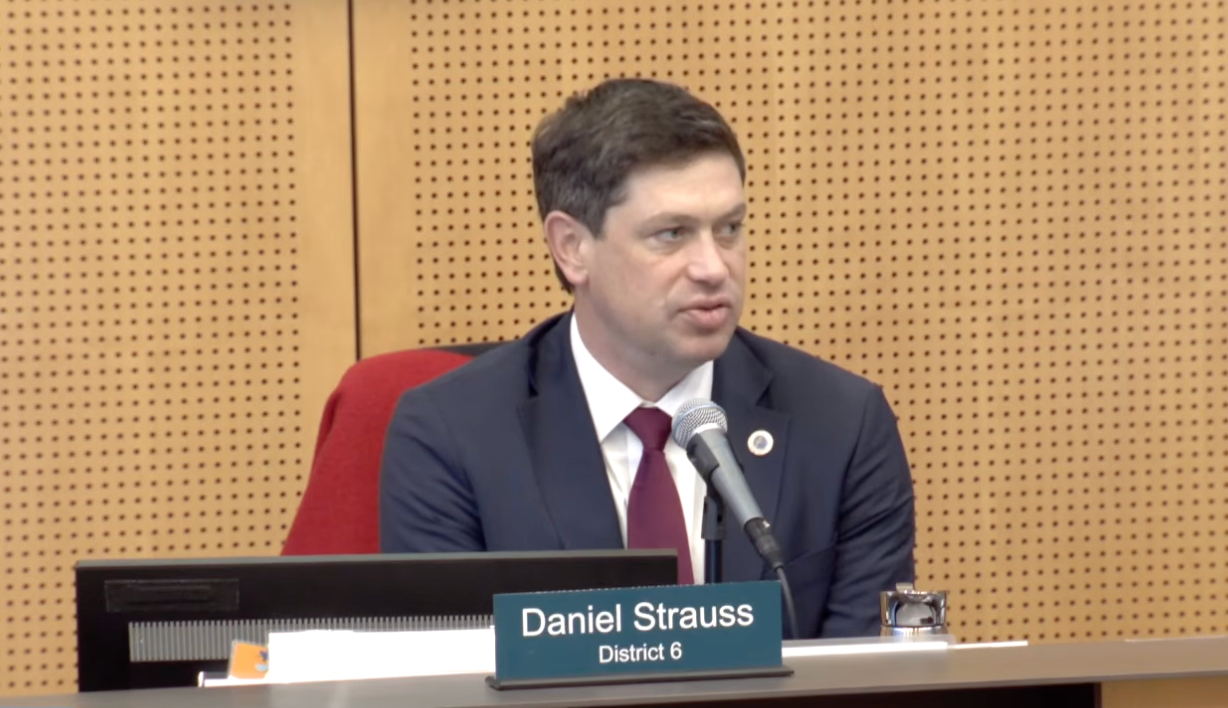
Seattle Council Set to Vote on Budget Adding Millions, Fiscal Guardrails Bill Fails
The Seattle Times reported. The council’s two-day amendment marathon produced a 2,835-page agenda packet of changes that found...

Breakfast with Santa Returns to Ford Wyoming Center Dec. 12
Santa Claus is scheduled to arrive at the Ford Wyoming Center on Saturday, December 12 for the return...

West Virginia Mountaineers Beat Auburn Tigers 76-70 in Players Era Tournament Opener
The West Virginia Mountaineers beat the Auburn Tigers 76-70 early Wednesday to win their opening-round game at the...

Del. Marty Martinez to Propose Virginia Home Rule Act to Change Dillon’s Rule
Virginia lawmakers are preparing to revisit a 19th-century legal doctrine that has long forced localities to ask Richmond...