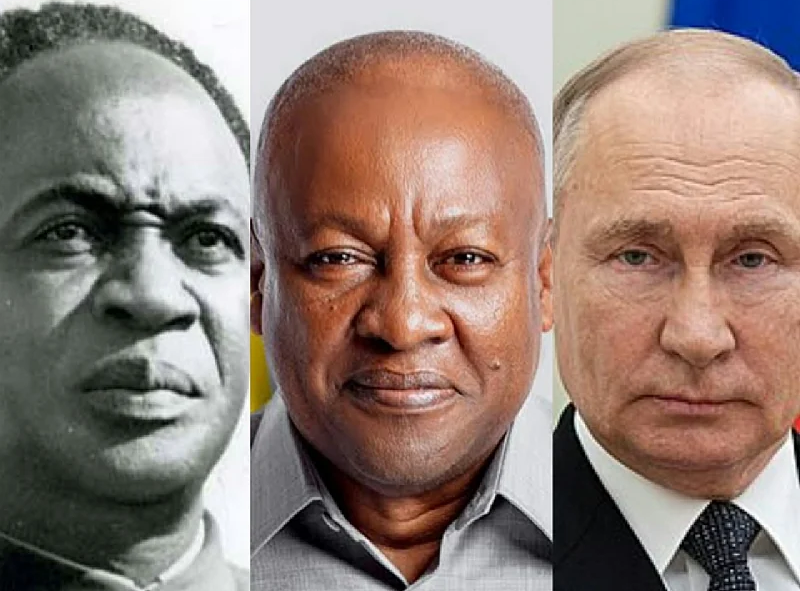
Kwame Nkrumah’s Postcolonial Prediction Faces New Realities in a Multipolar World
More than six decades after gaining political independence, African nations continue to grapple with a stark contradiction: holding political sovereignty while lacking the economic power to dictate their own development conditions. This enduring imbalance validates a prescient warning once issued by Ghana’s first president, Kwame Nkrumah, who argued that political liberation remains incomplete without accompanying economic autonomy. As the global order shifts away from Western dominance toward competing centers of influence like China, Russia, and India, African leaders face renewed choices regarding how to use international relationships without falling into new cycles of dependency.
This geopolitical recalibration forms the backdrop for President John Dramani Mahama’s Accra Reset initiative, which was formally launched at the United Nations General Assembly in September 2025. The initiative aims to overhaul international development cooperation by moving away from heavy dependence on external aid and fragmented donor-driven financing structures. Instead, the proposal champions country-led development systems, strong domestic institutions, and coordinated financing arrangements designed to spur productive economic transformation across the continent.
Addressing Structural Vulnerabilities in Global Health and Finance
The genesis of the Accra Reset lies partly in Africa’s glaring vulnerabilities within the international health architecture. The continent's reliance on foreign financing, imported pharmaceuticals, and external medical technologies highlights the limits of political independence when basic public services depend on decisions made abroad. To counter this, the initiative calls for sweeping reforms in global health governance, increased investment in local pharmaceutical manufacturing, and the establishment of mechanisms such as the High-Level Panel on Global Health Architecture and Governance Reform alongside the Health Investment National Gateway.
Beyond the health sector, the framework sets sights on regional industrialization, technological cooperation, and equitable economic partnerships. By proposing Sovereign Prosperity Spheres, the initiative seeks to align productive investments, infrastructure projects, and financing structures across neighboring economies. These proposals represent a deliberate shift away from measuring international cooperation merely by the volume of external assistance received, prioritizing domestic productive capacity and institutional autonomy instead.
The Complex Equation of Multipolar Competition
While emerging global powers offer African countries fresh avenues for trade, energy cooperation, infrastructure development, and financing, analysts caution that alternative partnerships do not automatically dismantle entrenched structures. Vladimir Putin has emphasized these shifting dynamics in engagements with African leaders, presenting the continent with opportunities to diversify its diplomatic ties. However, simply swapping traditional Western alliances for new geopolitical partners risks reproducing the same unequal economic division of labor if Africa continues exporting unprocessed raw materials while importing finished goods derived from its own natural resources.
This reality brings Nkrumah’s doctrine of non-alignment back into sharp focus for contemporary foreign policy. For Nkrumah, non-alignment meant the sovereign right to pursue independent development policies free from external ideological subordination. President Mahama’s pragmatic diplomatic engagements reflect this balance, seeking cooperation without policy capture across various international actors, including Russia, China, India, the United States, and European nations. The ultimate test for these relationships remains whether they foster local industrial capacity, technological skills transfer, and domestic value retention rather than perpetuating external control.
Continental Integration and the Path to Collective Power
Economic transformation cannot occur in isolation from the broader historical struggle for continental integration. Today, the African Continental Free Trade Area (AfCFTA)—an independent African Union framework—complements the regional ambitions of the Accra Reset by building a larger integrated market to boost intra-African trade and industrial value chains.
Yet, trade liberalization alone cannot substitute for deliberate industrial policy and regional infrastructure development. The core question remains whether African governments possess the political will and collective economic strength to transform these shifting global dynamics into genuine instruments of continental power. Without developing the internal institutional and economic capabilities necessary to shape international financial and technological systems, Africa risks remaining defined by its strategic utility to external powers rather than its own sovereign rules.
Worth a look

NTSB focuses on weather in Florida Learjet crash that killed nine
Florida Learjet Crash Kills Nine as Investigators Focus on Severe Weather and Icing Weather conditions have emerged as...

James Blunt Admits He Tried To Get Banished From The Celebrity Traitors
Singer James Blunt admitted he spent much of the 2026 series of The Celebrity Traitors trying to get...

US Midterm Elections: Voters Head to Polls in Referendum on Trump Presidency
Midterm Balloting Underway as $12 Billion Election Tests Donald Trump’s Second Term Millions of American voters headed to...

OpenAI executive urges caution in China-US AI talks, warns of distillation – South China Morning Post
The Unspoken Risks in US-China AI Collaboration Caroline Zier, OpenAI’s deputy lead for national security, warned U.S. officials...