
The Unspoken Risks in US-China AI Collaboration
Caroline Zier, OpenAI’s deputy lead for national security, warned U.S. officials to remain “clear-eyed” during upcoming bilateral AI talks with China, citing risks of “unauthorized distillation” and divergent definitions of AI safety. The remarks delivered at the Hudson Institute highlighted tensions between Washington and Beijing concerning intellectual property and model integrity issues.
Zier’s comments emerged ahead of a planned summit between President Trump and Chinese leader Xi Jinping, aimed at advancing a September framework for AI risk management.
The ‘Unauthorized Distillation’ Controversy
Unauthorized distillation—where malicious actors use outputs from a “teacher” model to train a “student” model—was flagged as a primary threat by Zier. She noted that Chinese labs frequently engage in this practice, stripping safety mechanisms and misappropriating protected intellectual property.
The U.S. government has previously accused Chinese firms like DeepSeek and Alibaba of “industrial-scale distillation,” a claim Beijing denies.
According to Michael Ortiz of Reflection AI, about 80% of U.S. AI startups utilize Chinese open-weight models. AI startups rely on Chinese open-weight models due to their cost‑effectiveness, creating a “strategic vulnerability” if access were restricted.
The Geopolitical Chessboard
The tension reflects broader U.S.-China competition over AI infrastructure. While both nations invest heavily in AI, their priorities differ: the U.S. emphasizes guardrails against model misuse, whereas China’s approach to AI infrastructure is described as a “different race.”

Sam Bresnick of Georgetown University’s Centre for Security and Emerging Technology echoed Zier’s concerns, questioning the efficacy of a U.S.-China AI “hotline” given historical delays in Chinese information sharing.
The Economic Paradox
Despite security warnings, U.S. startups continue to adopt Chinese AI models.
The Path Forward: A Fragile Balance
Zier emphasized the need for cautious information sharing and clear expectations for any data exchanges.
—
Related reading

Charles left without umbrella in rainstorm fit for a king
Caught in a tropical downpour during Antigua and Barbuda’s 45th independence anniversary on November 1, 2026, King Charles...

Teen rescued from bonfire after being knocked unconscious – RTE.ie
Rescue After Assault Sends Teen Into Bonfire on Halloween Night A teenage boy was knocked unconscious and fell...
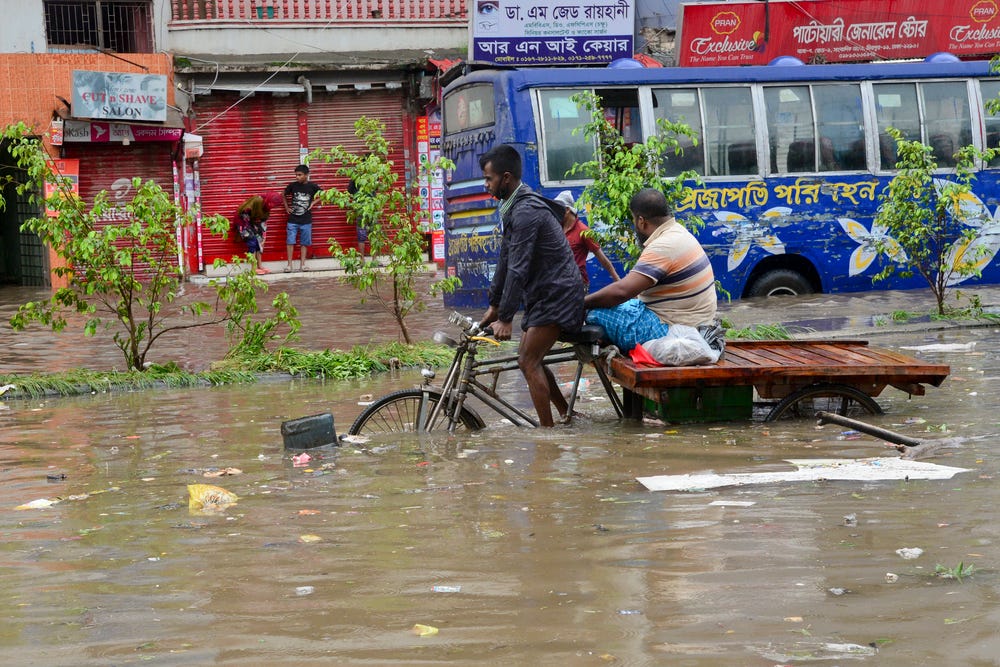
Climate Justice in the Global South: Understanding the Environmental Legacy of Colonialism – E-International Relations
The Historical Roots of Global Climate Vulnerability The negative effects of climate change in developing countries cannot be...

Dorit Kemsley and PK Reach Partial Financial Settlement in Divorce Case
Reality television stars Dorit Kemsley and Paul “PK” Kemsley reached a partial financial settlement in their ongoing divorce...