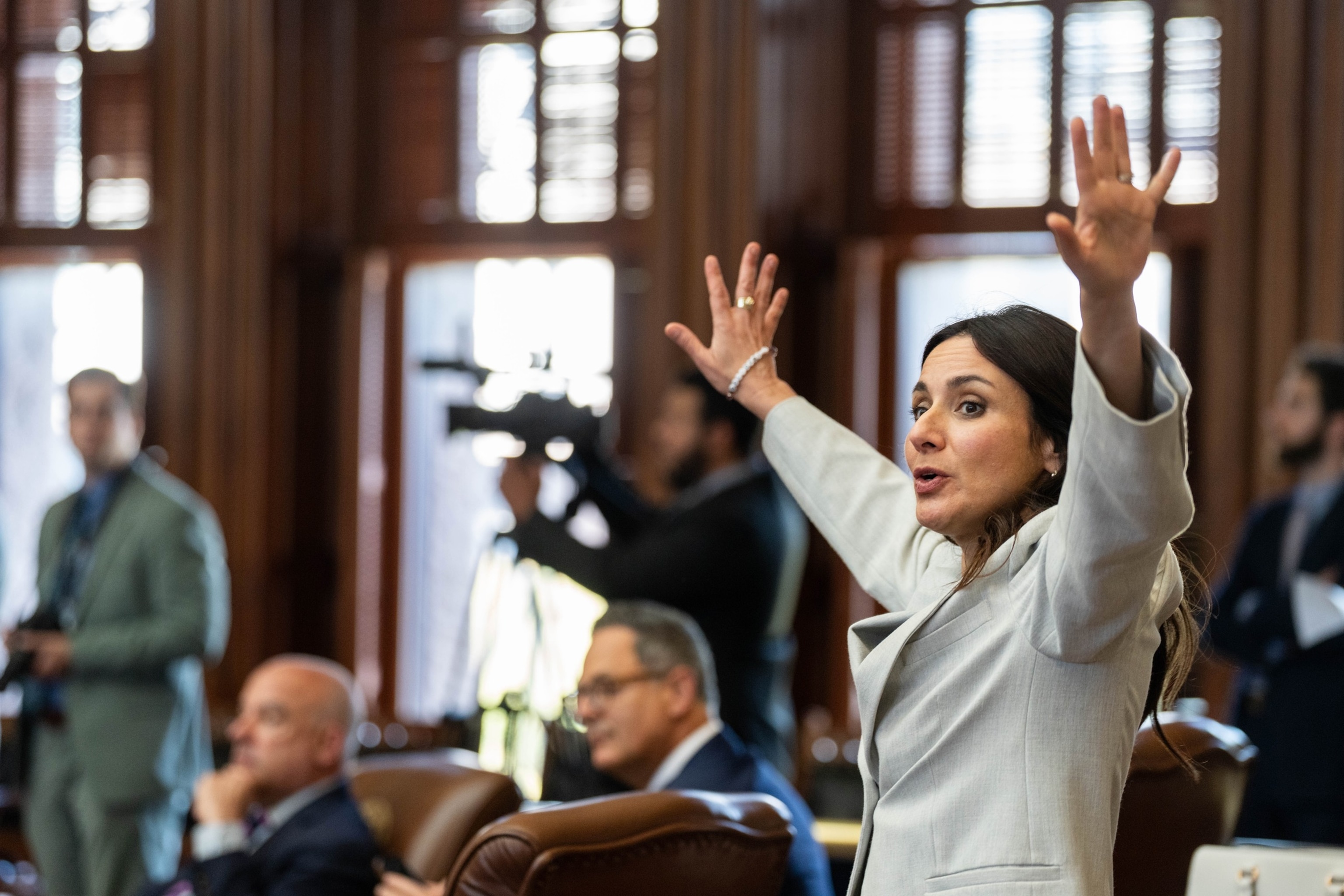
Texas has elected Gina Hinojosa as its first Latina governor, marking a historic shift that ends three decades of Republican control in the state’s executive office. A former school board president and state representative, Hinojosa secured the victory in this week’s midterm elections and is set to take office on January 19, 2027. NPR reported on the transition.
From Brownsville to the Governor’s Mansion
Gina Hinojosa’s political trajectory did not begin in the halls of the state Capitol, but rather in the local arena of school board advocacy. Raised in the border town of Brownsville in the Rio Grande Valley, she emerged as a prominent voice in Texas politics during a 2011 dispute over the potential closure of Pease Elementary in Austin. Hinojosa, a civil rights and labor lawyer by trade, viewed the threat to her son’s school as a personal call to action.
Texas banned the state income tax in the Texas Constitution 30 years ago. Greg Abbott & the establishment, do-nothing electeds pat themselves on the back for banning it a 3rd time. Texans are tired of performative politics and politicians that do nothing—it’s politics as usual…
Her subsequent 2012 election to the Austin school board served as her foundational experience in public governance. This background in local education policy has remained central to her platform, influencing her work as a state representative and informing her legislative priorities. As she told supporters on election night, her philosophy is rooted in the advice of her grandmother: no te dejes—a phrase she translates as knowing your worth and fighting to defend it.
Tactical Shifts in the State Legislature
Hinojosa has earned a reputation among her colleagues as a skilled strategist, particularly during her time in the Texas House. Democratic State Representative Trey Martinez Fischer has described her as a tactician capable of navigating complex legislative environments to achieve specific policy goals. Her approach often involves unconventional alliances, such as her 2023 move to have rural Republicans lead the opposition against private school vouchers, rather than relying solely on Democratic leadership.
Her legislative record also includes high-stakes maneuvers to block Republican-led redistricting efforts. When a group of Democratic lawmakers fled the state to stall a vote on congressional district maps, Hinojosa framed the decision as a necessary, situational fight. While the Republican majority ultimately succeeded in passing their preferred maps, the episode solidified Hinojosa’s image as a persistent and pragmatic political operator.
Building a Bipartisan Transition
As the governor-elect prepares to assume power, she faces the challenge of governing a state that has seen significant political friction. During her first press conference following the election, Hinojosa signaled an intent to move beyond the intense culture wars that have defined recent legislative sessions. In a gesture toward bipartisanship, she announced the appointment of former Republican state representative Ernest Bailes to her transition team.
People are tired of the divisions, of the fighting, tired of the culture wars. This is a time to come together in a way that is about just delivering for the people of Texas.
This approach faces a complex reality. While Democrats saw success in statewide races this cycle, the state government remains a landscape of deeply entrenched interests. The effectiveness of her transition will depend on whether this collaborative rhetoric can translate into concrete policy outcomes in a legislature that has historically been resistant to cross-party cooperation.
Shifting the Narrative for Future Generations
The significance of Hinojosa’s victory extends beyond the immediate policy implications, carrying a symbolic weight that has resonated across the state. Comedian Cristela Alonzo, who campaigned alongside Hinojosa in the Rio Grande Valley, highlighted the impact the election has had on young people in their shared home region. For many students, seeing a daughter of the Valley reach the highest office in the state serves as a tangible metric of what is possible.
This shift in representation represents a moment of transition for Texas, a state that has not seen a Democrat in the governor’s office in thirty years. With her inauguration scheduled for January 19, the focus now turns to how Hinojosa will balance the demands of her diverse coalition with the practical requirements of managing the Lone Star state’s economy and public systems.
Madison voter Terri Lachance referred for review after attempted second vote
The Madison Voter Who Tried to Beat the System When Terri LaChance walked back into her Madison polling...

Ron DeSantis Denies Washington Post Reports of 2028 Presidential Bid
The 2028 Speculation and the Governor’s Rebuttal Florida Governor Ron DeSantis took to social media this past Friday...

Virginia Beach prepares for Tunnel to Towers 5K Run & Walk
The Tunnel to Towers 5K Run & Walk in Virginia Beach serves as a local extension of a...

Salt Lake City Cemetery monument marks Japanese American veterans
A Granite Reminder of Sacrifice at Salt Lake City Cemetery A monument standing above 11th Avenue at the...