
Authentication and Security Cookies
Several cookies manage user accounts and prevent unauthorized access. The __Host-3PLSID
and __Host-GAPS
cookies are used to sign in with a Google account and last for one year. Google Authentications utilize the session-based G_AUTHUSER_H cookie, while LSOLH is for authentication with your Google account. Additionally, the __Secure-ENID
cookie functions for 11 months to prevent fraudulent login attempts, containing a Google user ID utilized for statistics and marketing purposes following a successful login.
Tracking, Statistics, and Advertising
A significant portion of the tracked identifiers deal with metrics, conversion rates, and ad targeting. Cookies such as OSID
, DV
, LSID
, COMPASS
, __Secure-OSID
, NID
, and SNID
are deployed to collect website statistics, track conversion rates, and handle Google ad personalization over durations ranging from two days to one year. Other targeted files include _gcl_dc
and _gcl_au
for Google AdSense advertisement efficiency experiments, TAID
to link user activity across devices for ad coordination, and _dcid
to collect user behavior information across multiple websites to optimize advertisement relevance.
Preferences and Functional Cookies
Cookies like SID
, SAPISID
, and AID
remain active for one to two years to download specific Google tools and save user preferences, such as search results per page or SafeSearch activation, while adjusting Google Search advertisements. Location-based functionality is managed by the UULE
cookie, which sends precise browser location information to Google servers depending on browser settings. Furthermore, Flipped
or consent-related functions rely on items such as CONSENT
for a 20-year tracking period, along with FCCDCF
and FCNEC
for the Google Funding Choices API handling GDPR consent and CCPA opt-out gathering.
KSHSAA Moves Boys Soccer State Championships to Topeka After Crash
KSHSAA Moves Boys State Soccer Championships From Wichita to Topeka The Kansas State High School Activities Association is...

IHSAA releases state quarterfinal schedule after round of 16 games
Toe met leather across the Hawkeye State on October 30, 2026, launching the high-stakes Round of 16 slate...
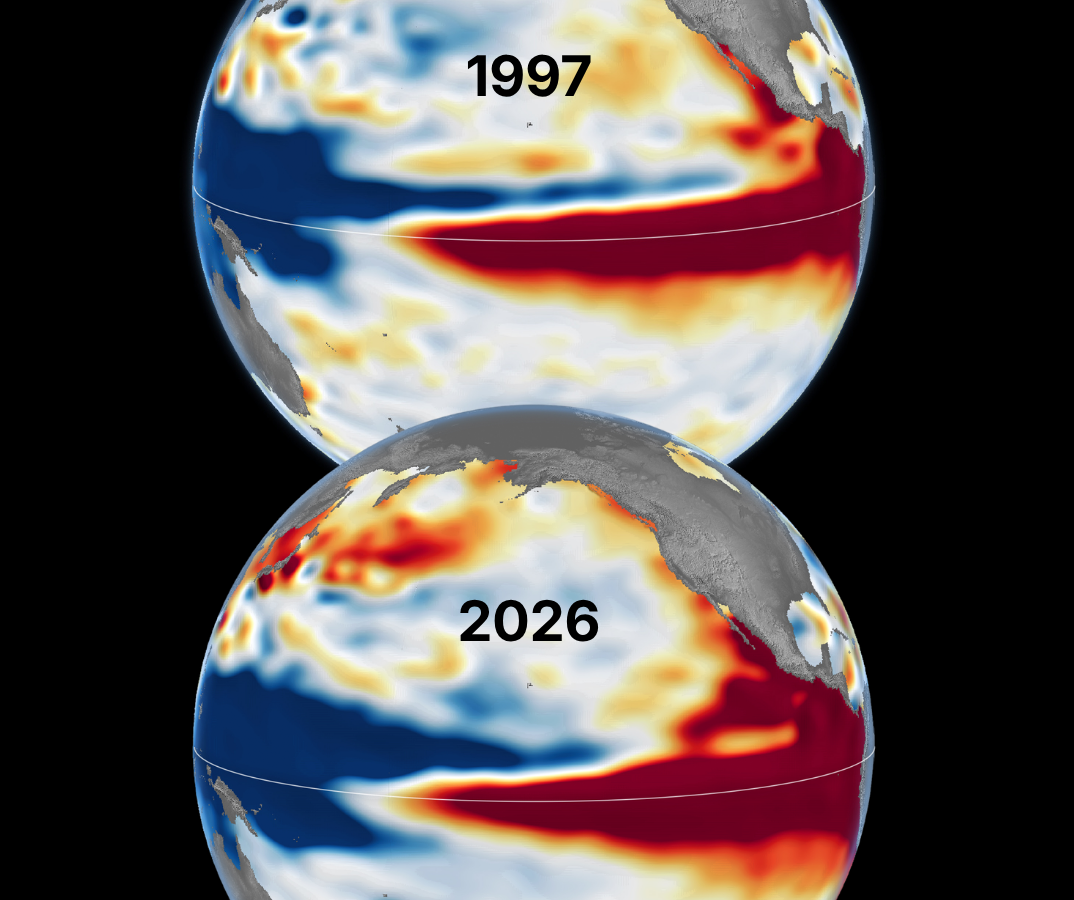
NASA satellite data links current El Niño to 1997 winter pattern
Meteorologists and climate researchers are looking back to the late 1990s as a new El Niño pattern takes...

University of Delaware Researchers Identify Topological Superconductivity
The seminar, hosted by the Department of Physics and Astronomy, focuses on how Moiré materials serve as a...