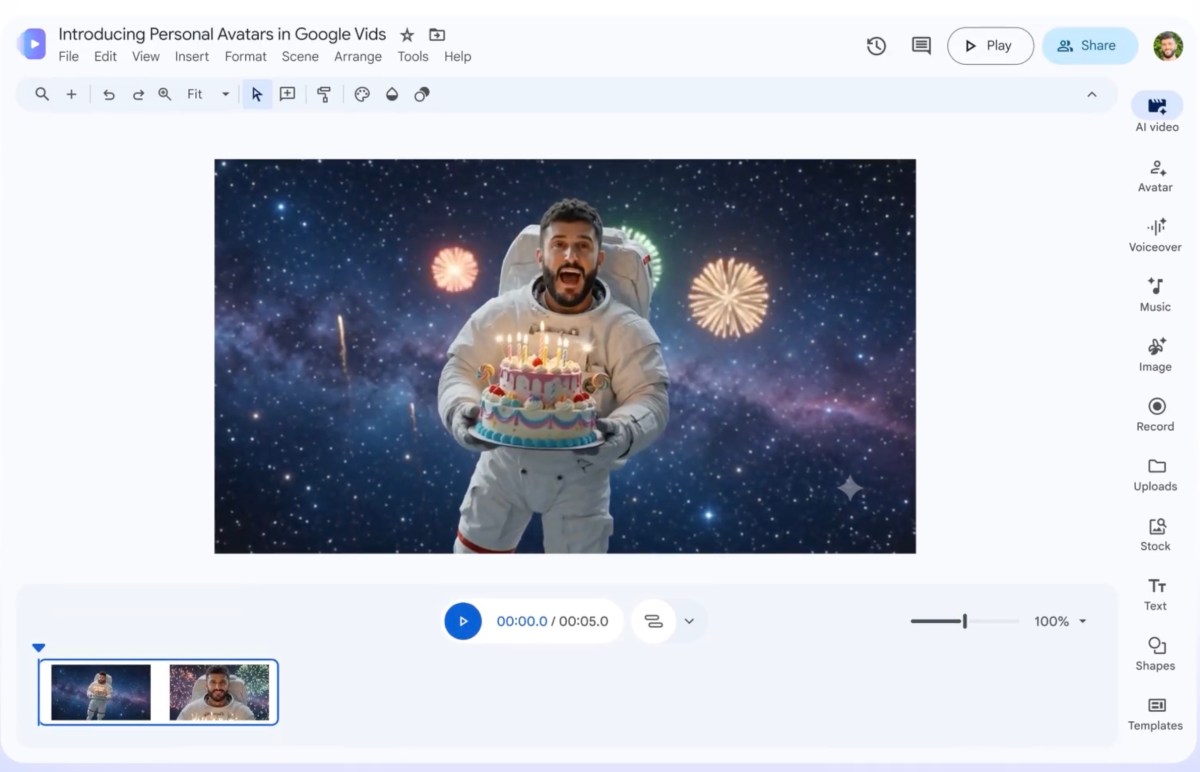
Users can now generate personalized AI avatars in Google Vids, edit photo metadata via the “Ask Photos” feature, and apply cinematic effects to videos using the new “Video Remix” tool in Google Photos.
Personalized AI Avatars and Gemini Omni Integration in Google Vids
Google has expanded the capabilities of its workspace video tool, Google Vids, moving it beyond its original role as an AI-assisted workplace presentation tool to become more of an all-in-one video creation platform. On Thursday, the company announced that users can now create custom digital avatars that look and sound like them based on a selfie and a voice recording they upload. These new AI avatars are tied to the account holder’s likeness, linked to their specific Google account, and watermarked invisibly with SynthID.

In addition to avatars, Google is integrating its multi-modal AI model, Gemini Omni, into the Vids workflow. This allows for more conversational video production, where users can combine written prompts with reference images to generate content. According to the company, Gemini Omni takes the hard work out of the editing process, letting users create videos using a combination of a written prompt and reference images. The model mixes those inputs together to create the desired AI video. It can also be used to do things like swap out the background, fix the lighting in a video recorded on a phone, or add effects. Furthermore, Omni now supports step-by-step edits, meaning users can make changes to a video as they go instead of starting over from scratch.
By making Vids a part of Google Workspace, the company is telegraphing its use as a business tool for things like company updates or training videos. However, personalized avatars and conversational edits could put it in closer competition with other AI video startups and tools like HeyGen, Synthesia, Captions, and D-ID. As of February, Google made the process simpler by rolling out Veo 3.1 to all users, helping everyone generate videos within Vids.
Google Photos Adds Video Remix and Metadata Editing
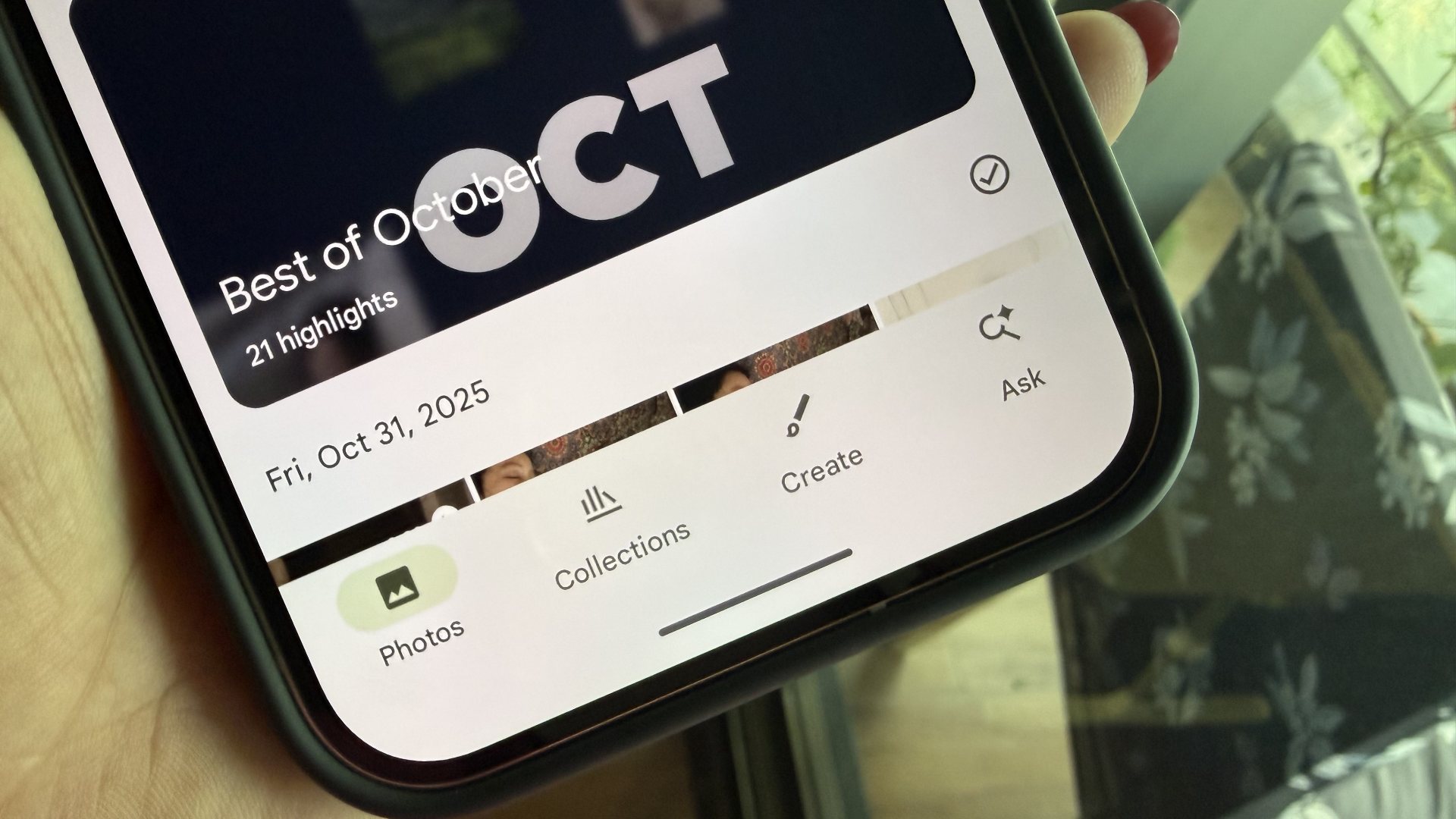
The consumer-facing Google Photos app is also receiving a suite of generative AI tools. The most notable addition is the “Video Remix” feature, which is powered by Gemini Omni—Google’s recently released model that promises to “create anything from any input.” The tool can be accessed in the “Create” tab in Google Photos, allowing users to apply cinematic relighting to brighten up a dark clip, swap out a plain background for something else, or add artistic styles to videos, such as watercolor, raw sketchbook, and oil painting effects. For example, a user could edit a video to make it appear as though it was shot in a greenhouse, relight a video with a morning glow, or apply a watercolor effect.

“Creating beautiful video clips shouldn’t require professional skills or hours of editing,” Google wrote in a blog post. “Now, with Video Remix in Google Photos, you can transform ordinary videos into share-worthy moments in just a few taps.” The feature starts rolling out to eligible Google AI Plus, Pro, and Ultra subscribers in the U.S., Argentina, Bangladesh, Brazil, Colombia, Egypt, and India.
Beyond video, Google is working on a new utility for its “Ask Photos” feature. Following an APK teardown of the Google Photos app (version v7.84.0.947289513), the Android Authority team spotted a change to the “Ask” button. The company is working on allowing users to edit photo metadata—including the timestamp, caption, and location—using the “Ask” button. While manual editing of these details has been available, the feature is now working properly in testing, allowing users to automatically generate and add a caption to photos or change place information.
Strategic Implications for the AI Ecosystem
These updates signal Google’s intent to keep users within its ecosystem by offering high-end editing capabilities that previously required dedicated software. By baking AI-powered video editing into Google Photos, the tech giant is making it easier for users to edit clips with a few taps. This launch is the latest push by Google to bring more generative AI tools into its consumer apps as it continues to compete with companies like Apple, OpenAI, and Adobe.
Find more reporting in our Technology section.
Related reading
Publishers Pivot to AI, Subscriptions, and Team Reorgs
Publishers are aggressively rewriting their strategies to survive the Google Zero post-search era by launching LLM subscriptions, reorganizing...

Retired Penn professor emeritus arrested for blocking Uber Eats delivery robots
A 78-year-old professor emeritus at the University of Pennsylvania was arrested in Center City Philadelphia after repeatedly blocking...
Google DeepMind’s Gemini 4 agents defeat Minecraft’s Ender Dragon after 605 deaths
Four autonomous artificial intelligence agents powered by Google's Gemini 4 Argon model have successfully completed Minecraft from scratch...
Alfozan Received Extensive Saudi Backing
Federal prosecutors allege an ex-OpenAI engineer accused of planting a hidden audio recording device in a San Francisco...