The Quiet Retreat in Hawaii’s War Against Extinction
For three years, the conservation community held onto a singular, high-tech hope: that by releasing millions of “birth control” mosquitos into the Hawaiian canopy, they could stop the spread of avian malaria and save the state’s native honeycreepers from total collapse. It was a strategy born of desperation and backed by over $50 million in public funding. But as of late 2026, the coalition behind the effort—a massive collaborative including the Hawaiʻi Department of Land and Natural Resources and the U.S. Fish and Wildlife Service—is signaling a fundamental change in tactics. The high-tech, incompatible insect technique that once promised a surgical strike against the malaria-carrying Culex quinquefasciatus has failed to meet the moment, forcing a pivot back to more traditional, labor-intensive methods.
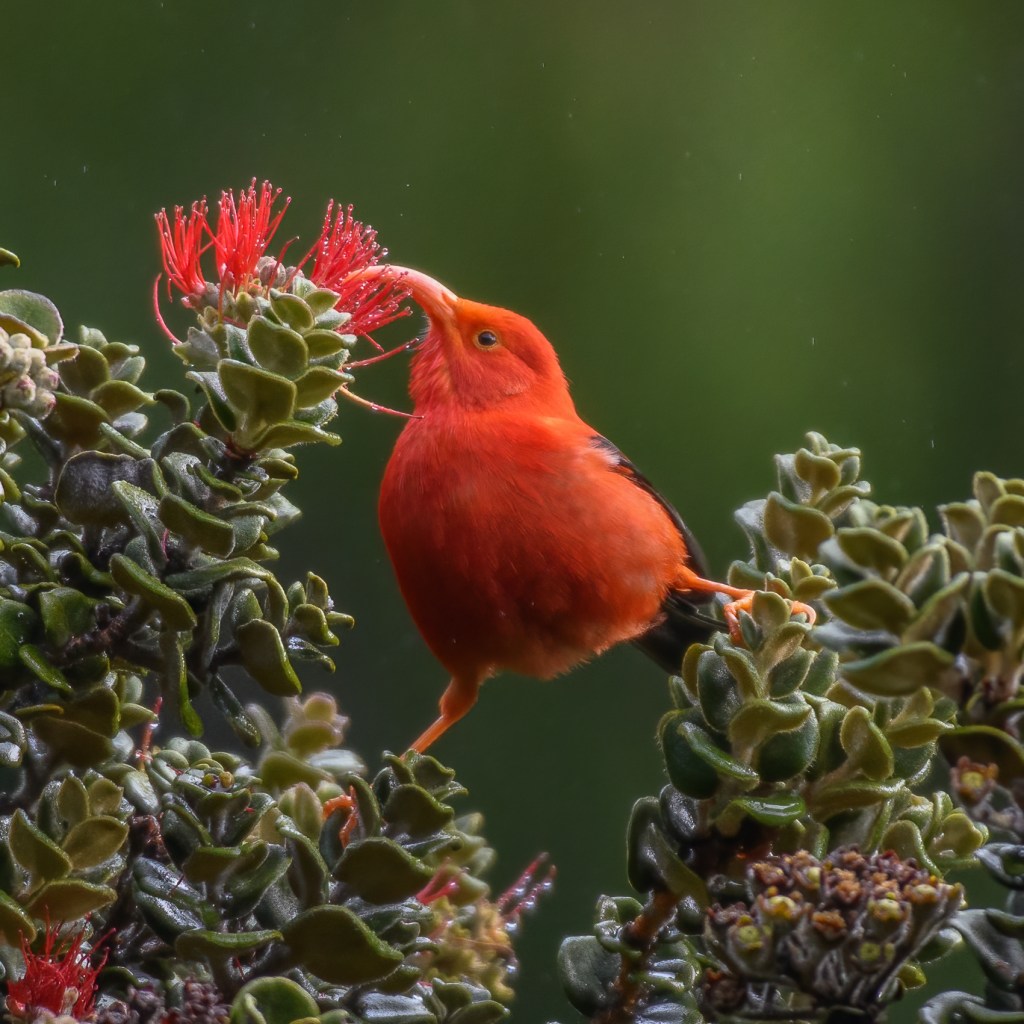
The stakes are nothing short of the survival of an entire avian lineage. Hawaiʻi once boasted 50 to 60 species of honeycreepers; today, only 17 remain, and many are teetering on the edge of extinction. The birds, including the iconic ʻiʻiwi, are being pushed higher into the mountains by rising temperatures, which in turn allow the invasive mosquitos to expand their range. As Civil Beat reported, the situation reached a breaking point last winter on Kauaʻi, where an unexpected population explosion of mosquitos decimated local bird populations, leaving conservationists to watch, in the words of state officials, as birds they had monitored for years effectively fell from the sky.
The Limits of Laboratory Solutions
The incompatible insect technique, which involves releasing male mosquitos infected with a specific bacteria to prevent viable egg production, was never intended to be simple. Yet, the reality of deploying it in rugged, high-altitude terrain proved more difficult than the decade of planning suggested. By March 2025, the coalition quietly hit the pause button. The data was unequivocal: the technique was not suppressing mosquito populations to the 95% threshold required to stop the transmission of avian malaria.
This failure carries a heavy economic and human cost. Over the last two years, the project served as an unexpected economic engine, creating more than 30 full-time and seasonal positions focused on drone operation, helicopter logistics, and community outreach. When the data failed to justify the high cost of transporting lab-bred insects from California, the coalition had to confront the reality that the “big swing” was not landing. The shift now moves toward using bacillus thuringiensis serovar israelensis, or BTI, a biological larvicide that is widely used in agriculture.

While BTI is more cost-effective, it is also significantly heavier to transport. Unlike the self-spreading male mosquitos, BTI must be applied directly to standing water where larvae develop. This shift changes the daily lives of those on the ground. As the American Bird Conservancy’s Chris Farmer noted, the transition from releasing insects to manually covering thousands of acres with a liquid payload requires a massive increase in human labor and potentially new, heavy-duty drone capabilities that are currently awaiting federal approval.
A Race Against Geography
The geographic reality of the Hawaiian islands complicates every decision. On Kauaʻi, the highest peaks reach only 5,200 feet, leaving the honeycreepers with nowhere left to hide. The situation on Maui, where the mountains reach 10,000 feet, offers a slightly longer window of time, yet the encroachment of the mosquito line remains relentless. The coalition is now looking to expand BTI applications to 1,500 acres on Maui, with an ultimate goal of covering 8,000 acres, though funding remains the most persistent barrier to this expansion.
“We have people out there who have worked with these birds for years, since they were chicks. Watching them literally fall out of the sky in front of them was just excruciating.”
This perspective from David Smith, the former administrator of the state’s Division of Forestry and Wildlife, highlights the emotional toll of a crisis that is increasingly becoming a logistical one. The coalition is now forced to weigh the economic feasibility of scaling BTI against the biological reality of extinction. Even with the pivot to a more established tool, there is no guarantee that the current funding—which only stretches through 2027—will be enough to maintain the scale of operations required to keep the remaining honeycreepers alive.

As the coalition looks toward the upcoming winter, they are not just fighting the mosquitos; they are fighting the clock. The transition to BTI is a pragmatic retreat from a high-tech dream, but it remains to be seen whether a labor-intensive, landscape-level application can be sustained in the remote, steep forests where these birds make their final stand. The question is no longer whether we have the tools to save them, but whether we have the capacity to use them effectively before the remaining species disappear from the wild entirely.
Worth a look

Southeastern Oklahoma State Honors Top Ten Freshmen Students
Southeastern Oklahoma State University honors the 2025-26 Top Ten Freshmen Southeastern Oklahoma State University held a ceremony and...

Carolyn Jane Norman, 80, Beloved Mother and Community Supporter
Carolyn Jane Norman passes away at age 80 Carolyn Jane Norman, a long-time resident of East Grand Forks,...

NYCFC and D.C. United Face Season Finale Amid Injury Struggles
New York City FC and D.C. United are both mathematically eliminated from the MLS postseason, setting the stage...

Ohio University graduate Michael Whittemore releases Ecology book
Michael Whittemore bridges ecological science and professional practice Michael Whittemore is currently managing a multifaceted career that spans...