
Trade Expo Indonesia Closes with $22.94 Billion in Potential Transactions
The 41st Trade Expo Indonesia (TEI) concluded its five-day run at the Indonesia Convention Exhibition (ICE) BSD City in Jakarta on October 18, 2026, recording a significant surge in commercial interest. According to ANTARA News, the event generated US$ 22.94 billion in potential transactions, a figure that eclipsed the government’s initial target of US$ 17.5 billion by 31.1 percent.
This massive volume of trade interest was captured across 426 memoranda of understanding (MoUs). The exhibition, which serves as Indonesia’s primary platform for connecting local exporters with international markets, saw participation from 1,873 exhibitors—well above the 1,500-company target. Data reports that 9,600 registered buyers from 151 countries attended the event, while the exhibition recorded more than 45,287 visitors, marking a 31.08 percent increase in visitor numbers compared to the previous year.
International Buyers Prioritize Indonesian Exports
The reach of the exhibition was truly international, with a diverse set of trading partners showing strong interest in Indonesian goods. The five countries with the highest potential transaction values were India, the Netherlands, Bangladesh, the United Arab Emirates, and Japan. When measured by the total number of registered buyers, the rankings for the five trading partners with the largest participation were India, Malaysia, mainland China, Saudi Arabia, and the Taiwan region.
The trade interest focused heavily on specific sectors. High-value categories identified during the event included:
- Food and beverages
- Jewelry
- Wood products
- Agricultural products
- Paper
Beyond these large-scale deals, the expo also acted as a catalyst for smaller economic segments. The Pangan Nusa Expo, held concurrently at the same venue, contributed US$ 327.7 million to the total transaction value. Micro, small, and medium enterprises (MSMEs) represented US$510.79 million in potential deals.
Strategy for Converting Potential to Contract
Minister of Trade Budi Santoso emphasized that the government views these figures as a starting point rather than a final outcome. The Ministry of Trade has outlined an integrated, three-stage strategy to ensure that these potential transactions transition into binding, long-term trade contracts. This process involves pre-exhibition business matching, on-site engagement, and a post-event monitoring phase managed by Indonesian trade representatives stationed abroad.
“We do not stop at organizing the exhibition. The Ministry of Trade, together with trade representatives abroad, will continue to monitor and follow up on agreements established during TEI. We hope these agreements can develop into trade contracts and make a tangible contribution to Indonesia’s export performance,” said Minister Budi Santoso.
Cultivating the Next Generation of Exporters
A notable feature of the 2026 expo was the “Campuspreneur” program, an initiative designed to integrate university students into the global trade ecosystem. Collaborating with 25 universities, the Ministry of Trade provided export training and mentoring to students. Participants from 20 of these institutions showcased innovative products, resulting in over US$ 24.57 million in potential transactions during their own pitching and business matching sessions.
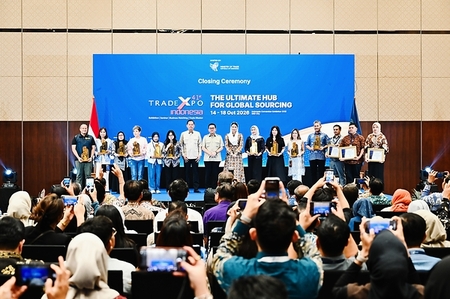
While the event boasted growth, the ultimate success of the 41st TEI will be determined by the Ministry’s ability to continue to monitor and follow up on agreements to ensure they develop into trade contracts. The follow-up phase remains the critical “so what” for the Indonesian economy; without the conversion of these 426 MoUs into actual shipping containers and finalized payments, the US$ 22.94 billion figure remains a metric of intent rather than realized economic growth.
Looking ahead, the Ministry has already set the dates for the next gathering. The 42nd Trade Expo Indonesia was scheduled to take place from October 13–17, 2027. Minister Budi Santoso urged all participants to keep the momentum alive, stating, “Let us maintain this momentum by continuously improving product quality and competitiveness, expanding partnerships, and ensuring that the opportunities opened can generate sustainable exports.”
Keep reading
The Journal: 2016–2026—a decade of crisis framed by Bowie’s death and Trump’s return
The Decade That Broke the American Psyche: Why 2016–2026 Feels Like a Horror Film For Americans weary of...

Benedict Oramah Says Africa should keep reserves on the continent
What was billed as a routine anniversary lecture turned into a direct challenge to the global financial order....

Democrats win both US chambers in 2024 midterms; Trump accepts defeat, warns of veto power
Democrats won control of both the US Senate and the House of Representatives on Tuesday in a midterm...
China Eyes Southeast Asia’s nuclear sector amid trust Gaps
China Eyes Southeast Asia's Nuclear Future, but Trust Gaps Remain China is poised to break into Southeast Asia's...