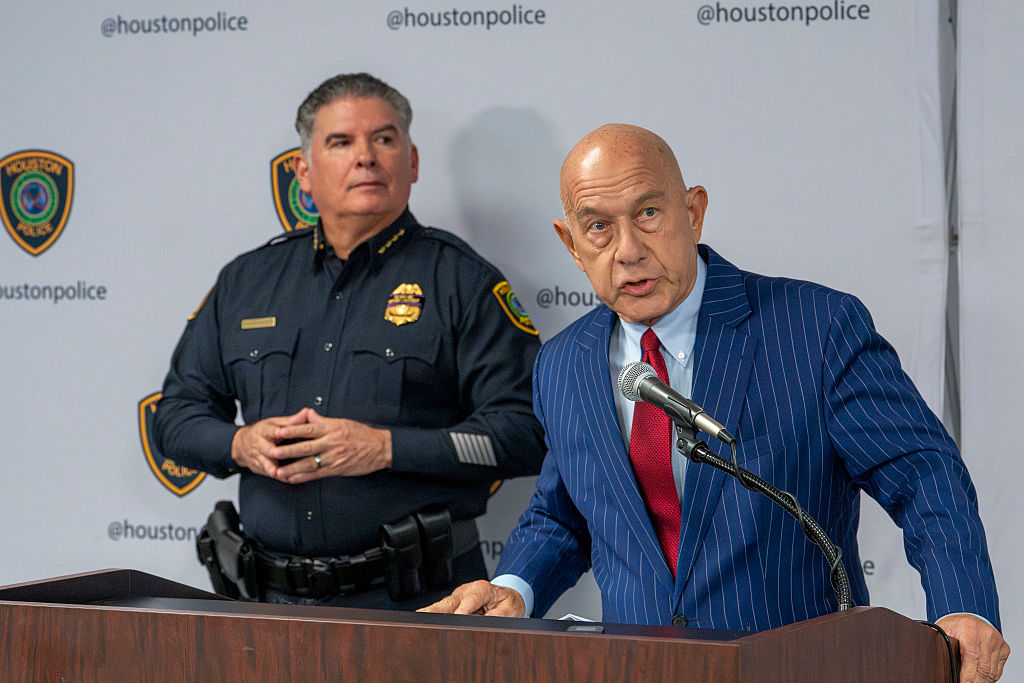
Houston Police Department Limits ICE Interaction Under New Directive
“I was on the Senate floor when SB 4 was approved. I voted against it. I voted no because we were concerned about the fear, the anxiety that it would create.”
With those words, Houston John Whitmire announced a significant shift in how the Houston Police Department handles contact with federal immigration authorities. During a surprise news conference held Friday, Whitmire, alongside HPD Chief J. Noe Diaz, detailed a new policy that restricts the circumstances under which city officers will cooperate with U.S. Immigration and Customs Enforcement (ICE).
Under the new order, Houston police officers will only initiate contact with ICE if an individual is suspected of committing a jailable offense. This policy adjustment arrives at a time when the relationship between local law enforcement and federal immigration agencies has been under intense scrutiny in Texas, particularly following the implementation of Senate Bill 4, which aimed to increase state-level enforcement of immigration laws.
Balancing Public Safety and Community Trust
The mayor framed the decision as a necessary step to stabilize the city’s social climate. Whitmire noted that while Houston has faced challenges, it has managed to avoid the level of turmoil seen in other jurisdictions where the National Guard has been deployed to assist with immigration enforcement. By narrowing the scope of HPD’s cooperation, the administration aims to mitigate the pervasive fear and anxiety that have permeated many Houston neighborhoods.
Chron reported that the decision comes in the wake of several high-profile incidents involving ICE agents in Houston. These include a fatal shooting of a man during a traffic stop and a separate incident where a man was hospitalized after being struck by an ICE vehicle. These events heightened local tensions, prompting calls for a clearer delineation between city police duties and federal immigration enforcement.
“I believe this will be the model for Texas cities. It’s been a challenge, but we’ve done it. It’ll reduce the fear and anxiety and not just in some of our communities but all across Houston,” Whitmire stated during the press conference.
Political Stakes and State-Level Pressure
The timing of the policy change is particularly notable given the current political landscape in Texas. While Republicans continue to hold control of the state Legislature for the next two months, Whitmire signaled his intent to maintain the new policy despite potential pushback from federal or state officials. He acknowledged the risks inherent in his position but emphasized that his primary responsibility is to the city’s budget and the safety of its residents.
“It’s easy for critics to say fight them back, when they don’t have to pass a city budget,” Whitmire said. “Elections matter.”
Whitmire also pointed to his deep-rooted connections within the Texas political establishment as a potential asset in navigating this transition. He highlighted his long-standing relationship with Senfronia Thompson, who is currently in the running for Texas House speaker. Their professional history dates back to 1973, when both served as freshman lawmakers. By leveraging these established channels, the mayor hopes to manage the expected scrutiny from state leaders.
The Practical Impact on Houston Residents
For the average Houstonian, the practical effect of this policy is a shift in the standard operating procedure for routine police encounters. By decoupling local policing from federal immigration enforcement except in cases involving jailable offenses, the city is effectively limiting the reach of federal immigration agents within the local criminal justice system. The administration argues this will encourage victims and witnesses to come forward to the police without the fear of deportation, a long-standing concern raised by community advocates.

However, the move is not without its detractors. Critics of such policies often argue that limiting cooperation with federal authorities undermines the rule of law and creates “sanctuary” environments that hinder federal immigration enforcement efforts. By proactively taking responsibility for the decision, Whitmire is positioning the city to withstand these arguments, framing the policy as a pragmatic choice for a city as diverse and complex as Houston.
“I will take that responsibility,” Whitmire said when asked about potential federal pushback. “I am doing what’s in Houston’s best interest. I understand there’s risk. I wouldn’t be surprised if I get some calls. The reason I’m here is because I care about Houston. I will take that risk and I know I’m doing right.”
Earlier coverage: Houston Mayor Whitmire will limit city's cooperation with ICE
Related reading

Hughes Provides Full-Service Staffing and Recruiting Across Wisconsin
As the Wisconsin labor market shifts to meet the demands of an evolving industrial landscape, Hughes is scaling...

One Injured, One Detained After Shooting at Chippenham Hospital
Shooting in Chippenham Hospital parking lot leaves one injured A shooting incident in the parking lot of Chippenham...

Star Valley Braves Host Lander Tigers in 3A Semifinals
Star Valley Braves Host Lander Tigers in 3A Semifinal Showdown The path to the Wyoming 3A state championship...

Obituary: Valarie Val M. Matushak, 96, Wausau, WI
A Life Defined by Resilience: Remembering Valarie Matushak Valarie "Val" M. Matushak, a woman whose life spanned the...