
President Donald Trump is approaching the midpoint of his second term following a major electoral defeat that cost Republicans control of both chambers of Congress, Jakarta Globe reported.
Changing politics in Washington has prompted calls within Indonesia to reassess its bilateral relationship with the United States. For years, Jakarta has operated from a position of significant concession to mitigate trade pressures from the Trump administration.
The stakes for Indonesia are both fiscal and structural. To reduce tariffs from 32% in April 2025 to 19% in February 2026, the Indonesian government agreed to eliminate tariff barriers on more than 99% of US goods across all sectors. Jakarta also exempted US companies and US-origin goods from local content requirements and committed to massive procurement deals, including approximately $15 billion in annual energy commodity purchases and $13.5 billion for 50 Boeing commercial aircraft.
With the Republican Party losing its grip on Congress, analysts suggest the Indonesian government now possesses more room for diplomatic maneuver.
“Jakarta should move away from being overly accommodating and focus on a more practical, transactional strategy rooted in its traditional ‘free and active’ foreign policy and national interests,” said Didin Nasirudin, a doctoral candidate in diplomacy specializing in US politics.
Nasirudin said that Trump has effectively become a lame-duck president, facing a legislative agenda hindered by Democratic control and an administration vulnerable to congressional investigations and increased scrutiny of presidential appointments starting in January.
The limits of political recalibration
While the change in congressional leadership offers a window for a new strategy, experts warn that the fundamental nature of US trade policy may not transform overnight. Trump is scheduled to remain in office until January 2029, and his executive authority over trade and foreign policy remains intact.
Imam Pambagyo, a former director general of international trade negotiations at the Trade Ministry, suggested that Indonesia must transition from accommodation to strategic engagement. However, he cautioned that a Democratic victory does not guarantee more favorable trade terms.
Recent regulatory shifts illustrate the complexities of the current trade environment. After the US Supreme Court struck down earlier emergency tariffs in February, the White House implemented a temporary 10% global baseline tariff limited to 150 days. Indonesia has also faced a 10% tariff linked to forced-labor allegations that took effect in July.
Despite these pressures, Jakarta has not yet signaled an intent to revisit the concessions made during the height of the previous tariff disputes. The economic reliance on the US remains high, particularly in the energy sector.
| Category | Value/Statistic |
|---|---|
| Annual US energy commodity commitment | $15 billion |
| Boeing aircraft procurement value | $13.5 billion |
| US share of Indonesia’s LPG imports | 70% |
| Total Indonesian LPG imports | 7.8 million tons |
“Indonesia has made various commitments but has yet to receive comparable assurances from the US regarding market access and tariff certainty,” Imam told Jakarta Globe.
Securing the energy supply chain
The push for a more “transactional” relationship must also contend with Indonesia’s domestic energy vulnerabilities. The nation consumes roughly 1.7 million barrels of petroleum liquids daily, yet domestic oil lifting sits at only around 600,000 barrels per day.
This massive gap necessitates heavy reliance on imports, making energy security a matter of national stability rather than just political preference. Damon Evans, a Singapore-based senior reporter for Energy Intelligence, suggested that the current geopolitical climate may actually favor strengthening ties with the US to ensure supply reliability.
Evans argued that diversifying toward the US makes strategic sense given the persistent uncertainties surrounding the Strait of Hormuz. He suggested that rather than viewing energy purchases as a political concession, Indonesia could use the relationship to address structural weaknesses in its own industry.
“There may also be opportunities to broaden cooperation with the US beyond purchasing energy commodities, particularly by encouraging American investment and technical expertise in Indonesia’s upstream oil and gas sector and refining industry,” Evans said.
The challenge for Jakarta lies in whether it can use its massive purchasing power to build domestic capacity rather than simply maintaining a cycle of dependence. As the political tides in Washington turn, the question remains whether Indonesia can pivot from a position of vulnerability to one of strategic partnership.
Keep reading
- Study Shows Stable Motor Function for 13 Weeks in ALS Cell Therapy Trial
- Giant Cervicomediastinal Thyroglossal Duct Cyst Mimicking a Parathyroid Cyst: A Case Report
- Trump Netanyahu clash over Iran strikes in heated phone call (newsarchyuk.com)
- Nvidia’s Jensen Huang Faces Board Meeting Over Affair and Spy Reports (world-today-news.com)

Study Shows Stable Motor Function for 13 Weeks in ALS Cell Therapy Trial
Motor function scores remained stable for 13 weeks in a small group of patients receiving bone marrow-derived cell...
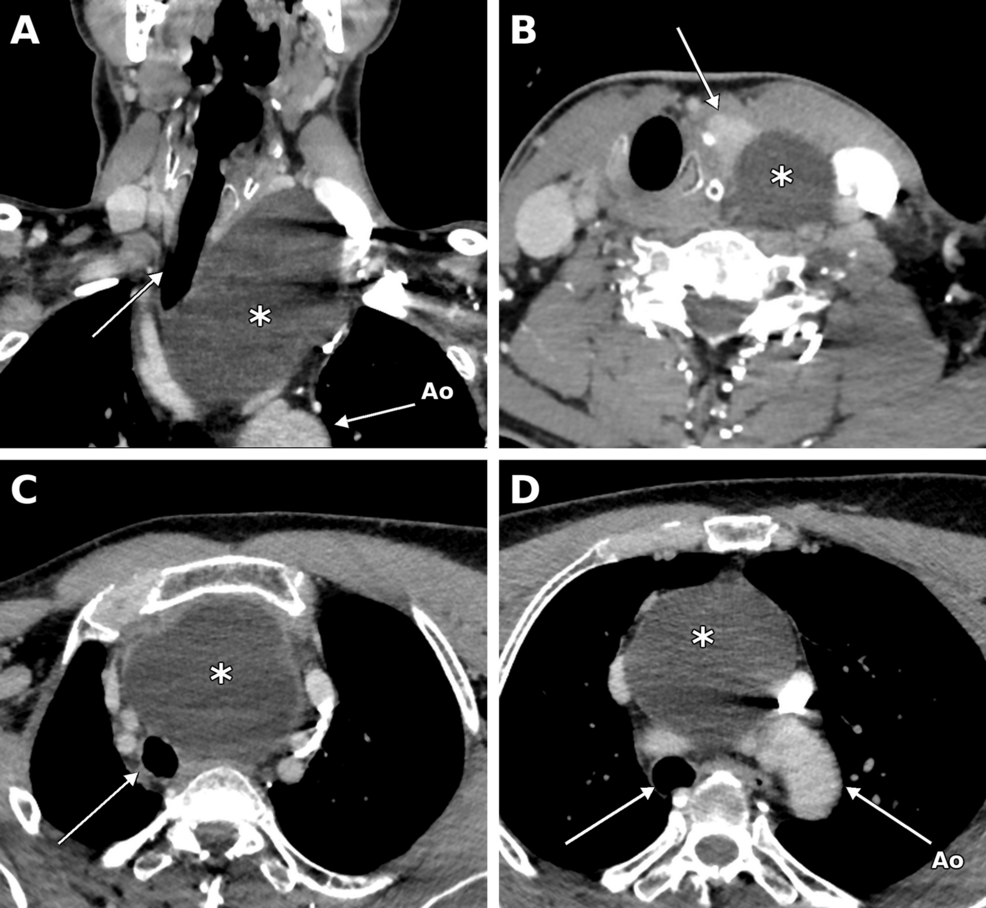
Giant Cervicomediastinal Thyroglossal Duct Cyst Mimicking a Parathyroid Cyst: A Case Report
An 11-centimeter cyst, stretching from the neck down to the aortic arch, was successfully removed from a 59-year-old...

Rare MYOF Genetic Variant Linked to Angioedema With Normal C1-INH Levels
A rare genetic variant in the MYOF gene may explain why a 51-year-old woman suffered from recurring angioedema...

Educators and Students Rally Against Pax Silica Initiative
Teachers, professors, and students gathered at the Bantayog ng mga Bayani in Quezon City on Thursday to voice...