
“The next two years must be about moving beyond dialogue towards tangible outcomes,” said Renard Siew, President of the Malaysia Carbon Market Association (MCMA), which chaired the framework for its first 18 months.
Private sector groups in Southeast Asia are renewing their push to unify national carbon markets, according to a report by Eco-Business.
The initiative aims to align regional markets so that carbon credits issued in one country can be sold in another, addressing a bottleneck that currently limits the pool of buyers available to project developers. While the framework was signed by industry associations rather than sovereign governments, it seeks to provide the interoperability necessary for a liquid regional market.
The signatories include the Asean Alliance on Carbon Markets, the Indonesia Carbon Trade Association, the Malaysia Carbon Market Association (MCMA), the Singapore Sustainable Finance Association (SSFA), and the Thailand Carbon Markets Club. The Aboitiz Foundation, representing the Philippine conglomerate Aboitiz Group, has joined the group as an observer, marking the framework’s first participant from the Philippines.
Bridging the Gap Between Private Interest and State Law
The current architecture of Asean carbon trading remains split along national lines. An April report by RHB Investment Bank said that this fragmentation restricts the scale of individual projects. To combat this, the signatory groups are seeking clarity on how law treats verified carbon credits and are working to lower the barriers that prevent cross-border trading.
The groups are also developing guidance for corporate carbon credit usage and a due diligence framework to assist lenders in financing carbon-related projects. All five signatories have aligned themselves with the Shared Principles of the Coalition to Grow Carbon Markets, a government-led initiative co-chaired by Kenya, Singapore, and the United Kingdom that was launched at COP30 in November 2025.
“As chair, SSFA will work closely with the Singapore government, which takes on the Asean Chairmanship in 2027, to complement its market-building efforts from the private sector side,” said Oi-Yee Choo, Co-Chair of the framework and Chief Executive of Climate Impact X.
The movement toward standardization has roots in a July 2024 proposal by Malaysia’s natural resources minister. Following that push, the original memorandum was signed by the five associations at COP29 in Baku. While the groups had previously intended to launch pilot projects covering peatland, forest conservation, blue carbon, and carbon capture at COP30, a recent statement did not mention these pilots, despite May reports suggesting they remained a priority.
The Economic Stakes of Regional Interoperability
The push for a unified market coincides with broader economic shifts in the region. The Jakarta Post notes that Asean, with a combined GDP of approximately US$4.3 trillion in 2025, is a critical custodian of global natural assets, holding 25 percent of the world’s known plant and animal species and roughly 27 million hectares of peatlands.
The scale of the opportunity is matched by the scale of the risk. The region is among the most climate-vulnerable globally, facing intensifying floods, droughts, and rising sea levels. To manage these threats, Asean member states are utilizing the ASEAN Peatland Management Strategy 2023–2030 and the ASEAN Biodiversity Plan 2024–2030 to protect carbon-rich ecosystems.
The goals of the private-sector framework mirror those of the official Asean Economic Community Strategic Plan 2026–2030. This economic blueprint, adopted last year, commits member states to promoting common recognition and interoperability among regional carbon markets. In July, Asean foreign ministers supported this objective in a joint communiqué, calling for the mutual recognition of high-quality carbon credits where appropriate.
Singapore is currently a primary driver of these cross-border links through bilateral agreements under Article 6 of the Paris Agreement. By June 2026, Singapore had secured 11 such agreements, including with the Philippines and Vietnam. Under these terms, companies can use transferred credits to offset up to 5 percent of their taxable emissions under Singapore’s carbon tax.
Diplomatic Momentum at COP31
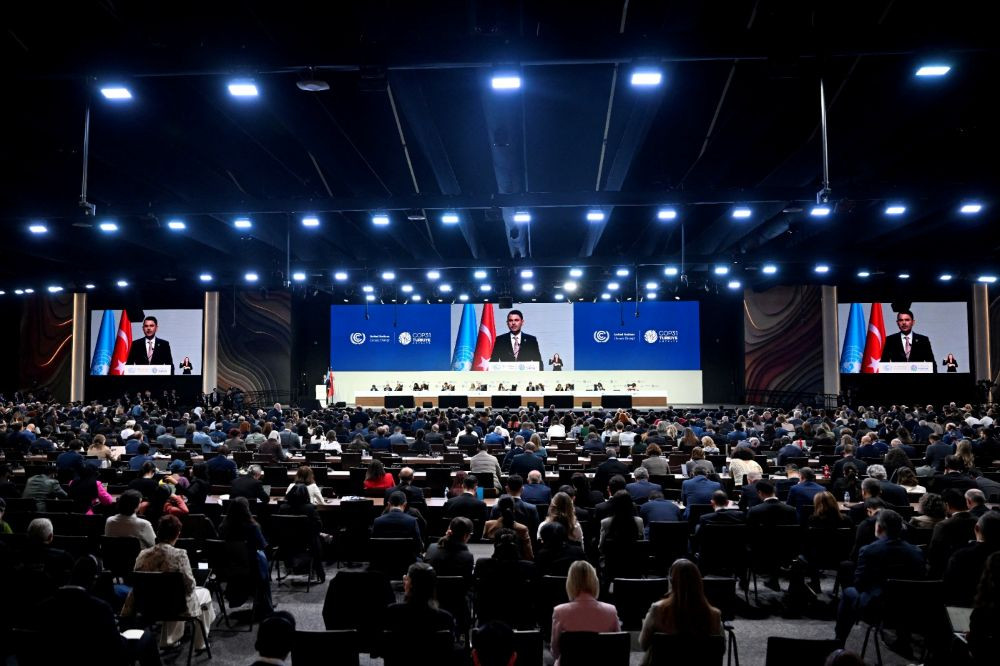
The regional effort is receiving high-level diplomatic attention during the UNFCCC COP31 in Antalya, Türkiye. Dr. Kao Kim Hourn, the Secretary-General of ASEAN, delivered a video message at the ASEAN-EU High-level Session, highlighting shared priorities such as carbon pricing and nature-based solutions, according to the ASEAN Main Portal.
As the Philippines prepares to hand over the Asean chairmanship to Singapore on January 1, the focus on carbon markets is expected to intensify. Ambassador for Climate Action Ravi Menon indicated in a speech in May that carbon markets are one of three primary areas Singapore intends to prioritize during its chairmanship.
“Cooperation between governments and businesses can build on the region’s carbon market development, strengthening credit quality and interoperability while respecting national priorities,” said Gloyta Nathalang, Chair of the Thailand Carbon Markets Club.
Worth a look

Zelensky and Kushner Say Europe to Join Ukraine-Russia Peace Talks Amid Major Prisoner Exchange Deal
Ukrainian President Volodymyr Zelenskyy and US special envoys Jared Kushner and Steve Witkoff confirmed on Wednesday that European...
Rare Corpse Flower Pete Set to Bloom at Geelong Botanic Gardens
Pete, a giant corpse flower currently standing at 1.5 metres tall, is expected to bloom within the next...

Pete Hegseth Awards Medal to Soldier Who Reprimanded Him at Tomb of the Unknown Soldier
Defense Secretary Pete Hegseth awarded the Joint Service Commendation Medal on Thursday to Specialist Thomas Iglesias, the Army...

Insider: Walliams’ Reputation Was ‘In Plain Sight’ Due to Jokes
Public jokes regarding David Walliams' personal life spanned two decades, according to industry insiders and media archives. The...