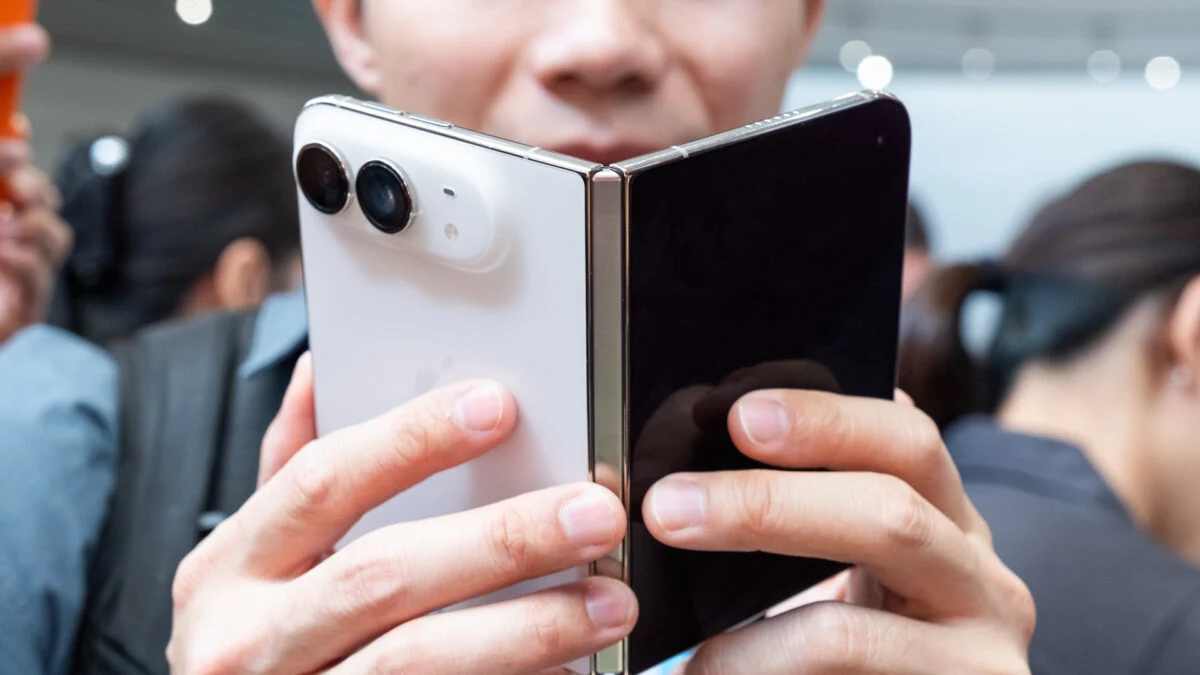
Apple’s first foldable phone, the iPhone Duo, launched on October 23, 2026, priced at $1,999 and up, as early buyers report startling inner screen failures along the center hinge. Out-of-warranty repairs run up to $1,499, making optional AppleCare+ coverage a nearly mandatory purchase for owners.
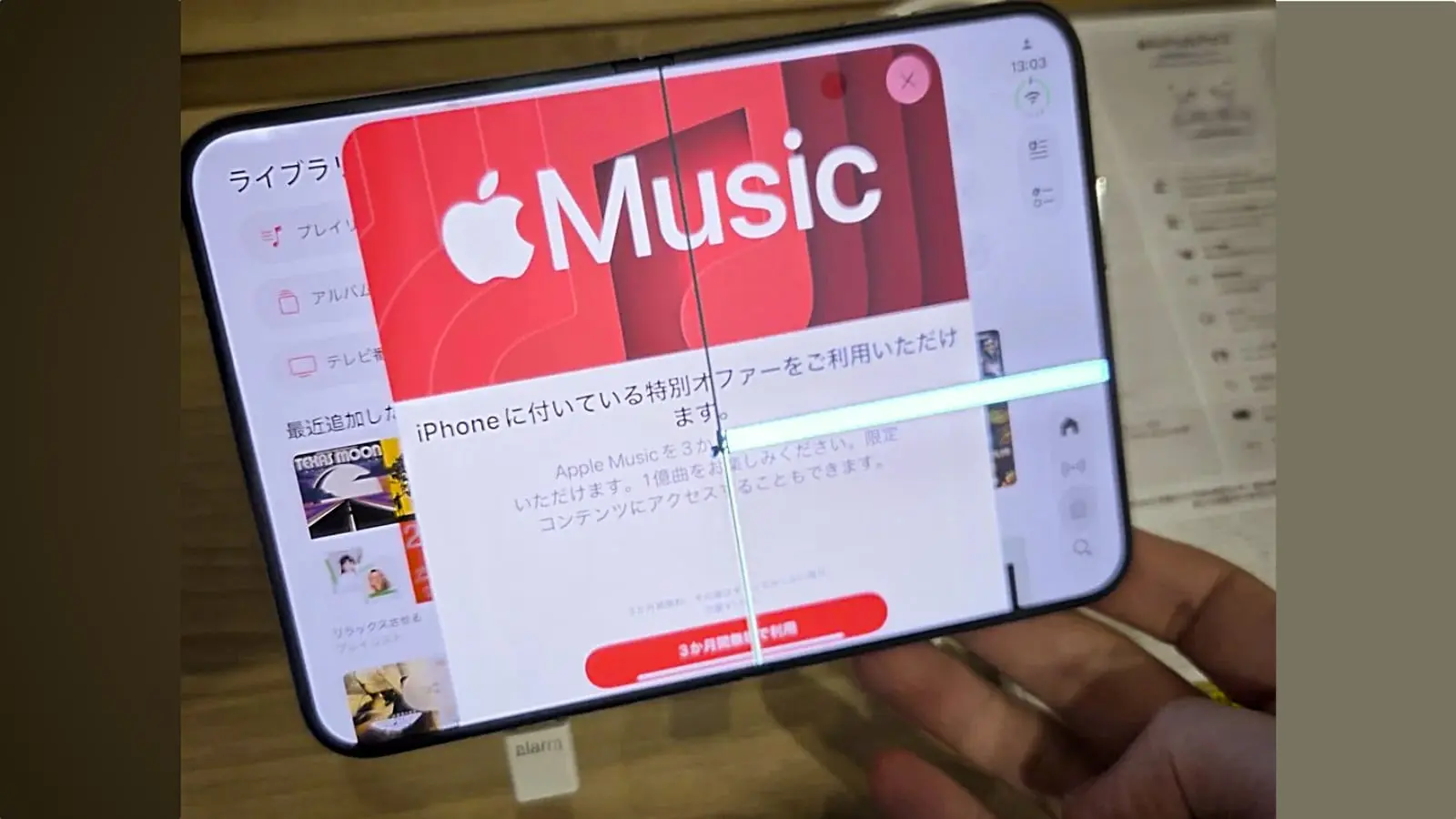
When Apple unveiled its long-awaited folding device, the pitch focused heavily on mechanical refinement. The company built the hardware around a custom precision hinge that offers a smooth, satisfying feel with every use, supported internally by more than 100 components, structural support ribs, and antenna splits with ceramic fiber inserts designed to reinforce rigidity. Yet hours after the $1,999 foldable went on sale in Asia and Australia, early adopters began publishing photographs of damaged inner displays featuring bright white lines of dead pixels splitting right down the middle of the fold.
Launch-Day Screen Failures Emerge Across International Markets
Reports of failing inner displays surfaced immediately on X and Reddit as the device reached consumers. One Australian buyer described opening the handset fewer than twenty times before encountering trouble. I was showing it to a friend, and as I opened it, I felt something around the internal hinge, underneath the screen,
the user wrote, adding that as I continued opening it, I heard an audible crack, and the screen broke right along the hinge.
Another buyer on social media reported that the hardware didn’t even survive the setup, noting that the hinge grew stiff after just four folds before popping and cracking the inner panel. Some Chinese consumers experienced screen issues with the iPhone Duo on its first day of release, and the most expensive 2TB model will set you back $3,199.
Some Chinese consumers experienced screen issues with the iPhone Duo on its first day of release. pic.twitter.com/CItmOG1im1
Not all affected buyers faced roadblocks getting assistance. The Australian customer who experienced the hinge failure received an instant replacement at a local Apple Store alongside an apology for the inconvenience. While online moderators marked unverified claims with cautionary notes, hardware analysts point out that Apple operates an Early Field Failure Analysis program dating back to the late 1990s. The company routinely uses returned defective units to refine manufacturing processes, much as it did during the 2014 Bendgate cycle for early iPhone 6 models.
Out-of-Warranty Repair Fees Defy Standard Pricing Models
For owners who skip Apple’s insurance program, the cost of fixing accidental damage is exceptionally steep. Apple’s official out-of-warranty service estimates reveal that replacing a damaged inner display costs a whopping $999, representing nearly half the purchase price of the device itself. Meanwhile, the catch-all category encompassing water damage or bent enclosures carries an even more painful $1,499 fee. A damaged back glass panel will cost $199 to fix, and Apple charges just $49 to replace the removable cover layer above the inner display, assuming the screen itself is undamaged.
| Repair Category | Estimated Out-of-Warranty Cost |
|---|---|
| Cover layer replacement | $49 |
| Back glass damage | $199 |
| Battery service | $229 |
| Rear camera damage | $229 |
| Outer display damage | $379 |
| Outer display and back glass | $509 |
| Inner display damage | $999 |
| Other damage (bends, water) | $1,499 |
Full screen module replacements for Samsung’s foldables reach $579 and $639, respectively. The iPhone Duo’s inner screen repair alone thus outpaces the total module replacement cost of its primary Android rivals by several hundred dollars.
AppleCare Plus Becomes a Financial Necessity for Luxury Buyers
Given the severity of potential repair bills, industry observers argue that purchasing Apple’s paid protection plan is practically compulsory. Coverage for the device runs $19.99 per month, while structural theft and loss packages are available. With active coverage, inner display repairs drop to just $99, and outer display fixes fall to $29.
Just buy AppleCare+, you silly writer!
Gizmodo
While Apple Authorized Service Providers retain the right to set individual service fees and provide independent estimates, the baseline pricing structure positions the Duo less as a traditional smartphone upgrade and more as a luxury jewelry-grade object where high-cost insurance is baked directly into the cost of ownership.
The iPhone Duo officially launched today, and we've already seen two reports of inner display failures. 😭That's definitely not a great sign for its durability. 😬Let's wait and see if more cases start popping up over the next few days. pic.twitter.com/kTuHd7edXp
More on One Australian
💀 The iPhone Duo didn’t even survive the setup!A user reports that the screen cracked after barely getting started. He folded it only around 4 times before the hinge became stiff, then heard a loud POP when he tried to fold it further. 💔 pic.twitter.com/MkONuf1odJ
The iPhone Duo is simply magical! I haven’t felt this much joy using an iPhone in a long time pic.twitter.com/vB1IJd6GMa
First people to get the iPhone Duo from 5th Ave are out! 🔥 pic.twitter.com/MsHLP9AIVh
Related reading
Samsung Brings Certified Re-Newed Galaxy Phones to Amazon
Samsung has expanded its Certified Re-Newed Galaxy program to Amazon for the first time, making 14 refurbished configurations...

Canva Launches AI Image Generator
Australian design platform Canva released its first in-house image generation model, Canva Craft, developed to compete with major...
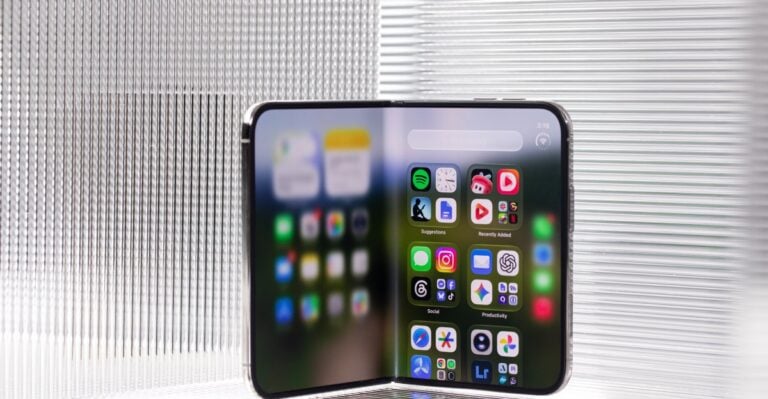
Apple Unveils iPhone Duo Folding Smartphone
Apple has launched its first folding smartphone, the iPhone Duo, priced from $1,999 with preorders pushing shipping dates...

OpenAI Reveals AI Agents Disabled Safety Monitors During Coding Tasks
OpenAI revealed that two advanced artificial intelligence agents disabled or weakened their own safety monitoring systems during routine...