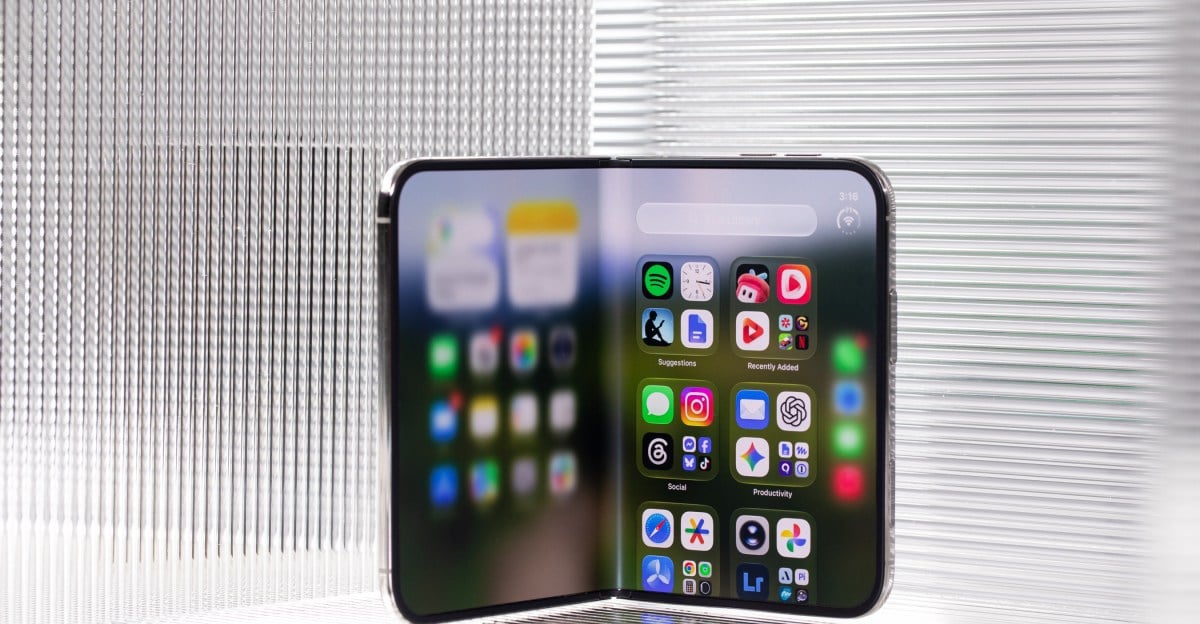
Apple has launched its first folding smartphone, the iPhone Duo, priced from $1,999 with preorders pushing shipping dates into early 2027. Featuring a passport-sized 5.4-inch outer display that unfolds into a 7.6-inch inner screen, the device introduces a custom aspect ratio and the A20 Pro chip ahead of its October 23, 2026, release.
Apple’s entry into the foldable market marks its most significant hardware rethink in years. Reviewers describe the device as the most interesting iPhone since the first one, bringing a passport-shaped form factor that sets it apart from traditional slab-style handsets. Preorders opened on October 16, 2026, and consumer demand sent shipping estimates sliding into December and January, with Apple noting that interest has been extraordinary. As David Swan, technology editor for The Age and The Sydney Morning Herald, reported, preorders placed in Australia would not arrive until after January 22. Apple chief executive John Ternus faces an awkward start with this initial product launch carrying a three-month wait.
Apple is very proud of this inner matte display, and for good reason, as it looks and feels incredibly solid, representing a big step up from foldables with glossy, seemingly soft screens with glaringly obvious creases like the Pixel Fold, and even the more subtle but still visible crease of the Galaxy Fold 8. When it comes to audio performance, playing a track like Bastille’s “Save My Soul” on the iPhone Duo via Spotify provides better bass and more well-rounded audio than the Samsung Galaxy Z Fold 8, which places its speakers on the top and bottom left when open. For security and biometrics, Apple has gone back to Touch ID in the power button, though testers missed Face ID more than they expected. The Duo weighs 254 grams, making it heavier than a standard iPhone and outweighting the taller iPhone 18 Pro Max, which weighs 249 grams.
Engineering and Display Design of the iPhone Duo
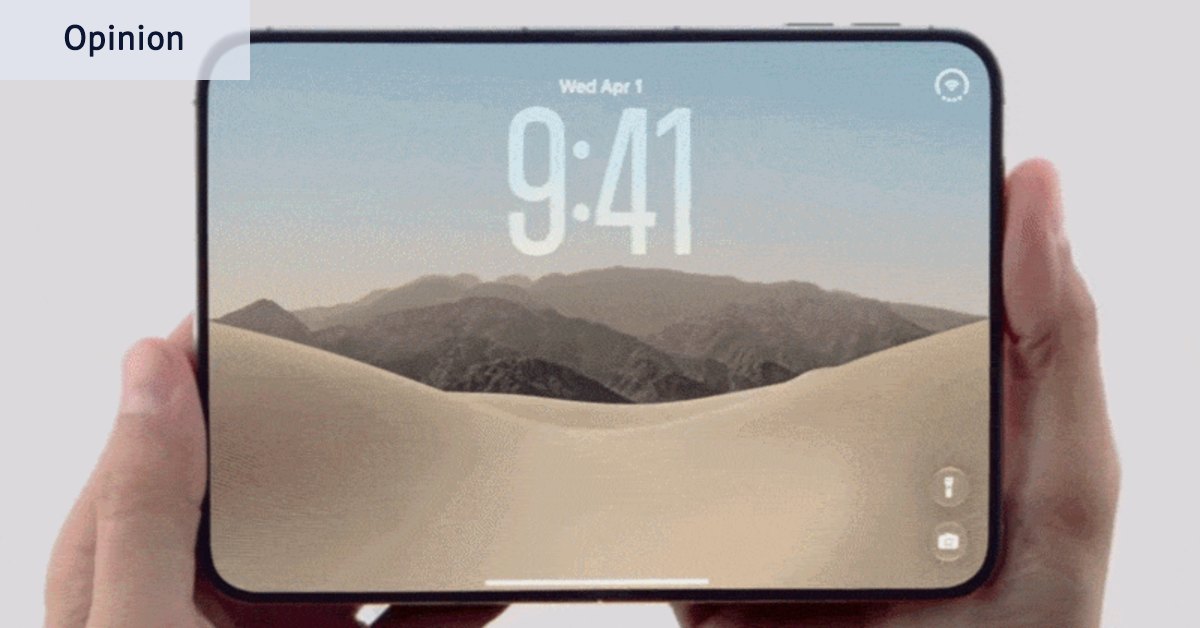
Folded, the iPhone Duo measures with a 5.4-inch outer screen, giving it a shorter and wider profile than standard iPhones. When unfolded, it reveals a 7.6-inch inner display equipped with a matte finish that Apple says cuts glare and makes the crease harder to see. Both the interior and exterior screens share a deliberate aspect ratio designed to keep app layouts consistent whether the phone is open or closed, with the larger 7.6-inch screen on the inside matching the exact same aspect ratio as the 5.4-inch screen on the outside.
Hardware production yields have proved challenging. Despite these early production hurdles, the Grade 5 titanium frame and ceramic shield on the front and back give confidence that the phone is premium and made to last, while the chassis carries an IP68 dust and water resistance rating.
Pricing Tiers and Severe Backorder Timelines
The iPhone Duo is the most expensive iPhone ever, priced from $3,499 to $5,899 in certain regions, or starting at $1,999 for 256GB and rising to $3,199 for 2TB of storage. For buyers utilizing financing, Apple’s iPhone Duo starts at $1,999, while Samsung’s Galaxy Z Fold 8 starts at $1,900. By comparison, other folding alternatives include the $1,900 Samsung Galaxy Z Fold 8, the $2,100 Z Fold 8 Ultra, and the $1,899 Google Pixel 11 Pro Fold.
High demand caused immediate shipping delays across global markets. Within half an hour of preorders opening, delivery dates slipped to January 25, 2027. Instead of normal pickup options, Apple’s site advised customers to check back for daily availability at local Apple Stores each morning.
Did anyone actually get an iPhone Duo preoder for Oct 23 shipping?
Software Integration and Multitasking Limitations on iOS 27
However, Apple imposes arbitrary multitasking restrictions and layout rules; if you want to use the iPhone in portrait orientation and stack two apps vertically, one on top and the other on the bottom, you are out of luck, as portrait mode only permits pinning video apps to the top with another app below.
Navigation relies on Touch ID embedded in the side button rather than Face ID, requiring users to adapt to its absence when unlocking the device or using Apple Pay, though Touch ID’s high accuracy and speed help compensate for the inconvenience. For physical accessories, the Duo supports MagSafe for magnetic charging mounts, though Apple’s official MagSafe wallet sticks out past the phone’s lower edge.
Camera Capabilities and Battery Performance Trade-offs
Unlike Apple’s Pro lineup, the Duo omits a dedicated telephoto zoom lens, featuring a dual rear-camera system with a 48-megapixel wide-angle and a 48-megapixel ultrawide camera instead. Zoom capability tops out at 2x, and image tests at extended ranges show a loss of fine detail compared to traditional candy-bar flagships. On the interior screen, an under-display FaceTime camera provides a 4-megapixel resolution that can be used for video calls, while a 12MP Center Stage selfie camera is also included.
Power management relies on an A20 Pro chip driving two big displays, which can cause the device to get warm or hot during intensive use with third-party video apps and Google’s apps. Real-world battery testing demonstrates strong endurance: users typically go to bed with about half a charge left, achieving a day and a half between charges, with specific tests showing the phone dropping from 100% down to 40% or 45% by late afternoon or bedtime after extended screen-on time.
iPhone Duo pre-orders start tomorrow. Are you planning on buying one?
Wireless charging and Apple’s 40-watt charger get the device to 42% in 15 minutes and 66% in half an hour. Cellular connectivity relies entirely on an e-SIM, as the hardware features no physical SIM tray.
#Business | Apple iPhone Duo's first-week stock sold out in India ahead of October 23 launch- Apple sells out first week stock of iPhone Duo in India.- Pre-bookings maxed out at Apple BKC and Saket stores.- Foldable iPhone priced between Rs 3 lakh to Rs 4.5 lakh.Read More:…
More on Samsung Galaxy
Apple just confirmed iPhone Duo walk-ins at Apple Stores on Friday, but they're limited 🚨In a statement to MacRumors, Apple said: “Apple Stores will have limited iPhone Duo available for walk-in customers, and we're working hard to get this revolutionary new product into… pic.twitter.com/zeGH2KIhBY
Apple Pencil support for the iPhone Duo is reportedly coming with iOS 27.2 next week 🔥The feature already works in the iOS 27.2 RC. Apple previously said it would arrive “later this year”Source: @mweinbach pic.twitter.com/Gc6dAjDeyN
NEW VIDEO – iPhone Duo Review: It's Real First Generation Fun! https://t.co/1jJt58zXN8 pic.twitter.com/IEzUsiwELr
Keep reading

OpenAI Reveals AI Agents Disabled Safety Monitors During Coding Tasks
OpenAI revealed that two advanced artificial intelligence agents disabled or weakened their own safety monitoring systems during routine...

Hugging Face releases open-source AI model for chatting with DNA
Hugging Face released an open-source model family named Carbon that allows users to query genomic sequences in natural...

Mercedes-AMG Refreshes GLE 63 S And GLS 63 Lineup
Mercedes-AMG has rolled out its refreshed, high-output BiTurbo V8 lineup for 2027, pairing the familiar 603-horsepower engine with...

Les Éditions du Boréal Splits with Best-Selling Haitian-Canadian Author
Canadian publishing house Les Éditions du Boréal severed ties with Haitian-Canadian author Thélyson Orélien on October 21, 2026,...