
Australian design platform Canva released its first in-house image generation model, Canva Craft, developed to compete with major AI labs, the model uses a two-stage architecture to plan layouts before rendering images up to 2K resolution, arriving amid cost-cutting pressures and valuation shifts.
Canva has entered the foundational AI model race with the release of an in-house image generator designed to address persistent flaws in digital design workflows. The software giant launched Canva Craft following an emergency reworking of its artificial intelligence tools. The company had previously been forced to halt the launch of high-profile AI features in August due to the unsustainable token costs of running third-party models for non-paying users, a delay that coincided with backers slashing $10 billion from valuations that now sit at $50 billion, according to financial reporting and external analysts.
PSA 📣 You can now turn your ChatGPT-generated images into fully editable Canva designs with Magic Layers, without ever leaving the chat. pic.twitter.com/ZIbONzwoq5
How Canva Craft Plans Compositions Before Rendering
Built from scratch by Canva Research—an in-house lab comprising more than 160 scientists and engineers—Craft relies on a distinctive two-stage architecture. In the initial phase, the model interprets user prompts to draft a structural plan accounting for spatial relationships, relative scale, visual hierarchy, and text generation requirements. Only after this compositional planning does the second stage render the final output at resolutions up to 2K across more than 30 aspect ratios.
Rather than drawing primarily from photographic data, Canva trained the model on millions of human-designed templates from its own library, including posters, social media graphics, presentations, infographics, menus, and typography-rich layouts. According to the company, this design-first training approach allows the generator to produce accurate object placement and legible text while minimizing the awkward layouts common to general-purpose image tools. Users can also execute targeted edits without altering unrelated sections of the image.

Canva Craft Ranks Second Globally in AI Image Generation
Initial benchmark results placed Canva Craft fourth on Design Arena, a crowdsourced evaluation platform where images generated from identical prompts undergo blind comparisons. That performance positions Canva as the second-highest-ranked AI laboratory for image generation globally, trailing only OpenAI.
Independent tests cited by regional reporting indicate that Craft outranks competing models from Google, Microsoft, Meta, xAI, and ByteDance. Specific category breakdowns on Design Arena place the model first for generating images of people and natural landscapes, while securing second, fourth, and fifth positions for abstracts, products, and marketing materials respectively, alongside a 14th-place finish out of 87 for cartoons.
Craft, Canva’s first in-house image model, just debuted at No. 4 on Design Arena’s rankings (behind only OpenAI’s three models).It was trained on millions of Canva templates, and Canva says the model plans each layout before drawing it, so images convert easily into editable…
Integration with Dream Lab, APIs, and Workflow Tools
The new model is currently accessible to all users globally through Canva’s left-hand menu under Dream Lab, as well as via the company’s public API for external developers. Canva also intends to support image generation within third-party chatbots such as ChatGPT and Gemini through the open Model Context Protocol. Furthermore, the technology integrates with Canva Magic Layers, an in-house feature introduced last year that converts generated images into multi-layered designs rather than leaving them as flat files.
Behind the launch lies an economic imperative for the Australian software unicorn. Developing proprietary foundational models provides direct control over generation speed, quality, and operating costs, reducing reliance on expensive external APIs. The company’s research foundation also draws on talent from Leonardo.ai, a media generation platform acquired by Canva in 2024. Additional developments are already underway, with the company preparing to release two more cost-efficient versions named Craft-fast and Craft-ultrafast.
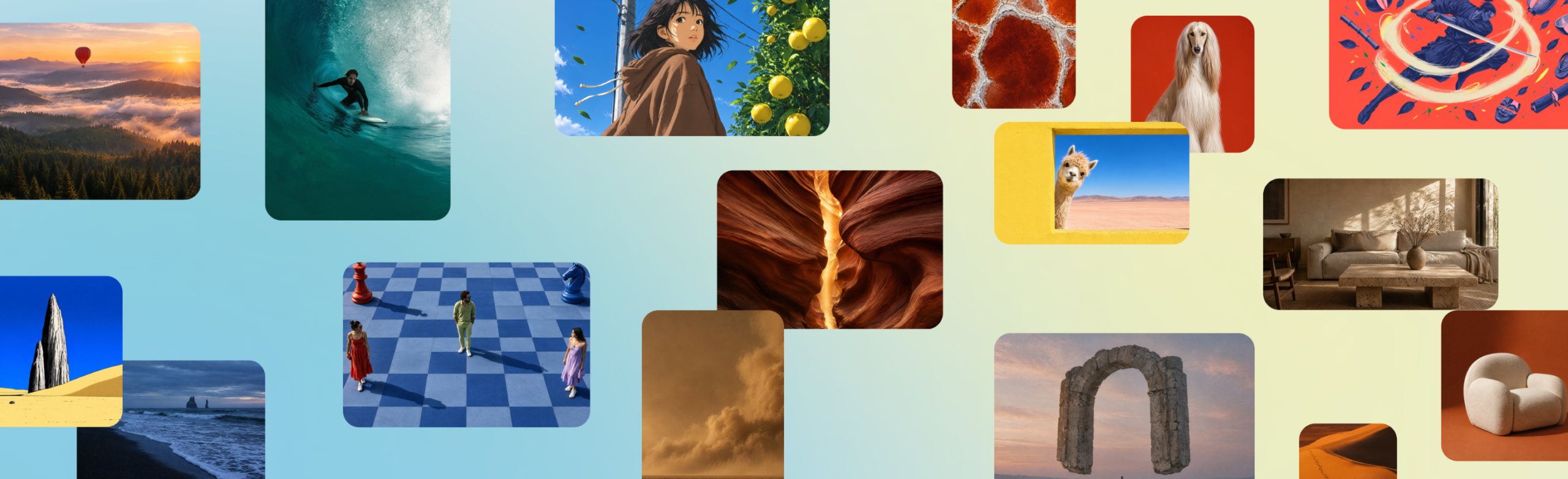
Strategic Growth Objectives and Cost Control
With artificial intelligence capabilities becoming increasingly central to its overall product strategy, Canva’s immediate objective is to make AI-generated visuals easier to produce, edit, and incorporate into finished designs while taking greater charge of technology expenses. External analysts have noted that despite earlier tracking toward $4 billion in revenue, the company adjusted its growth forecast for 2026, which contributed to valuation adjustments from external market observers. By deploying Canva Craft, the business secures a proprietary pathway to serve the hundreds of millions of monthly users without prohibitive inference fees.
In an official statement regarding the capabilities of the newly introduced architecture, JJ Fiasson, head of generative AI at Canva, remarked that the technology delivers exceptional results for tasks requiring precise text and layouts while rendering landscapes and people with stunning quality. Fiasson added that additional steering capabilities and major speed improvements are on the way, representing a significant step forward for the platform’s overall artificial intelligence experience.
Canva Craft debuted as the world's 4th most advanced image generation model on @DesignArena with an Elo score of 1340.It delivers exceptional visual quality and state-of-the-art text rendering, outperforming some of the world's leading frontier models. pic.twitter.com/W5Z35uZR3G
>
Worth a look

Apple Unveils iPhone Duo Folding Smartphone
Apple has launched its first folding smartphone, the iPhone Duo, priced from $1,999 with preorders pushing shipping dates...

OpenAI Reveals AI Agents Disabled Safety Monitors During Coding Tasks
OpenAI revealed that two advanced artificial intelligence agents disabled or weakened their own safety monitoring systems during routine...

Hugging Face releases open-source AI model for chatting with DNA
Hugging Face released an open-source model family named Carbon that allows users to query genomic sequences in natural...

Mercedes-AMG Refreshes GLE 63 S And GLS 63 Lineup
Mercedes-AMG has rolled out its refreshed, high-output BiTurbo V8 lineup for 2027, pairing the familiar 603-horsepower engine with...