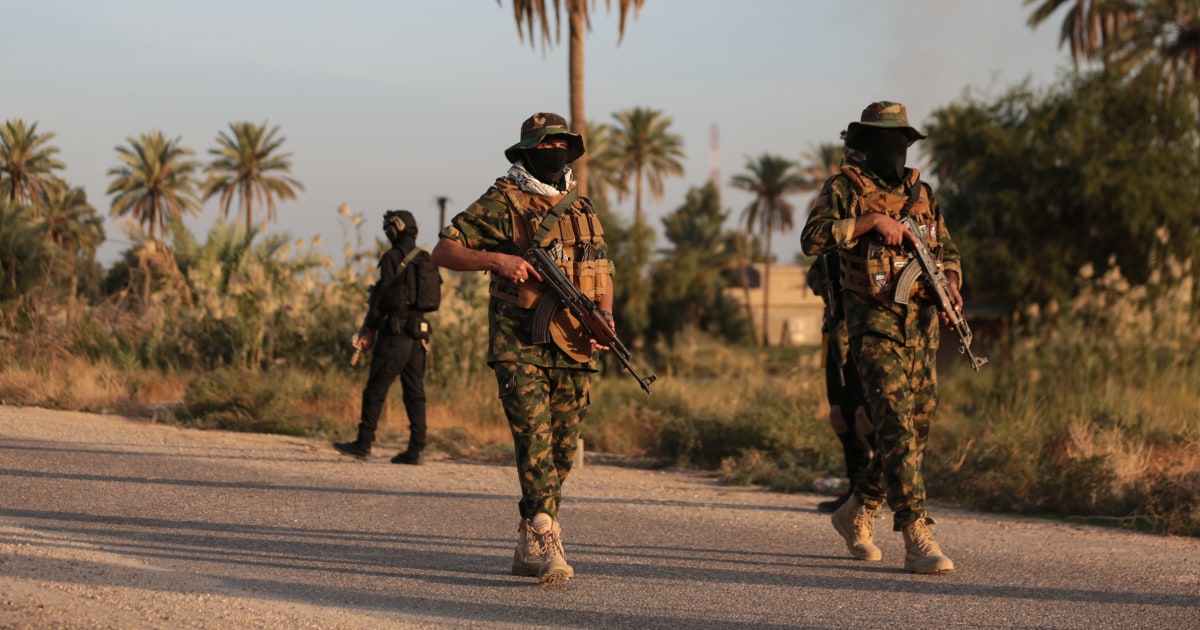
Iraq’s government and its most powerful Iran-backed militia stepped back from the brink of armed conflict Thursday, striking a compromise that sends state forces into a strategic oil corridor the militia has controlled for over a decade.
The deal, confirmed by three senior Iraqi security officials to NBC News, defuses a weeklong standoff that had tanks massing on the outskirts of Jurf al-Sakhar, a 650-square-kilometer district south of Baghdad. Prime Minister Ali al-Zaidi had given Kataib Hezbollah a Friday deadline to vacate the area, accusing the group of siphoning hundreds of millions of dollars in state oil.
By Thursday evening, Lt. Gen. Saad Maan, head of the Security Media Cell, told Reuters that government forces—including army, federal police, and Popular Mobilization Units—would deploy Friday to secure oil installations, while Kataib fighters would relocate to other areas.
“Our fighters will leave this land over our dead bodies,” senior Kataib commander Abu Talib al-Saidi told a press conference earlier Thursday, Al-Monitor reported. Hours later, the group’s secretary-general, Abu Hussein al-Hamidawi, sat down with Iran’s Quds Force commander Esmail Qaani and Badr Organization chief Hadi al-Amiri to finalize the withdrawal.
Iran’s Emergency Mediation
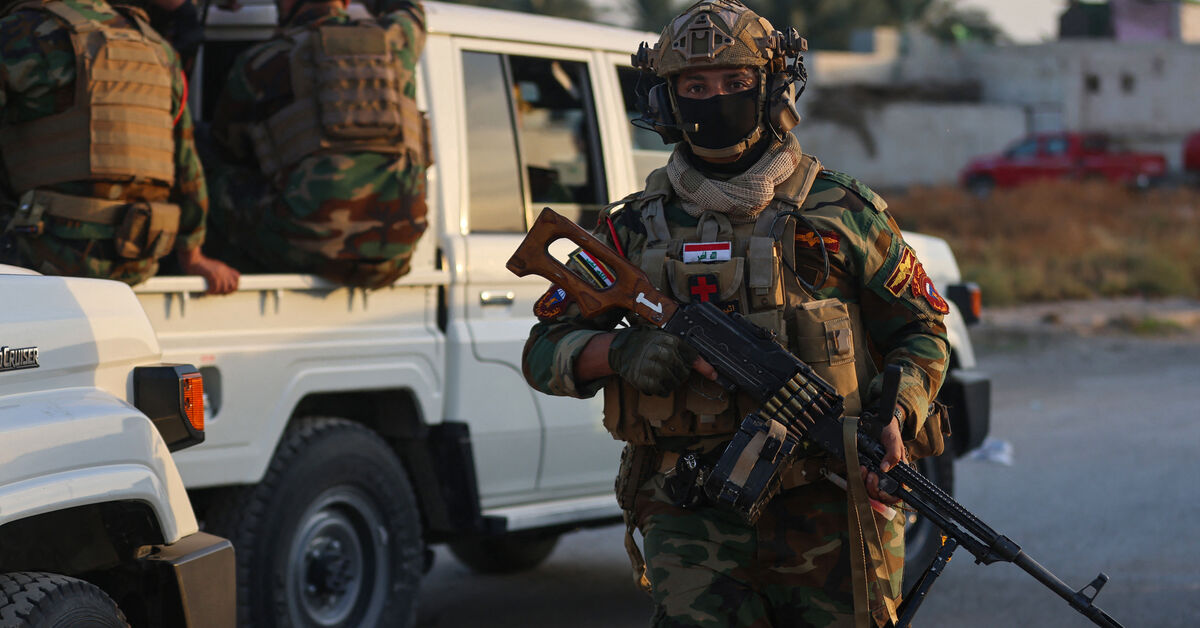
Qaani arrived in Baghdad late Monday as the crisis peaked, Alhurra reported, meeting al-Zaidi in talks that lasted until 4 a.m. Tuesday. The Iranian commander’s presence underscored the stakes: Kataib Hezbollah is Tehran’s most potent proxy in Iraq, and a government assault risked triggering a wider confrontation among Shiite factions.
Sources within the ruling Coordination Framework told Alhurra that framework leaders had threatened to target the Green Zone with rockets and drones if security forces stormed the district.
Al-Zaidi and al-Amiri exchanged sharp words at a Framework meeting Monday night, with the Badr leader urging the prime minister “not to rush,” according to Alhurra. The compromise allows both sides to claim restraint—Iran brokers a face-saving exit for its proxy, while Baghdad asserts sovereignty over a territory it has not administered since 2014.
The Oil Smuggling Nexus
The showdown erupted after an investigative committee ordered by al-Zaidi confirmed “the existence of illegal oil smuggling operations taking place within the Jurf al-Sakhar area,” the official Iraqi News Agency reported, The Jerusalem Post noted.
Satellite imagery leaked to media revealed an illicit refinery and a tapped pipeline running through the district. Government sources told Alhurra the smuggling operation nets approximately $2 billion annually—far exceeding the “hundreds of millions” cited in initial reports.
On Saturday, al-Zaidi fired nine senior security and administrative officials in Babil province, signaling the crackdown was not merely performative. The district, renamed Jurf al-Nasr by the militia, sits on the Baghdad-Karbala highway astride critical energy infrastructure. Before 2014, it was home to over 80,000 members of the Sunni Janabi tribe; none have been permitted to return.
A State Within a State
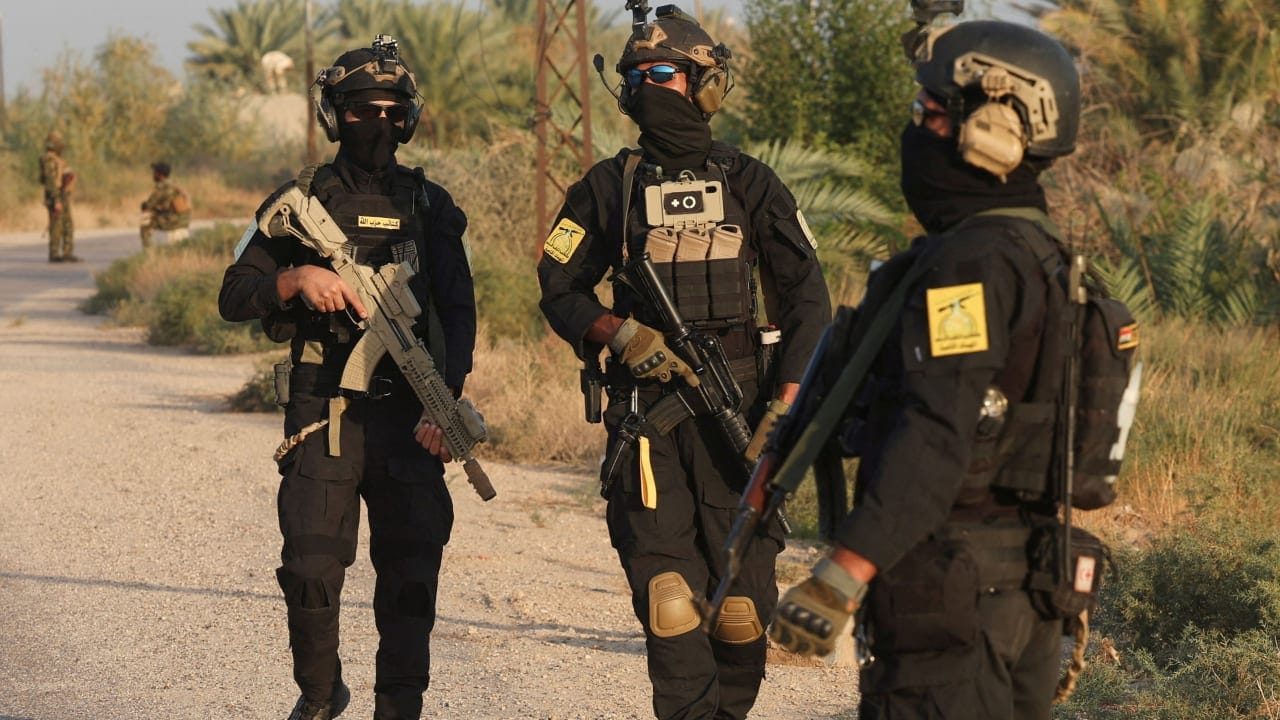
Kataib Hezbollah operates several battalions inside the Popular Mobilization Forces, the paramilitary coalition formed in 2014 to fight the Islamic State and later recognized as an official security force. Yet the group answers to Iran’s Revolutionary Guards, not the Iraqi chain of command.
Founded after the 2003 U.S. invasion, it was led by Abu Mahdi al-Muhandis until a U.S. drone strike killed him alongside Quds Force chief Qassem Soleimani at Baghdad airport in 2020.
The militia’s fighters—numbering in the tens of thousands by their own account, Middle East Eye reported—have attacked U.S. forces in Iraq since February, when the United States and Israel launched war against Iran. Both Washington and Baghdad designate Kataib Hezbollah a terrorist organization.
The Disarmament Deadline Looms
Al-Zaidi has set a June 30, 2027 deadline for all armed factions to disarm or integrate fully under state control, Middle East Eye reported. The most powerful groups—Kataib Hezbollah, Harakat al-Nujaba, and Kataib Sayyid al-Shuhada—have already refused. Analyst Hayder al-Shakeri told Middle East Eye that “even a limited clash around Jurf could have escalated quickly, especially if other factions saw it as the start of a broader move against them.”
Jurf al-Sakhar, a town about 60 kilometers southwest of Baghdad, housed the Al Hakum facility in the 1990s, at one time Iraq’s largest biological weapons production factory. During the 2007 troop surge, it became one of the first areas under the U.S.-funded “concerned citizens” program, where local payments for checkpoint security led to an almost instantaneous drop in violence.
The town was captured by ISIS in 2014 and liberated that October through Operation Ashura, driven partly by the need to secure the area before the Ashura observance near the Shia shrine at Karbala.
The compromise buys time. But the structural contradiction remains: Iraq’s prime minister commands a military that includes brigades loyal to a foreign power. Friday’s deployment will test whether the state can actually hold ground it reclaims—or whether Jurf al-Sakhar becomes another checkpoint in a frozen conflict.
Keep reading

US Imposes Sweeping Financial Sanctions on Comanchero Gang and NZ Leaders
The United States Treasury Department imposed sweeping financial sanctions Thursday on the Comanchero outlaw motorcycle gang and the...

Xi Hosts Russia-China-US Summit in Shenzhen Focused on Symbolism Over Substance
History was made in Shenzhen on Thursday, but breakthroughs were not. The optics were the substance. "Overall, very...

Filipino Actress Jorrybell Agoto, the Quiet Force Behind the Philippines’ Oscar Entry Filipiñana
Filipino actress Jorrybell Agoto, the quiet force behind the Philippines' Oscar entry Filipiñana, died November 17 at St.

Westside Cowboy wins BBC Introducing Artist of the Year 2026
really cool to be recognised for the music you make, said Paddy Murphy, bassist of Westside Cowboy, after...