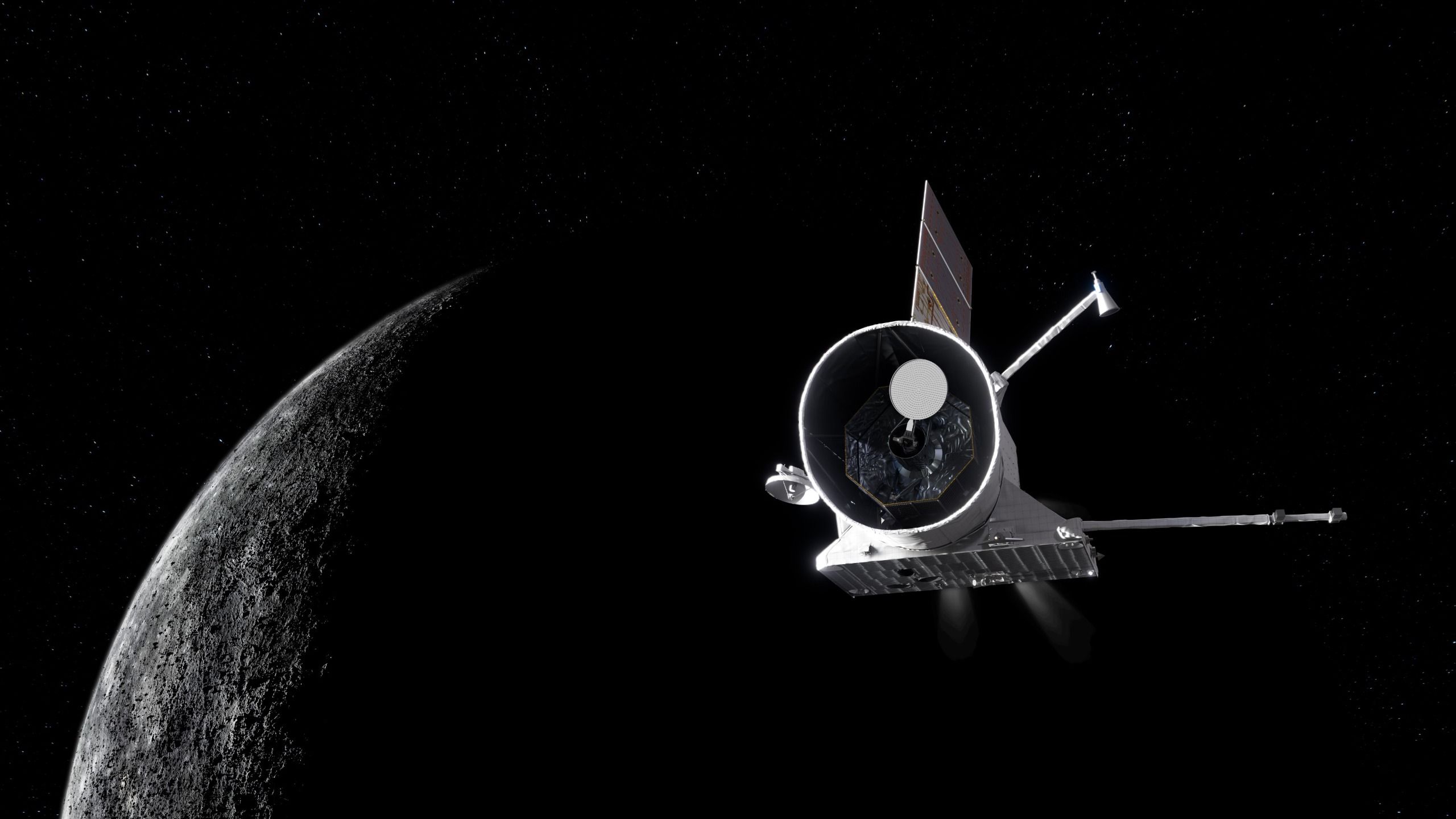
BepiColombo slipped into orbit around Mercury on Saturday after an eight-year, 10-billion-kilometer cruise, becoming only the second spacecraft ever to circle the solar system’s innermost planet.
The European Space Agency confirmed orbital capture on Sunday. A 37-minute thruster burn that began at 1:24 p.m. EST on November 21 had succeeded despite a software issue cutting the burn shorter than planned. Flight dynamics teams at ESOC in Darmstadt verified the spacecraft had been captured by Mercury’s gravity. The probe is now communicating with ground controllers.
- Orbital insertion was achieved on November 21 after an eight-year journey covering 10 billion km
- Only the second mission to orbit Mercury, following NASA’s MESSENGER (2011–2015)
- Two orbiters — Europe’s MPO and Japan’s Mio — will separate December 9–10
- Primary science phase begins April 6, 2027
A harder target than Pluto
Reaching Mercury demands more energy than a trip to the outer solar system. A spacecraft falling toward the Sun accelerates continuously. Mercury’s weak gravity — about a third of Earth’s — cannot capture a fast-moving visitor without a prolonged braking campaign.
BepiColombo’s trajectory used one Earth flyby, two Venus flybys, and six Mercury flybys over roughly seven years to shed that speed. The mission launched on October 20, 2018, aboard an Ariane 5 from Kourou, French Guiana.
“Energetically, it takes more energy to go to Mercury than to go to the outer Solar System,” said Emma Bunce, a plasma physicist at the University of Leicester and lead scientist on the Mercury Imaging X-ray Spectrometer (MIXS), speaking to Nature. The mission’s transfer module, which provided electric propulsion for the cruise, separated on September 3, 2026, after a solar-panel issue reduced available power and delayed arrival by about a year.
Two orbiters, one arrival
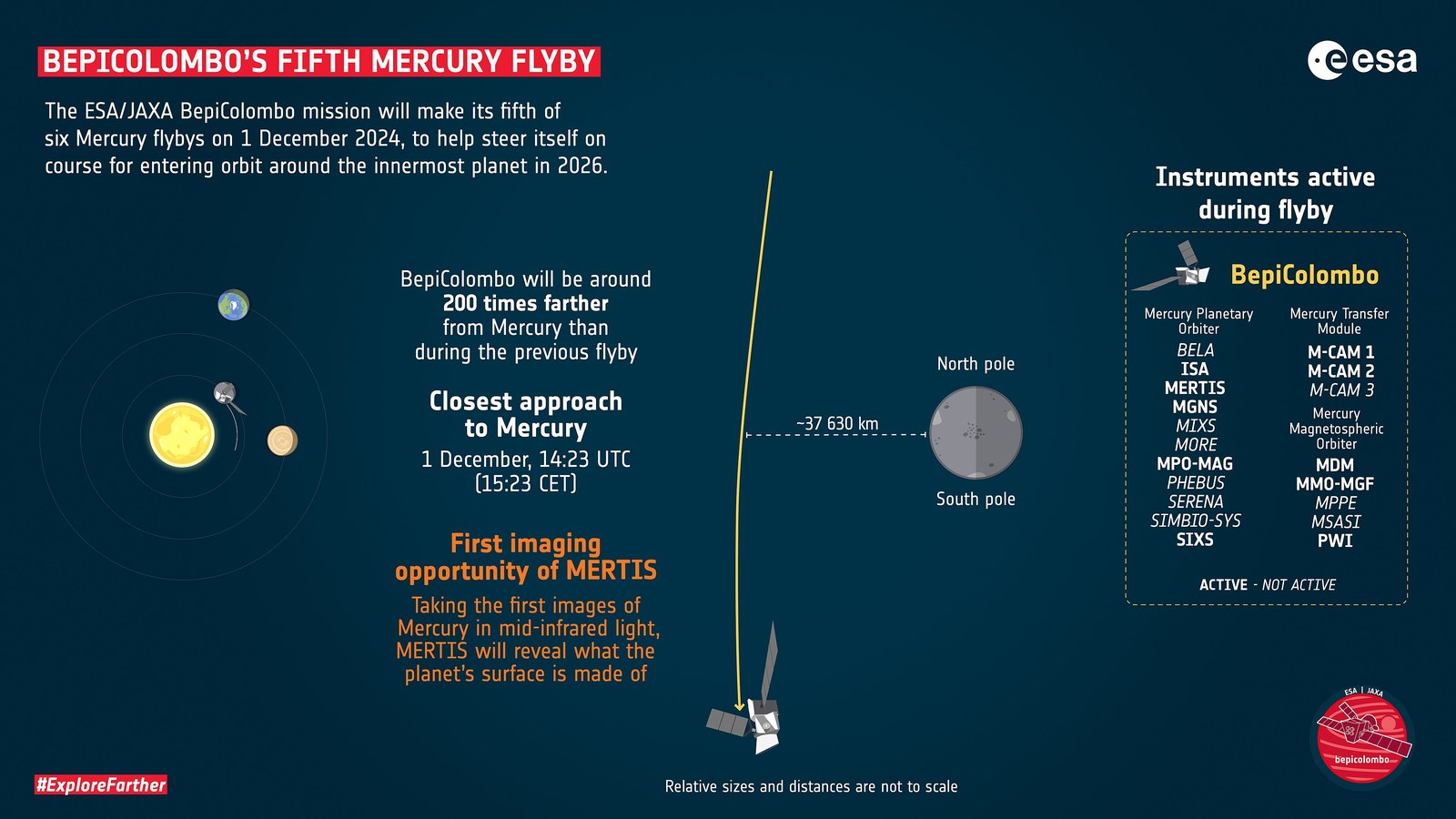
BepiColombo carries two science orbiters that remain stacked for now. The European Space Agency’s Mercury Planetary Orbiter (MPO) will study the planet’s surface and interior from a low, near-circular polar orbit. The Japan Mercury Magnetospheric Orbiter, named Mio, will follow a highly elliptical polar orbit reaching 11,000 km from the planet to sample the magnetic environment and solar wind interaction.
Separation is scheduled for December 9–10. MPO will then discard Mio’s protective sunshield on December 16. A series of engine burns will lower it to its final science orbit by March 10, 2027. Instrument commissioning follows, with the primary science phase set to begin April 6, 2027.
MIXS wakes up after eight years
Before orbital insertion, the UK-built Mercury Imaging X-ray Spectrometer captured its first in-flight cosmic X-ray observations. On November 20, the instrument detected X-rays from the Crab Nebula during a 39-hour calibration campaign involving 55 controlled orientation changes.
The telescope’s angular resolution matches or slightly exceeds pre-flight laboratory baselines from 2015. Its detector shows no radiation damage after eight years in space.
We have waited a long time to make measurements with MIXS and it is fantastic to see it operating brilliantly in space. This is testament to our engineering and technical team, and our international partners who we have worked with over many years to build this incredible instrument. 80% of the technology on MIXS is new!
Professor Emma Bunce, University of Leicester
BepiColombo, and MIXS in particular, are like part of my family. I've been involved since I was an undergraduate and touched almost every part of the instrument before it was launched. This first data is mind-blowing to me. Adrian
The calibration also showed self-fluorescence when the Sun shines on the optic — a known effect that will not affect dayside surface observations — and continuing galactic cosmic-ray signatures that can be filtered out. MIXS will map Mercury’s surface composition through X-ray fluorescence, targeting elements including magnesium, aluminum, silicon, sulfur, calcium, titanium, chromium, manganese, and iron.
What MESSENGER left unanswered
NASA’s MESSENGER orbited Mercury from 2011 until it exhausted propellant and impacted the surface on April 30, 2015. It discovered water ice in permanently shadowed polar craters, a surprisingly strong magnetic field for such a small planet, and a surface composition that defied formation models.
BepiColombo’s dual-orbiter design allows simultaneous measurements from two vantage points — a capability MESSENGER lacked. Scientists say this is essential for connecting surface processes with the dynamic magnetosphere.
Mission Scientists Outline Next Steps and MIXS Performance
Geraint Jones, a mission project scientist, said the two spacecraft would allow researchers to compare unprecedented measurements taken simultaneously at the planet, according to ABC News.
Professor Emma Bunce said the team has waited a long time to make measurements with MIXS and it is fantastic to see it operating brilliantly in space. She said it shows the work of the engineering team and international partners.
She noted the detector has suffered no radiation damage after eight years in space. She paid tribute to the late Professor George Fraser, who led MIXS development until his death in 2014, saying he would be very proud of the team and delighted at the first-light observations.
Next milestones
The mission timeline leaves more than four months between orbital capture and routine science operations. The next major step is the December 9–10 separation of the two orbiters, followed by MPO’s orbit-lowering burns through mid-March 2027. ESA cautions that operational requirements can shift these dates. For now, the spacecraft is safe, teams at ESOC are assessing telemetry, and the first update on the shortened thruster burn is expected Monday.
Worth a look
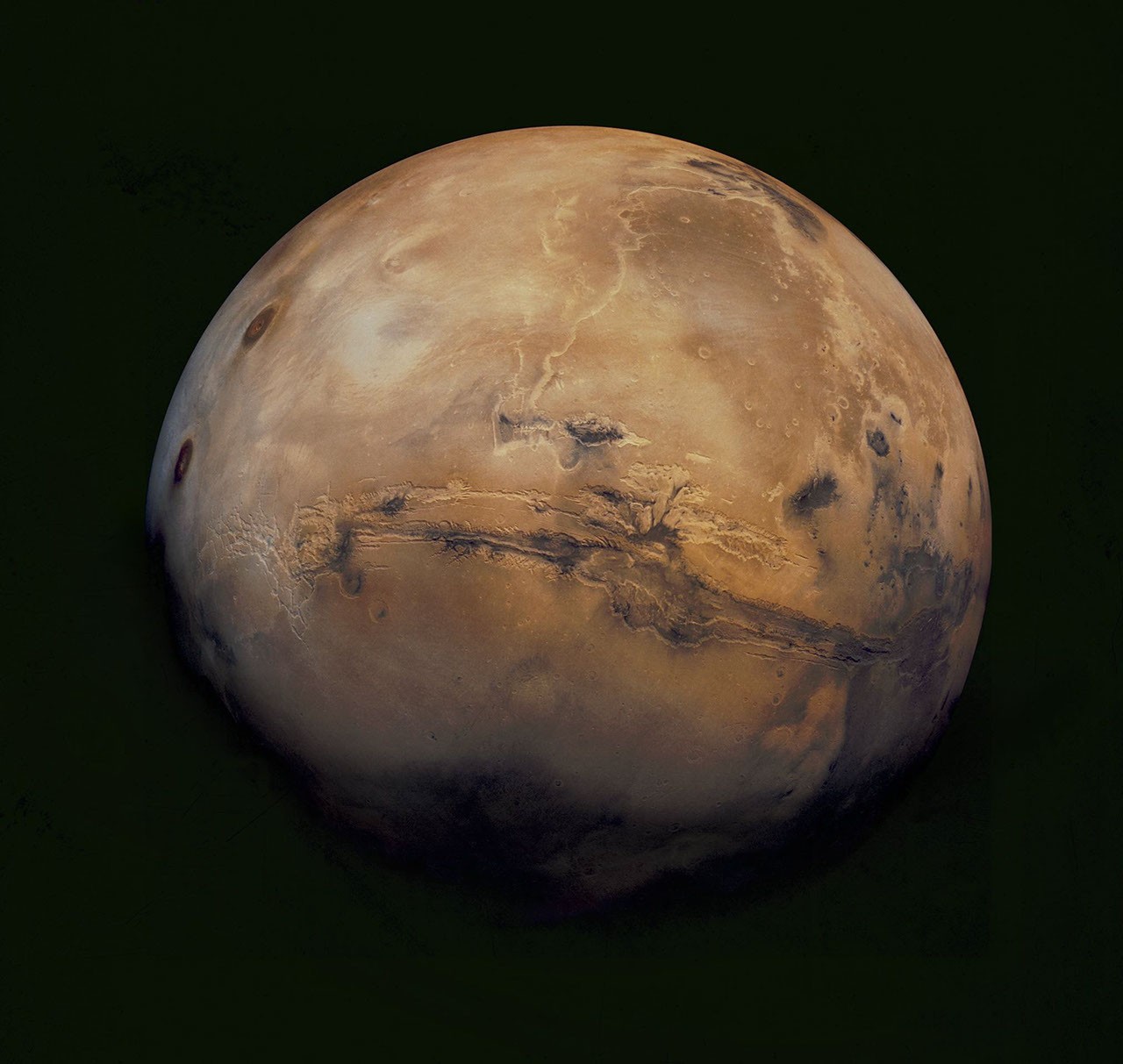
NASA Pauses Science On Perseverance Rover And Mars Odyssey Orbiter
NASA paused active science operations on the Perseverance rover and the veteran 2001 Mars Odyssey orbiter after hardware...
DESY, European XFEL Reliably Generate Sub-Atomic X-ray Flashes at 0.04 Nm
Researchers at DESY and European XFEL have reliably produced X-ray laser flashes with a wavelength of about 0.04...
Two Studies Reopen Primordial Black Hole Windows, Papers Show
A new model shows that microscopic primordial black holes could have reheated the early universe after inflation, and...
Chengdu University Study Finds Atmosphere Gained Oxygen in Three Pulses
Earth's atmosphere gained oxygen in three distinct pulses, each arriving hundreds of millions of years before the deep...