Federal Judge Halts Trump DOJ’s Attempt to Withhold Washington Ballots
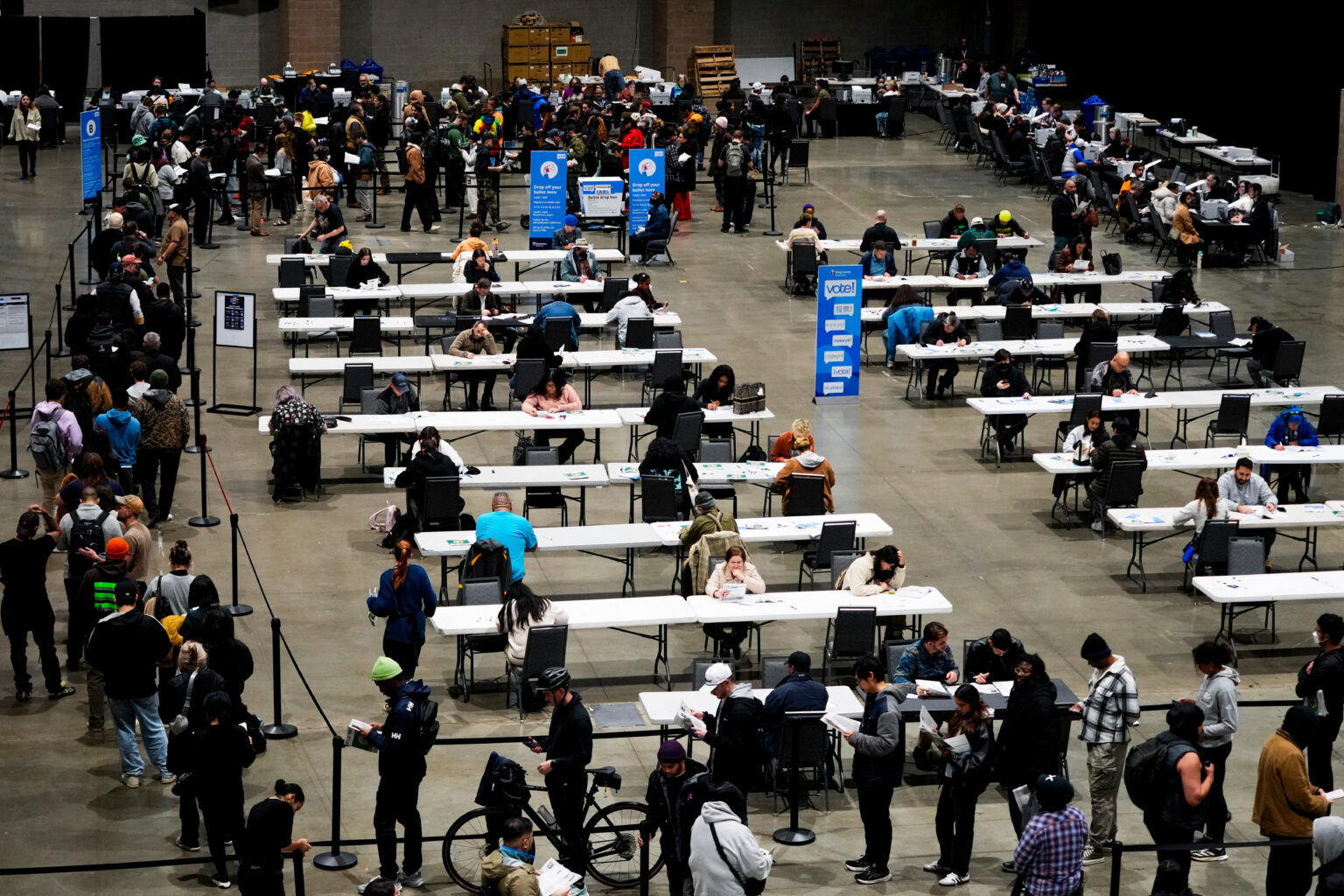
Two days after Election Day, a federal judge struck down a Trump administration effort to interfere with Washington state’s ballot counting. U.S. District Judge Jamal Whitehead issued a 14-day temporary restraining order, prohibiting the Department of Justice and Department of Homeland Security from pressuring state officials to set aside ballots from voters suspected of being noncitizens. The order, effective immediately, also bars federal officials from threatening election workers with prosecution for refusing to comply.
The case, brought by OneAmerica Votes, the Latino Community Fund of Washington State, and the United Food and Commercial Workers International Union, stems from a direct confrontation in the campaign’s final days. Democracy Docket reported that on Oct. 26, just eight days before the election, two federal prosecutors—Pete Serrano and Neil Floyd—dispatched a list of approximately 400 registered voters they believed might not be citizens to Washington Secretary of State Steve Hobbs.
The DOJ’s Demands and the State’s Pushback
The federal prosecutors demanded state officials refrain from verifying signatures or counting those voters’ ballots until their citizenship could be determined. They framed the request as a matter of legal compliance, warning election officials could face criminal prosecution for helping ineligible voters cast ballots. But Washington officials quickly found significant problems with the federal list. At least 62 people on it had not been sent ballots due to canceled, inactive, or unlocatable registrations. Others had already provided proof of U.S. citizenship.
Despite these findings, the pressure intensified. Secretary Hobbs refused to comply. In response, prosecutor Pete Serrano publicly threatened to take the matter directly to county election officials, bypassing state authority. This move signaled a direct attempt to federalize a core state function, setting the stage for the legal challenge that would follow.
Judge Whitehead’s Sharp Rebuke
In a 14-page ruling, Judge Whitehead dismantled the administration’s central argument that it was merely seeking “cooperation.” “On this record, Defendants did not ask,” the judge wrote. “They directed Washington to set aside specific voters’ ballots, set a deadline, told election officials they would be prosecuted if they counted those ballots as state law requires.” The judge found the administration had likely exceeded its legal authority by attempting to force state officials to interfere with ballot counting.
“A threat of prosecution made for that purpose is not legal advice,” Whitehead wrote. “It is the pressure that makes the demand work, and the order restrains the two together.”
The ruling emphasizes a critical principle: the federal government cannot use a criminal statute to take control of state election procedures. The judge also warned the administration’s actions threatened to disenfranchise eligible voters, particularly naturalized citizens who could be incorrectly flagged by federal databases. “Voters who followed the rules should not lose their votes to a list that even its authors admit may include citizens,” Whitehead wrote.
A National Pattern of Federal Intervention
This case is not an isolated incident. It reflects a comparable setback for the DOJ in California, where federal courts rejected the administration’s attempt to compel election officials to segregate ballots from suspected noncitizens. In that instance, the Supreme Court declined to intervene on Nov. 2, effectively allowing the lower court’s ruling to stand.
The Constitutional Boundary
The federal government’s role is largely one of oversight and enforcement of specific laws, not direct command of state procedures. The judge's ruling shows this boundary, finding the DOJ crossed the line from cooperation to coercion.
The immediate impact of the ruling is to allow Washington’s election officials to continue their work without federal interference. The order does not prevent federal officials from investigating unlawful voting or sharing information with state administrators. It specifically targets coercive demands and threats that could disrupt the state’s established procedures. This distinction preserves the DOJ’s investigative role while preventing it from commandeering the state’s election machinery.
The next major step in this legal saga is scheduled for Nov. 18, when a hearing will be held to determine whether the temporary restraining order should be replaced with a preliminary injunction. That hearing will determine if this temporary pause on federal intervention becomes a more permanent feature of Washington's election process.
At its core, this story is about the fundamental tension between federal power and state sovereignty in administering elections. It raises a simple, powerful question: Who gets to decide how votes are counted? For now, in Washington state, the answer remains the state itself.
- SC Flags to Fly at Half-Staff for Former College of Charleston President Alexander Sanders
- AHEAD Virginia Announces 2024-2025 Executive Committee
- Washington's Intel Shares Lost $11.4 Billion Friday; 132M Are in Escrow (daybreakwire.com)
- China blocks SoftBank’s $5.4 billion ABB robotics deal, FT says (newsarchyuk.com)

SC Flags to Fly at Half-Staff for Former College of Charleston President Alexander Sanders
Flags atop the South Carolina State House fly at half-staff for Alexander M. Sanders, Jr. The flags flying...
AHEAD Virginia Announces 2024-2025 Executive Committee
The Association on Higher Education and Disability (AHEAD) in Virginia has announced its Executive Committee for the 2024-2025...
Dick Burchard Obituary: Montpelier Man Dies After Dementia Battle
Dick Burchard of Montpelier, Indiana, dies after five-year battle with Lewy body dementia Dick Burchard, a resident of...

Nashville Judge Blocks Tennessee Demand for Immigration Status Checks for HIV/AIDS Services
Nashville Judge Halts Tennessee's Push for Immigration Checks in HIV/AIDS Program A Nashville judge on Wednesday extended a...