
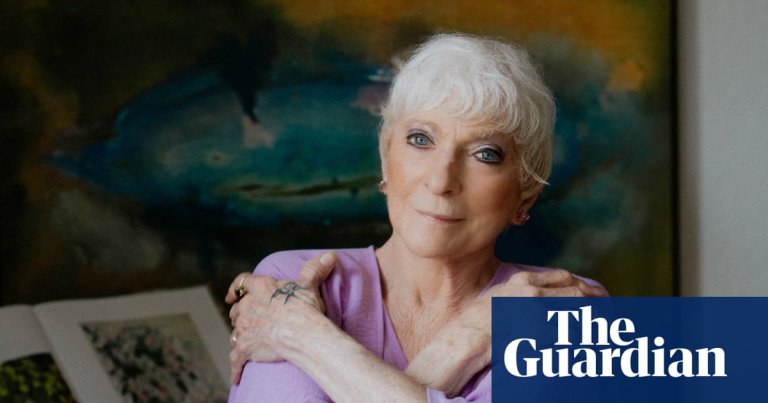
Judy Collins is closing the book on a six-decade career, but she is doing so with the same sharp-eyed clarity that defined her ascent in the 1960s Greenwich Village scene.
As the 87-year-old singer-songwriter prepares for the conclusion of her farewell tour, she has offered a candid look back at the industry dynamics and personal encounters that shaped her trajectory, according to an interview with The Guardian.
The narrative of Collins’ career is inextricably linked to the intellectual property she championed before the public—and even the songwriters themselves—fully grasped their commercial potential.
Perhaps the most striking example occurred in 1967, when an unknown Joni Mitchell performed “Both Sides, Now” for Collins over a 3 a.m. phone call facilitated by producer Al Kooper. Collins recorded the track the following day, securing a massive hit that helped launch Mitchell’s career.
“I don’t think Joni was too happy that I was the first to record it, but she was very generous and I’ve since recorded many of her songs,” Collins told The Guardian.
While the incident highlights the often-fraught tension between creative ownership and the rapid-fire pace of 1960s music production, it also underscores the deep brand equity Collins built by acting as an early, influential curator of contemporary song.
From Leonard Cohen to the Doors
Collins’ ability to identify enduring material extended to her work with Leonard Cohen. After being introduced to his music in 1966, she recorded “Suzanne,” which became a significant commercial success.
She credits Cohen as a “guru” who pushed her toward her own songwriting, a transition that led to her penning “Since You Asked” in a mere 40 minutes. This shift from interpreter to creator was part of a larger evolution at Elektra Records, where label head Jac Holzman fostered a remarkably eclectic roster.
Both Sides Now/ Judy Collins ( Joni Mitchell ) Tears and fears and feeling proud To say "I love you" right out loud Dreams and schemes and circus crowds I've looked at life that wayhttps://t.co/96NNCdk4gZ
The label’s willingness to bridge the gap between traditional folk and the burgeoning rock movement allowed Collins to experiment with arrangements, such as her 1966 album In My Life.
By treating the work of Bob Dylan, The Beatles, and Donovan with the seriousness of classical composition, she helped elevate the status of pop songwriters. Elektra’s influence on the era was profound, as Holzman famously expanded the label’s reach to include acts as diverse as Carly Simon and the Stooges.
The financial and creative risks of that era paid dividends, setting a standard for how folk music could infiltrate the mainstream. Collins notes that the sub-genre’s staying power lies in its storytelling core: “Inside every great pop song, there’s a folk song.”
The Economics of a Farewell Tour
As she winds down her current tour, which runs through May 22, 2027, the industry is witnessing the sunset of a generation that defined the singer-songwriter archetype. Her final Irish performance is set for January 24, 2027, at St Michael’s Theatre, followed by her final UK date at the Palladium in London on February 6, 2027.
These dates are not merely nostalgic milestones; they represent the tail end of a business model built on live performance and the enduring catalog value of legacy artists.
The tension between the art of the 1960s and the modern corporate infrastructure remains a constant for legacy acts. While Collins has embraced new projects—such as her Grammy-nominated album Spellbound, which features 12 of her own compositions—she acknowledges that the industry has shifted toward an era dominated by AI and different consumption habits.
Yet, for the consumer, the value remains in the narrative. The stories behind “Suite: Judy Blue Eyes”—the seven-minute masterpiece written about her by Stephen Stills—remain as potent as ever in the eyes of fans, ensuring that the intellectual property retains its market value long after the initial recording sessions.
“If we’re still on the planet, we still have things to do,” Collins noted in her conversation with The Guardian. Whether through her ongoing writing projects or the finality of her stage presence, she continues to navigate the balance between the artist’s legacy and the practical realities of a career spanning 87 years.
Disclaimer: The cultural analyses and financial data presented in this article are based on available public records and industry metrics at the time of publication.
Related reading

NAZA: How and Where to Watch the Guardian’s Acclaimed Gaza Documentary – The Guardian
“Tough to watch, and impossible to ignore,” according to The New York Times, the acclaimed documentary NAZA will...

CMAT Joins Philomena Begley on Stage at NI Music Prize
Country music star CMAT delivered a surprise appearance alongside Philomena Begley at Belfast’s Ulster Hall during the 15th...

Russell Brand Sentenced and David Walliams Faces Misconduct Allegations
The British entertainment industry is currently grappling with a profound systemic reckoning as two of its most prominent...

Malcolm in the Middle’ Star Frankie Muniz Released From Hospital After Daytona Crash
Actor and race car driver Frankie Muniz was released from a Florida hospital following a practice-lap crash on...