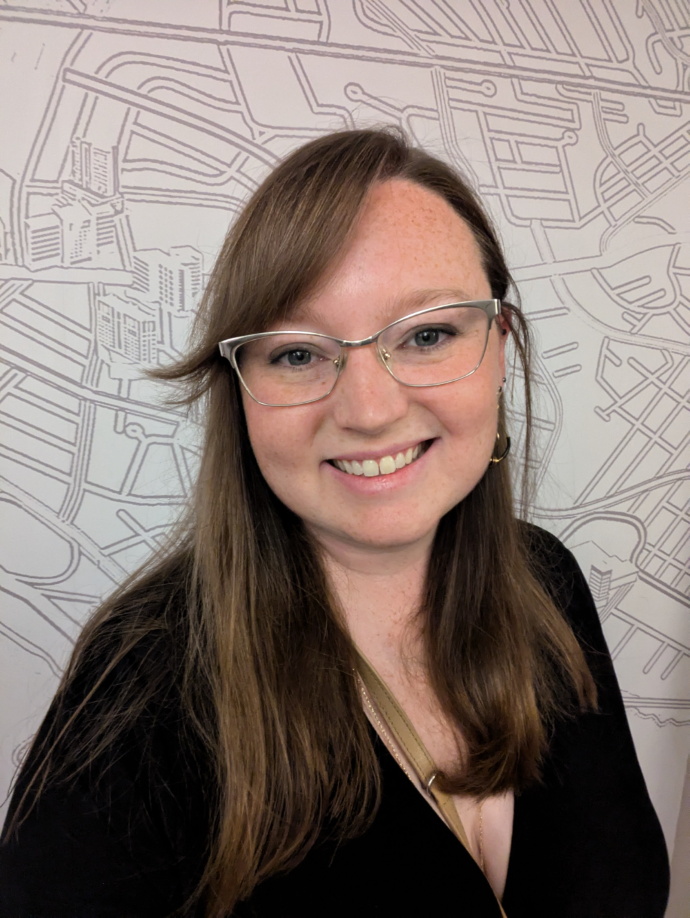
Kansas State University Spanish professor Raelynne Hale argues that artificial intelligence should serve human connection rather than replace it, a philosophy she has built into the Heartland AI Symposium she founded and directs on campus.
In an interview with the Kansas State University Foundation, Hale described how a casual conversation with her department chair about inviting a few guest speakers snowballed into a three-day conference. The first year drew more than 450 registrations, she said. Now the symposium runs 80 concurrent sessions — 60 in person and 20 online — with four keynote speakers, two multi-institutional panels, 11 hands-on workshops, a hackathon and a career fair.
Five university systems now partner on the event: the University of Nebraska system, the University of Kansas and its medical center, Wichita State University and the University of Missouri. The Manhattan Public Library hosts a community town hall that Hale calls her favorite event.
Hale said that event is her absolute favorite because you don’t know what’s going to happen, and that people ask a lot of questions, which is really fun.
Hale approaches the technology with curiosity rather than advocacy. As a literary scholar, she worries about the ethics of training data and the flattening of linguistic diversity. “The data AI is being trained on here is very English-centric and U.S.-centric,” she said. “There’s a lot of loss when we flatten things.”
A graduate research assistant in her program is examining linguistic biases in large language models, noting that AI translators often blend cultural expressions from disparate Spanish-speaking regions into a single output. She contrasted that with Microsoft’s early approach to spell-check, which invited communities — including Maori speakers — to help program their own languages into the system.
“I think technology should bring people together. If we’re going to use it, let’s use it for a good reason and to foster human connection.”
Raelynne Hale, assistant professor of Spanish, Kansas State University
Hale does not believe AI will replace human translators soon. Hospitals avoid automated medical translation because of liability concerns, she said, and the United Nations and judicial systems rely on human experts for the same reason. “One misinterpretation could really impact global politics,” she said. “That’s too risky.”

In her own classroom, most students resist the technology. “Most of my students really hate it,” she said. They fear being falsely accused of using AI after investing real effort in their work — a dynamic Hale finds fascinating and really disheartening.
Hale promises not to run their writing through detectors and frames the course around AI literacy: energy and water consumption, cognitive offloading, and the difference between a tool and a skill. “You can teach a tool, but then students only know how to use that tool,” she said. “And when the tool changes every few years, that is problematic.”
She said students acknowledge pressure to at least understand AI, so they discuss what it does well and where it fails. The goal, she said, is information literacy — the ability to identify who published a piece, who funded it, and whether an AI-generated answer is presenting fiction as fact.
“AI literacy doesn’t just mean knowing how to use a tool but also how to think critically about these different tools and technologies and understand what they can and can’t do,” she said. “I think that is the most important thing we can offer anyone, students and beyond.”
Related reading

Inside Bar Mar: José Andrés’ Spanish Seafood Tasting Menu & Coastal Hour at the W Nashville
José Andrés brings his Spanish maritime heritage to Nashville at Bar Mar, a seafood-driven restaurant inside the W...

Human Movement Drove Early Spread of 2026 Bundibugyo Ebola Outbreak in DRC, Study Finds
Human movement, not geography, wrote the early map of the 2026 Bundibugyo Ebola outbreak in the Democratic Republic...

Kirby Smart Calls LaNorris Sellers ‘Wow Player’ Ahead of Georgia-South Carolina Game
Georgia head coach Kirby Smart called South Carolina quarterback LaNorris Sellers a "wow player" on Monday, offering his...
Philadelphia Food as Medicine Coalition Convenes to Address 20-Year Life Expectancy Gap
Mike Cangi sat in a Boston conference room last year, listening to a panel on food and health,...