Kansas emergency managers now have a clearer, state-specific roadmap to earn a nationally recognized credential, after the Kansas Division of Emergency Management finalized its version of the FEMA Advanced Professional Series.
The program, administered by the Kansas Adjutant General’s Department, requires five core courses and five electives, all of which must be completed within a five-year window, the division’s training office confirmed. The shift lets Kansas tailor elective options to the threats the state actually faces — tornadoes, flash flooding, and wildfire — rather than relying solely on the federal baseline.
Candidates must first finish the foundational Independent Study courses — IS-100, IS-200, IS-700, and IS-800 — or the older Professional Development Series before they touch the advanced curriculum. From there, the required slate includes G2300 Intermediate EOC Functions, G0191 ICS/EOC Interface, G0205 or E0210 Recovery, G0393 or G0318 Mitigation, and G0557 Rapid Assessment.
Electives run the gamut from G0108 Community Mass Care and G0202 Debris Management to G0358 Evacuation Planning and E/L0105 Public Information & Warning. Kansas also designates HSEEP (E/L/K0146) and Instructional Presentation Skills (E/L0141) as electives for its emergency managers.
Once the ten courses are done, practitioners email certificates or transcripts to the KDEM Training Office. The state promises a 5- to 10-business-day turnaround for the final APS Certificate of Completion.
The Kansas Division of Emergency Management began in 1950 as the State Civil Defense Agency, created to address Cold War nuclear threats, and moved under the Adjutant General’s Department in 1955 when its mission broadened to cover all-hazards disaster coordination statewide. Today it handles mitigation advocacy, planning guidance, training and exercises, response coordination, and recovery program administration for the civil sector.
The move mirrors a broader FEMA decision to hand validation authority to state training officers, allowing local programs to add or retire electives as hazards evolve. For Kansas, that means the next time a supercell spawns a mile-wide wedge tornado, the emergency manager coordinating the response will have trained on the exact plans, debris protocols, and mass-care agreements the state uses — not a generic federal template.
Worth a look

Bucknell Wrestling Faces North Dakota State Friday, No. 8 Minnesota Sunday in Midwest Gauntlet
Bucknell wrestling hits the road Friday for a Midwest gauntlet that begins at North Dakota State and ends...

Judge Allows Trump Defamation Suit Against New York Times, Penguin to Proceed
A federal judge in Tampa ruled Thursday that President Donald Trump’s defamation lawsuit against The New York Times...

Entergy Mississippi Opens Capitol Green Connector, First Phase of Downtown Museum Trail
Ed Gardner stood on Commerce Street this morning and called the Capitol Green Connector a "really important investment"...
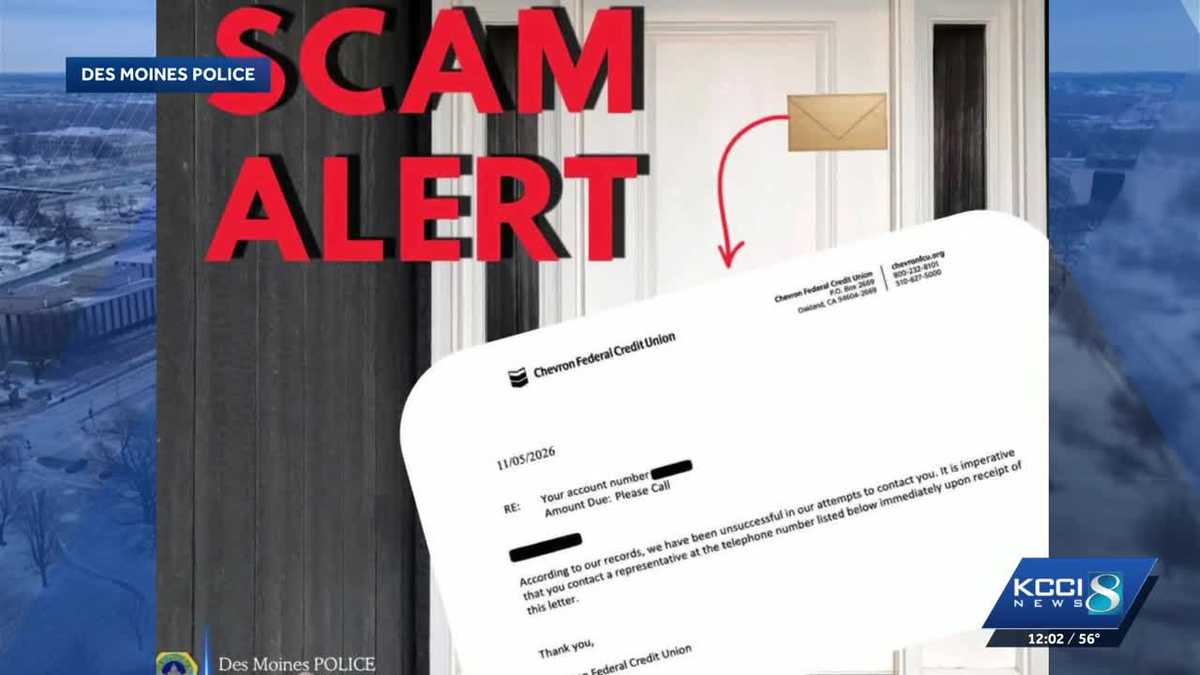
Des Moines Police Warn of Chevron Credit Union Scam Targeting Beaverdale Residents
Des Moines police are warning Beaverdale residents to ignore notices left on their doors that claim to be...