A petition calling for a complete ban on the transit of Belarusian and Russian grain through Latvia was published on the Manabalss.lv platform on Saturday, addressed to the Saeima.
The initiative was launched by Valters Bergs, a Riga City Council member from the National Alliance, which sits in the ruling coalition, reform.news reported.
“Latvia's national infrastructure must not serve the economic interests of an aggressor state at a time when Ukraine is fighting for its freedom and independence,” Valters Bergs, a Riga City Council member from the National Alliance, said. “Although Latvia has already banned imports of grain from these countries, transit is still permitted. This means that Latvia’s transport infrastructure can be used to deliver agricultural products from an aggressor state to global markets,” he said.
The proposal seeks to ban the use of Latvian ports, railways, roads and other infrastructure for the transit, transshipment and storage of such cargo, and calls for a verification mechanism to monitor the origin of shipments.
The push follows a November 13 proposal by the Latvian Foreign Ministry, then led by Baiba Braže, to ban grain transit as part of national sanctions. Protesters in Jēkabpils had demanded on November 7 that the government halt transit within 14 days, a deadline that expired on November 21, according to LSM English. Organizers said the government had not delivered a legally binding decision.
Public support limited
A November survey by the SKDS research centre found that a majority of Latvian society does not support halting Russian transit, including grain shipments, Baltic News Network reported. Protest organizer Gundars Kalve acknowledged on Latvian Radio that public participation in the November 7 demonstration was “extremely low.” By the morning of November 24, the Manabalss.lv petition had gathered just 88 signatures, a number Kalve described as “extremely low,” BNN reported.
Political scientist Filips Rajevskis told BNN that society is demanding a pragmatic solution. “Pre-election rhetoric is pre-election rhetoric, but the real question is whether it can be put into practice without harming ourselves,” he said. “I think the answer is fairly obvious – the country’s interests must come first.”
Economic risks cited
Agriculture Minister Edgars Putra (United List) warned on November 26 that a full transit ban could jeopardize cargo flows from Central Asia, particularly mineral fertilizers, LSM reported. “If this route closes for us and Russia no longer allows these cargoes to pass overland, it will mean that our farmers will lack mineral fertilizers. This is another channel that can create an additional crisis,” Putra told Latvian Radio.
He cited Estonia’s experience: after Tallinn banned grain transit, other cargo stopped flowing through Estonian ports for more than a month.
Grain transit from Russia through Latvia has increased 3.1 times in the first ten months of 2026 compared to the same period in 2025, LSM reported.

Minister warns transit ban could cut Central Asian fertiliser supplies
He said that if the route closes and Russia stops allowing such cargo to pass overland, Latvian farmers would lack fertilisers, creating an additional crisis.
Putra also said he “doesn’t like this situation,” noting that only a portion of each tonne of grain goes to the Russian budget in taxes, a source attributed to LSM. The Latvian government is concerned that cargo from Kazakhstan and Uzbekistan could stop heading toward Latvia regardless of moral considerations about grain, some of which has been stolen from Ukraine, the same source reported.
Russia accuses Latvia of artificial obstacles and drone complicity
She said that Latvia is inspecting Russian grain shipments for allegedly stolen Ukrainian agricultural products and seeking ways to ban Russian grain transit altogether, the same source said.
The National Alliance, a member of Latvia’s ruling coalition, demonstrated its influence on transit policy in November 2026 when Valters Bergs, a Riga City Council member from the party, launched a petition calling for a complete ban on Russian and Belarusian grain transit through Latvia.
This initiative sought to prohibit the use of Latvian ports, railways, and other infrastructure for such cargo, reflecting the party’s stance against supporting an aggressor state’s economic interests.
Russian reaction
Russia’s Foreign Ministry spokeswoman Maria Zakharova accused Latvia on Friday of creating artificial obstacles to hinder Russian grain transit, saying the restrictions pose risks to global food security, The Moscow Times reported. Zakharova also alleged, without providing evidence, that Latvia and other Baltic states are allowing Ukrainian drones to cross their airspace to attack Russian targets.
Estonia has announced the closure of all land border crossings with Russia from December 1, following a cooperation between Latvian and Estonian security services, RTÉ and LSM reported. Kalve has demanded Latvia follow suit and close its border completely.

Woman, 33, Losing Weight on Mounjaro After FND Left Her on Mobility Scooter
In a column for The Sun, content creator Lynsey Macfadyen describes losing half her body weight after starting...
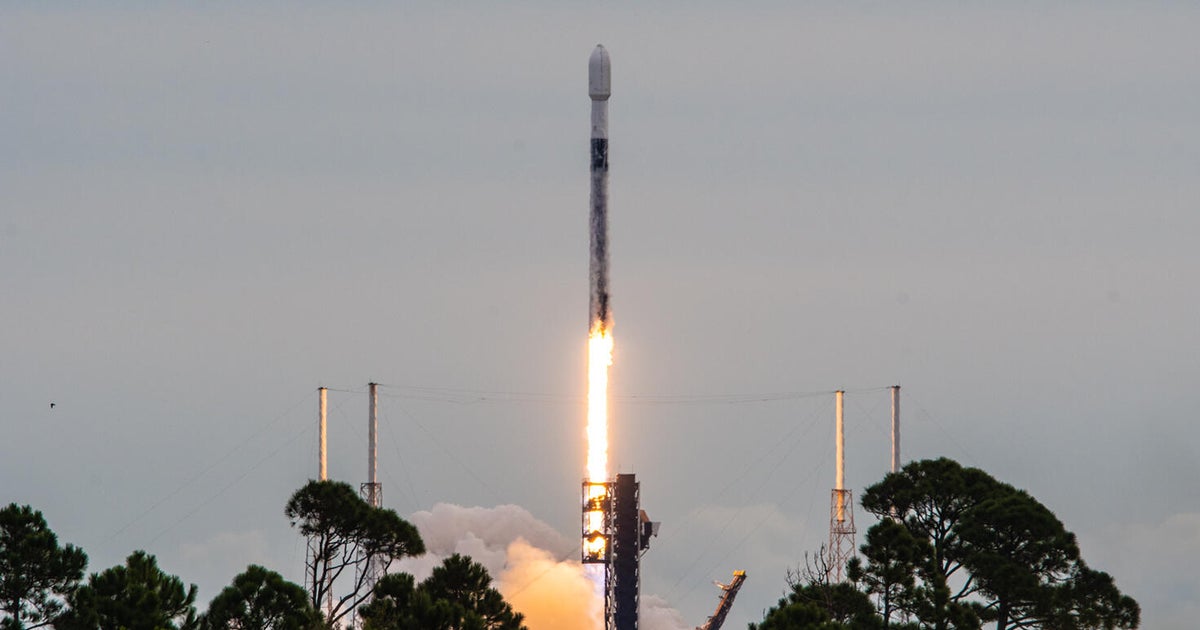
SpaceX Launches 11,000 Pounds of Cargo to International Space Station
A SpaceX Falcon 9 lifted off at 10:47 a.m.

How a Daily ‘Switchboard’ Call Keeps Three Friends Connected Through Life’s Chaos
In a guest column for The Washington Post, author Emily Nemens describes how brief, routine phone calls during...

VisionQuest Concludes WandaVision Trilogy With Raw Finale
What is grief, if not love persevering, Ultron tells Vision in the VisionQuest finale.