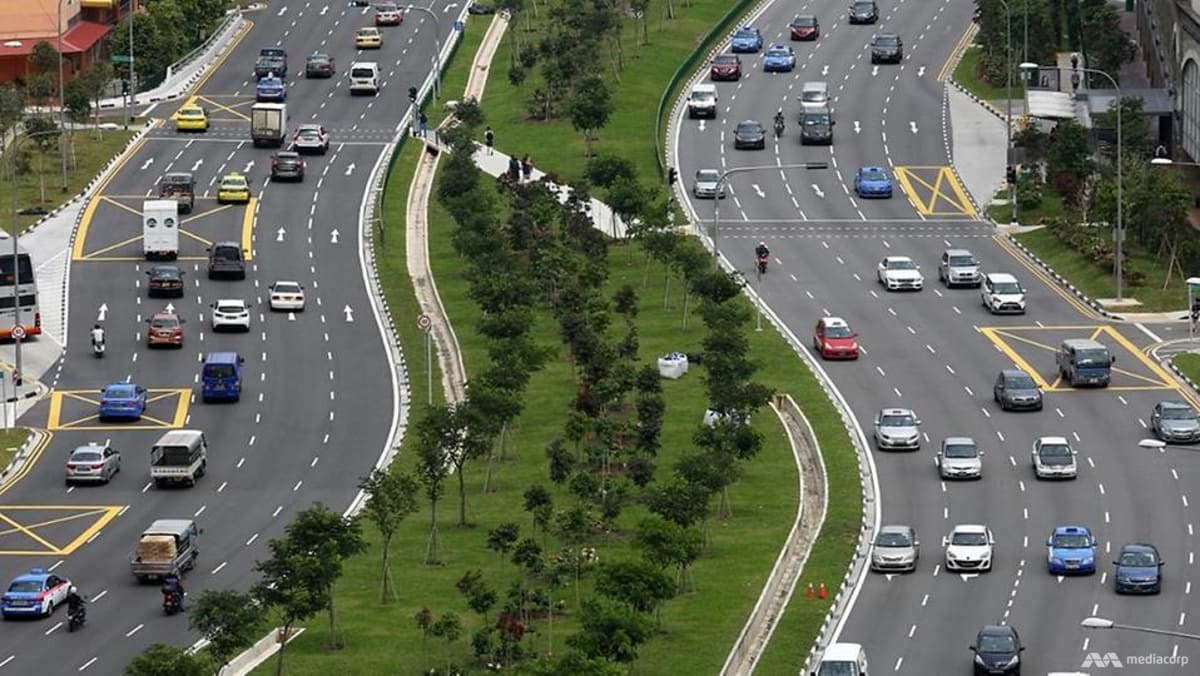
Singapore motorists face a unified vehicle certificate system as authorities propose merging Categories A and B into a single passenger car tier.
Transport Minister Jeffrey Siow asked the Land Transport Authority to review the framework during the ministry’s Budget debate in March. Since then, the agency has engaged more than 200 members of the public, academics, and automotive industry representatives through focus group discussions. The public consultation on the proposed merger and fee-and-rebate mechanism runs from October 8 at 5pm to November 2, 2026, at 11:59pm.
Why Categories A and B Converged Under Market Pressures
Category A closed at S$130,001 while Category B closed at S$130,100 at the bidding exercise on October 7, 2026, leaving a difference of just S$99. Category A COE prices exceeded Category B prices on three occasions between February and June 2026. Prices between the two tiers have nearly matched as a result.
Under current rules, cars with engine capacity and power up to 1,600cc and 130 horsepower, or 110 kilowatts, fall under Category A. Vehicles exceeding those limits fall under Category B. But manufacturers have increasingly tuned higher-end models from brands like BMW and Tesla to fit Category A requirements, overcrowding the category and driving up premiums.
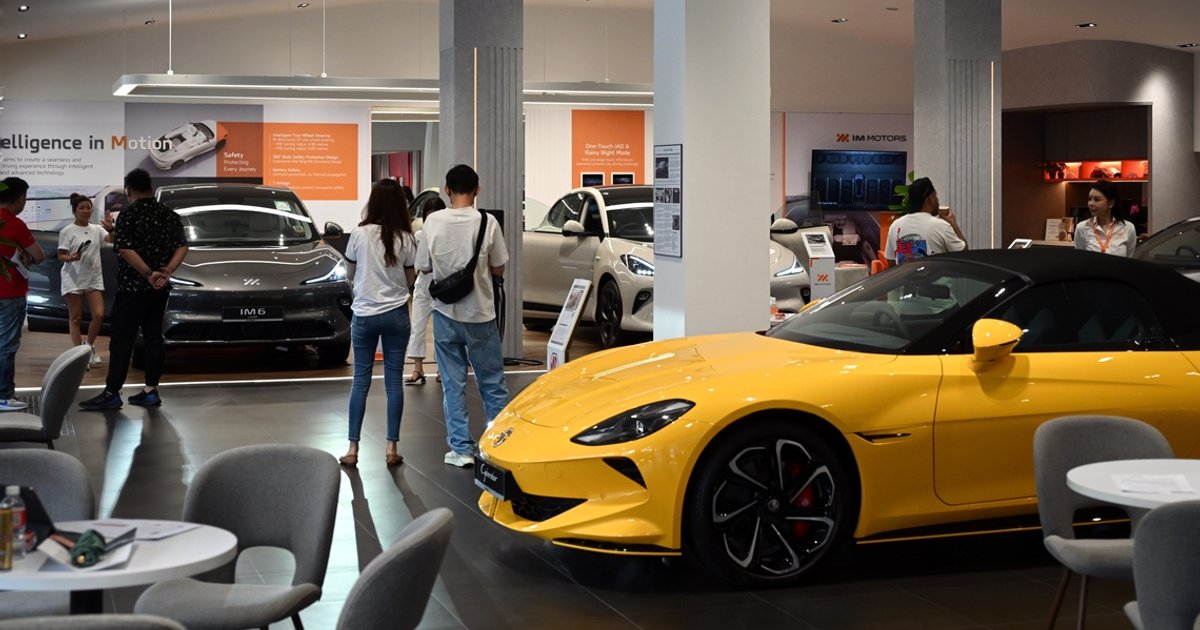
National University of Singapore economics associate professor Timothy Wong said changes to the current system are necessary because the categories no longer reflect the intended policy differentiation. He explained that all previous limits were evaded over time with technology, and the new open market value limit is designed so that buyers cannot evade the dollar cost of the car. Yet evolving vehicle technology and changing market conditions have strained the current division between mass-market and premium vehicles.
How the Proposed Feebate Structure Would Operate
Each car’s certificate price would adjust according to its median open market value calculated from past registrations over a set period like the past year, representing the assessed import cost including purchase price, freight, insurance, and all other sale and delivery charges for importing the car as assessed by Singapore Customs. This import value is already utilized to calculate Additional Registration Fees.
The agency’s proposed framework combines Categories A and B into a single passenger car bidding pool. To preserve financial differentiation between vehicle classes, the Land Transport Authority introduced a value-based fee-and-rebate mechanism.
In illustrative examples using 2025 registrations, a mass-market vehicle like a Toyota Sienta would receive a S$15,000 rebate under a three-band structure, but S$7,500 under a five-band structure. Meanwhile, a higher-end car such as a Tesla Model 3, BYD Sealion 7 Performance, or Mercedes-Benz A180, whose median import value falls above the 50th percentile, would require consumers to pay a surcharge on top of their certificate premium.
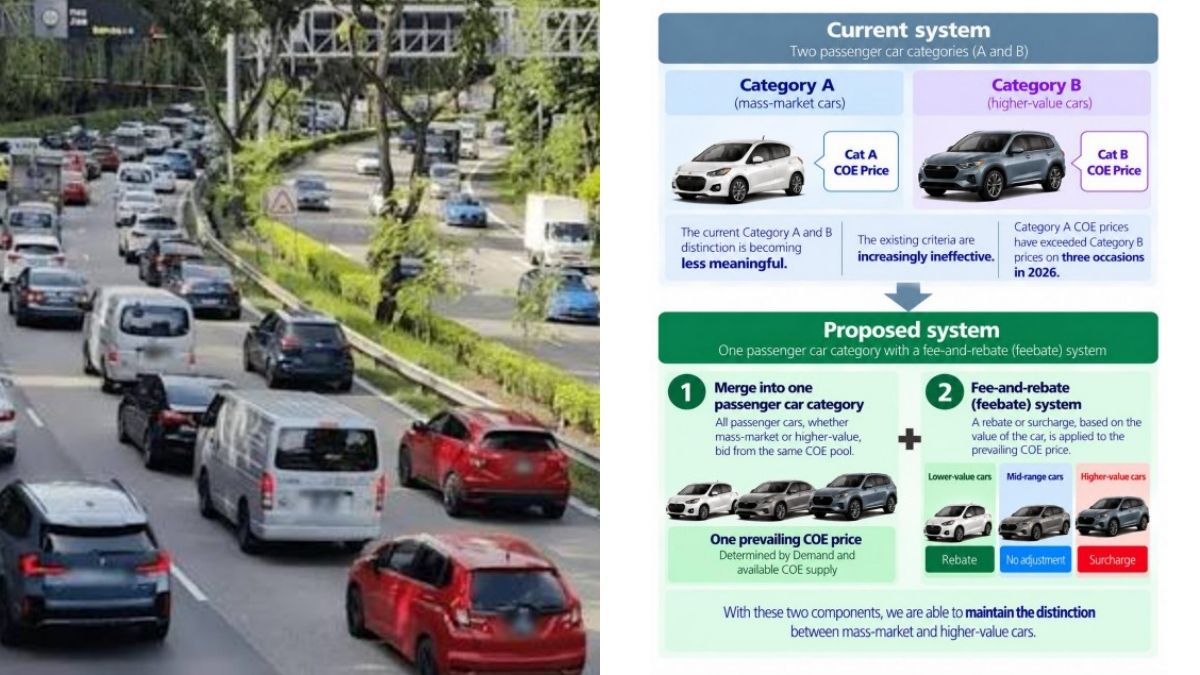
- Three-band structure: Features a S$15,000 rebate band for lower-value cars, a middle band with no adjustment, and a S$15,000 surcharge band for higher-value vehicles. This model is simpler to administer but creates larger jumps between adjacent bands.
- Five-band structure: Offers gradual differentiation with rebates of S$15,000 or S$7,500, a neutral middle band, and surcharges of S$7,500 or S$15,000. This option reduces treatment differences between comparable vehicles but increases administrative complexity.
The agency also considered whether individuals who own more than one car should face a surcharge similar to the Additional Buyer’s Stamp Duty applied to residential properties.
Impact on Consumers and Unresolved Questions
Based on estimates by The Straits Times, car registrations will likely reach around 55,000 units in 2026, marking a modest rise from 52,381 units in 2025 that falls far short of absorbing the demand from 87,302 car registrations during the 2016 peak. Vehicle growth rates for cars and motorcycles were brought down to zero for 10 years in February 2018, remaining in effect until January 31, 2028.
The public consultation runs from October 8 at 5pm until November 2, 2026, at 11:59pm.
“As vehicle technology and the vehicle market continue to evolve, it is timely to review whether the current categorisation framework remains fit-for-purpose. Through this consultation, we invite the public to share their views on the proposed changes and trade-offs involved.”
Lim Zhijian, Land Transport Authority chief operating officer
Worth a look
- Unilever Nigeria Awards Scholarships to Children of Non-Management Staff
- Four Filipinas Enter Fortune 2026 Most Powerful Women Asia List
- US Proposes $70,000 OPT Fees For International Students: Three Things To Know (archyde.com)
- Kazakhstan proposes regional declaration on responsible AI use (newsarchyuk.com)

Unilever Nigeria Awards Scholarships to Children of Non-Management Staff
Unilever Nigeria has awarded secondary school scholarships to children of non-management employees through its long-running Unilever Nigeria Scholarship...

Four Filipinas Enter Fortune 2026 Most Powerful Women Asia List
Four Filipinas secured positions on the 2026 Fortune Most Powerful Women Asia list, led by GCash president and...

Japan Fair Trade Commission raided four major beer makers over alleged price-fixing cartel
Japan’s Fair Trade Commission launched compulsory investigations into Asahi, Kirin, Sapporo, and Suntory on October 7, 2026, raiding...

Gold Prices Hold Steady as Dollar and Treasury Yields Offset Rate Bets
Gold prices held steady near $4,140 per ounce as pressure from a strengthening U.S.