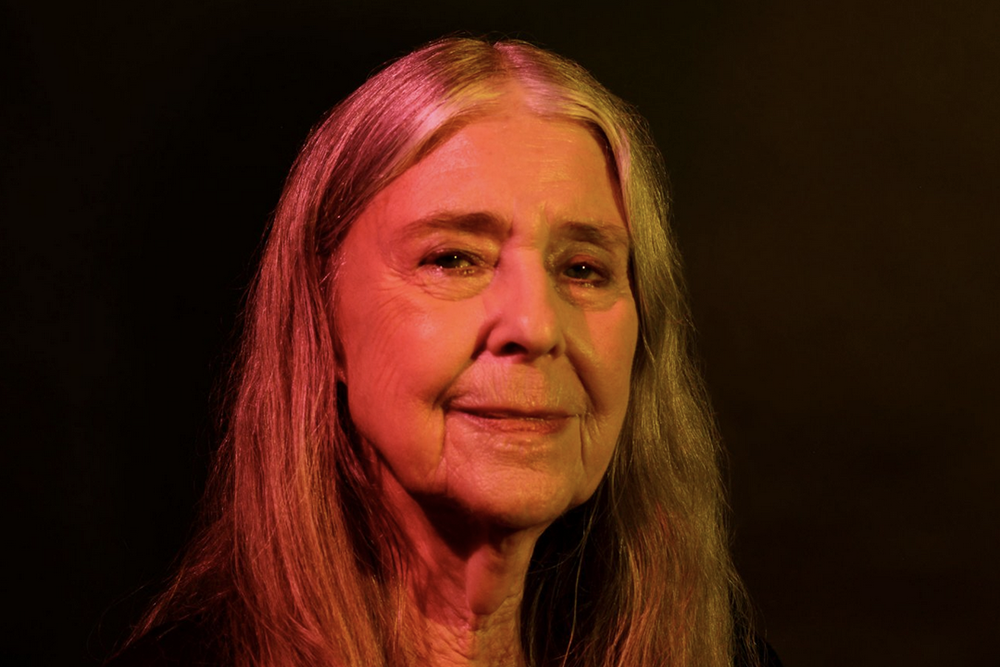
Margaret Hamilton, the pioneering computer scientist who led the team developing onboard flight software for NASA’s Apollo missions and popularized the term software engineering, has died at the age of 90. Her software overrode a computer overload during the historic Apollo 11 moon landing.
The Massachusetts Institute of Technology confirmed that Hamilton died on September 30 at a hospital in Cambridge, Massachusetts. Olivier de Weck, interim head of the MIT Department of Aeronautics and Astronautics, paid tribute to her legacy, stating that to say she was ahead of her time would be a dramatic understatement
.
Building Flight Software for NASA’s Apollo Program
Born in Paoli, Indiana, in 1936, Hamilton studied mathematics at the University of Michigan before earning a Bachelor of Arts in mathematics from Earlham College in 1958. She moved to Boston, Massachusetts, the following year with her husband, initially taking a job at MIT to support him while he studied law at Harvard. Early in her tenure at MIT, she programmed computers for weather forecasting alongside Edward Lorenz, who pioneered chaos theory.
In 1965, Hamilton joined an MIT lab seeking software developers for the Apollo project. She managed the Software Engineering Division of the MIT Instrumentation Laboratory, which secured a NASA contract in 1961. By 1968, she served as assistant director in charge of the command and service module team, leading more than 400 people writing and testing onboard in-flight code.
There was no second chance. We knew that. We took our work seriously, many of us beginning this journey while still in our 20s. Coming up with solutions and new ideas was an adventure. Dedication and commitment were a given. Mutual respect was across the board. Because software was a mystery, a black box, upper management gave us total freedom and trust. Looking back, we were the luckiest people in the world; there was no choice but to be pioneers.
Margaret Hamilton, via MIT News
Saving the Apollo 11 Lunar Landing From Computer Overload
Hamilton’s defensive programming and priority-driven software architecture proved crucial during humanity’s first lunar landing in July 1969. Moments before the Eagle module touched down on the lunar surface, the onboard computer raised a 1202 error alarm. Unwanted inputs from a radar system overloaded the processor, threatening the landing procedure.
Because Hamilton and her team had engineered priority-driven software, the system automatically shed non-essential background tasks to focus exclusively on guidance computations. Guidance officer Steve Bales confirmed the mission was a go after computer engineer Jack Garman advised that the alarms did not require an abort, allowing Neil Armstrong and Buzz Aldrin to land safely.
Earlier in the program, Hamilton’s rigorous focus on fault tolerance was shaped by an incident involving her four-year-old daughter, Lauren. While playing with a command module simulator, Lauren accidentally triggered a pre-launch program called P01 in midflight, crashing the system. Hamilton proposed adding a software safeguard against the error, though she was initially overruled because testers assumed astronauts would never make that mistake.
Lauren described her mother as a really eccentric and fun character
who delighted in gathering vintage apparel, held a very mischievous sense of humor,
and was very much a mathematician and into the abstraction of how to turn thought, I guess, into software.
Surviving family members include her daughter Lauren, son-in-law Richard Selesnick, two grandsons, four great-grandchildren, and siblings John, David, and Kathryn.

Hamilton Establishes Software Engineering as a Discipline
During her time at MIT, writing code lacked the professional status afforded to hardware design. To assert legitimacy for the discipline, Hamilton began using the term software engineering
to distinguish it from other fields while treating it as part of overall systems engineering. Reflecting on the terminology, she noted that it was initially treated as a running joke.
After the Apollo program concluded, the MIT Instrumentation Laboratory spun out into the Draper Laboratory. Jerry Wohletz, president and CEO at Draper, noted in a statement that Hamilton left an indelible mark,
stating that she helped ensure astronauts landed safely on the lunar surface and returned home safely.
Hamilton Receives Presidential Medal of Freedom and Lego Honor
In later decades, Hamilton became a celebrated figure for women in technology, anchored in part by a widely shared photograph of her standing beside a stack of printed Apollo code. In 2017, she also became an official Lego Minifigure after a set honoring women of NASA history, originally designed by MIT science communicator Maia Weinstock, became available worldwide. In 2016, President Barack Obama presented her with the Presidential Medal of Freedom, noting that she symbolized the unsung women who helped send humankind into space. Paul Curto, the technologist who nominated her for the honor, remarked at the time on her foundational concepts of asynchronous software, priority scheduling, end-to-end testing, and man-in-the-loop decision capability. In 2003, she received NASA’s Exceptional Space Act Award, followed by the Computer History Museum Fellow Award in 2017, the Intrepid Lifetime Achievement Award in 2019, and her 2022 induction into the National Aviation Hall of Fame.
NASA Administrator Jared Isaacman paid tribute on X, describing her as a pioneer whose work enabled humanity’s first journeys to the moon. A memorial service is scheduled for the spring in Cambridge, Massachusetts.
Worth a look

WashU Researchers Develop Modular Framework for Advanced Photonic Circuits
We developed a manufacturing process that will give us more freedom to design these new photonic chips, said...

Researchers Developed the Technology That Integrates AI and Microscopy to Screen Millions of Genetically Modified Cells
Researchers have developed SPARCS, a new technology that integrates artificial intelligence with microscopy to screen millions of genetically...

Best Prime Day Tech, Kitchen, and Fashion Deals Still Available After Sale
Amazon’s Prime Big Deal Days, which concluded on October 7, 2026, left behind a trail of active discounts...

Pininfarina and JAS Reveal the V6-Engined JAS Tensei by Pininfarina
Pininfarina and JAS have revealed the finished Tensei, a modified Mk1 Honda NSX featuring a 3.4-litre Judd-developed V6...