
Marsha Blackburn will become Tennessee’s next governor in January, creating a vacancy in her U.S. Senate seat that she will fill by appointing her successor. By resigning at the last possible moment before her inauguration, Blackburn ensures she—not outgoing Governor Bill Lee—will appoint her own successor to serve until a 2028 special election.
The mechanics of this transition hinge on a single calendar date. Tennessee law requires the governor to be sworn in on “the first Saturday following the fourteenth day of January,” which lands on January 16 in 2027, Knox News reported. Blackburn has been candid that she plans to remain in the Senate until that exact moment, resigning only after she takes the oath as governor. That timing matters because state law gives the sitting governor the power to appoint a replacement for a Senate vacancy; if Blackburn stepped down even a day earlier, Governor Bill Lee would make the choice instead.
Blackburn defeated Democratic nominee Jerri Green 45.52% to 42.95% on November 4, according to the Tennessee Secretary of State’s Office, as KFVS12 reported. Her victory makes her the 51st governor of Tennessee and extends the Republican hold on the office that has lasted since 2011. What happens to her Senate seat in the interim, however, remains one of the most consequential unanswered questions in state politics.
Why Blackburn waits until the last minute to resign
The strategy follows a precedent set in Alaska in 2002. When longtime Senator Frank Murkowski resigned to become governor, he waited until his inauguration day to step down, allowing himself to appoint his daughter, Lisa Murkowski, to the seat, Knox News noted. Blackburn appears to be employing the same maneuver: by staying in the Senate through January 15 and resigning only after she is sworn in on January 16, she transfers appointment power to herself.
Lee declined to comment on whether he would attempt to make the appointment himself if given the opportunity, and his staff did not respond to multiple inquiries from Knox News leading up to the election. That silence leaves Blackburn with unilateral control over who joins Senator Bill Hagerty in representing Tennessee—at least temporarily.
The short list of potential appointees
Speculation about Blackburn’s choice has centered on several prominent Republicans. Knox News reported that names mentioned most frequently include U.S. Representative Tim Burchett, former Knox County Mayor Glenn Jacobs, former CoreCivic CEO Damon Hininger, and U.S. Secretary of Defense Pete Hegseth. Each brings different political capital: Burchett has congressional experience, Jacobs has county executive experience, and Hegseth holds a cabinet position.
During the campaign, Blackburn refused to discuss her potential replacement, noting that it is illegal for candidates to promise appointments in exchange for election support. Now that she is governor-elect, those constraints no longer apply, but she has not signaled how she will approach the decision.
What recent Senate appointments reveal about the calculus
Two recent gubernatorial appointments offer a window into how Blackburn might think. In 2024, Ohio Governor Mike DeWine appointed a replacement for JD Vance after Vance became vice president. DeWine told the Columbus Dispatch that he viewed the choice as a long-term investment in Republican control of the seat.
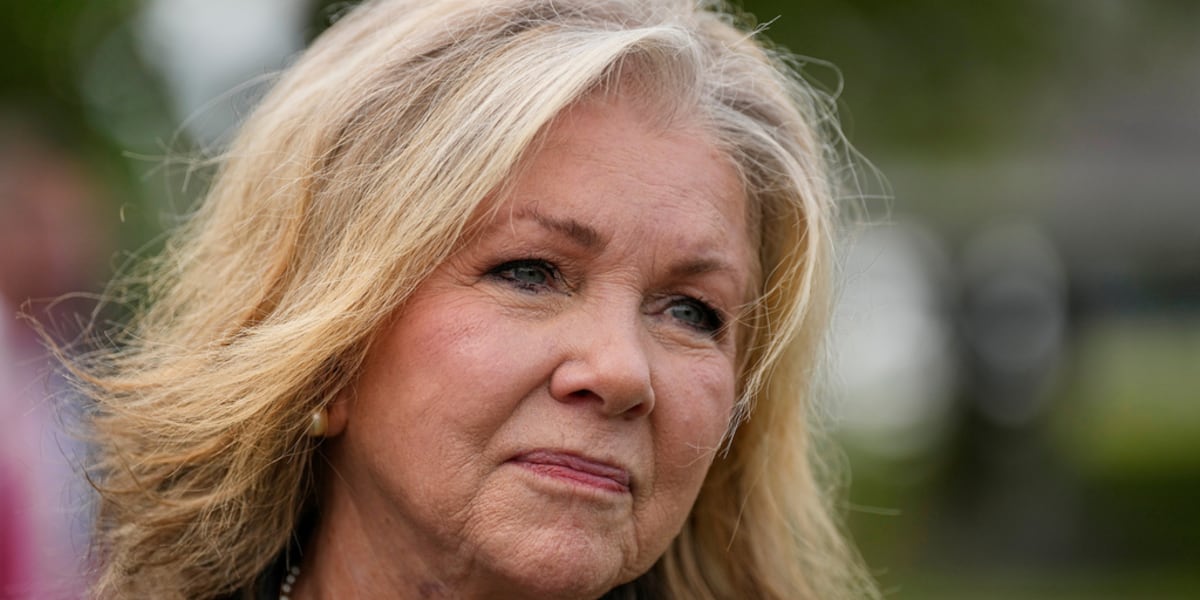
“It takes someone who really will focus on the state of Ohio, will focus on national issues, someone who will really work hard, someone who wants to get things done,” DeWine said. “These are qualifications, I think, that are very important. It also has to be someone who could win a primary. It has to be someone who could win a general election, and then two years later, do all that again. So, this is not for the faint-hearted.”
DeWine selected Lieutenant Governor Jon Husted, though Husted lost his bid to retain the seat in the November 3 election to former Senator Sherrod Brown. In Florida, Governor Ron DeSantis appointed Attorney General Ashley Moody to replace Marco Rubio, who left to become secretary of state. DeSantis told USA TODAY Network that he avoided choosing a House member because of the slim Republican majority in the chamber at the time.
“If you put someone there and it reduces the numbers in the House it may make it harder for them to enact an agenda,” DeSantis said.
That consideration will not apply to Blackburn. Democrats secured a big House majority, meaning Tennessee Republicans can afford to lose a House seat if Blackburn chooses Burchett or another representative.
The 2028 clock is already ticking
Whoever Blackburn appoints will serve only until the next general election in 2028, when voters will choose a senator to serve the remainder of the term through 2030, according to congress.gov. That compressed timeline means the appointee must immediately begin fundraising and campaigning, effectively running for a full term while serving in a temporary capacity. The seat will be on the ballot again in 2030 for a full six-year term.
For Tennessee voters, the practical impact is that they will have no direct say in who represents them in the Senate for the next two years. The decision rests entirely with Blackburn, who will make the appointment from the governor’s mansion after January 16. Until then, the question of who will succeed her remains officially unanswered—and Governor Lee has not said whether he would have tried to claim that power for himself.
Worth a look

US Stock Futures Mixed as Investors Weigh Midterm Results and Oil Prices
U.S. equity futures traded mixed early Thursday, November 5, 2026, as Wall Street digested a powerful rally that...

SWAT Team Arrests Cheyenne Man Following Felony Strangulation Warrant
When the flash-bang detonated outside the house at 8512 Cowboy Road just after 8 a.m. Wednesday, the sound...

39 Best Art Galleries and Museums in Downtown Charleston: An Interactive Guide
Thirty-nine galleries and museums now anchor downtown Charleston's cultural landscape, stretching from the French Quarter down to Gallery...
UW-Madison Campus Features Autumn Colors and Wildlife
Four sandhill cranes were photographed frolicking near Rennebohm Hall and the Nielsen Tennis Stadium during an autumn evening,...