
Meta Platforms shares have slid 17% from their recent peak as heavy infrastructure spending and a first-ever negative free cash flow quarter sparked market anxiety, even as advertising revenue surged 26% to $64.60 billion and management raised full-year capital expenditure guidance.
On one hand, the underlying advertising machine is running at full throttle, pushing revenue past analyst projections. On the other hand, a staggering capital expenditure commitment and an aggressive artificial intelligence buildout have driven cash outflows to historic levels, triggering a sharp correction in the stock.
How Heavy Infrastructure Spending Triggered Negative Free Cash Flow
The core of the market panic centers on a single financial metric that marked a first in public history for the social media giant since its 2012 initial public offering. Operating cash flow climbed 9% to $32.79 billion, but it was completely overwhelmed by capital spending of $34.91 billion. That mismatch left free cash flow at negative $2.12 billion, a stark reversal from the positive $10.63 billion recorded a year earlier.
Management signaled that the spending cycle is far from finished. The company raised the floor of its full-year 2026 capex guidance to $135 billion, with expectations for even larger deployments in 2027. Disclosures revealed roughly $825 billion in future lease and contract commitments as of September 30, up from $700 billion in July. That total includes $355 billion in data-center leases and $454 billion in non-cancelable contracts, with $121 billion scheduled for 2027 alone.
Why Strong Advertising Growth and the Muse AI Agent Offer a Counterweight
Beneath the heavy spending headlines, the commercial engine powering the company remains exceptionally strong. More than three billion people worldwide use at least one of the company’s core applications—Facebook, Messenger, WhatsApp, and Instagram—daily. That massive daily engagement continues to draw advertisers eager to reach active users, resulting in double-digit advances in both ad impressions and ad prices.
The social media giant stands out as a major player in the artificial intelligence revolution, and its digital marketing environment continues to benefit advertisers as the company scales its platforms.

How One-Time Legal Charges Distorted GAAP Earnings
Much of the initial market scare stemmed from headline GAAP figures that failed to reflect the operational reality of the quarter. GAAP diluted earnings per share landed at $3.83 because the period absorbed a one-time $9.89 billion settlement charge related to teen mental health litigation involving a group of state attorneys general.
Strip out that legal charge, and the company earned an adjusted $7.40 a share, comfortably beating Wall Street expectations. Total revenue for the quarter reached $64.60 billion, representing a 26% increase from the prior year and surpassing consensus estimates by roughly $1.2 billion. Advertising alone generated about $63 billion, accounting for close to 98% of the total top line.
What the Balance Sheet and Forward Valuations Reveal for Investors
With the stock sliding toward $643—down roughly 17% from its 52-week high of $779.82—analysts are divided on whether the sell-off represents a buying opportunity or a warning sign. The company held $82.45 billion in cash, cash equivalents, and marketable securities as of September 30, with about $10.8 billion restricted in escrow until 2028 to 2030.
Trading at roughly 21x forward earnings estimates, the stock offers patient buyers a dominant, cash-generating franchise compounding revenue at better than 25%, provided the massive artificial intelligence infrastructure investments eventually deliver the anticipated financial return.
More on Meta Platforms
Worth a look
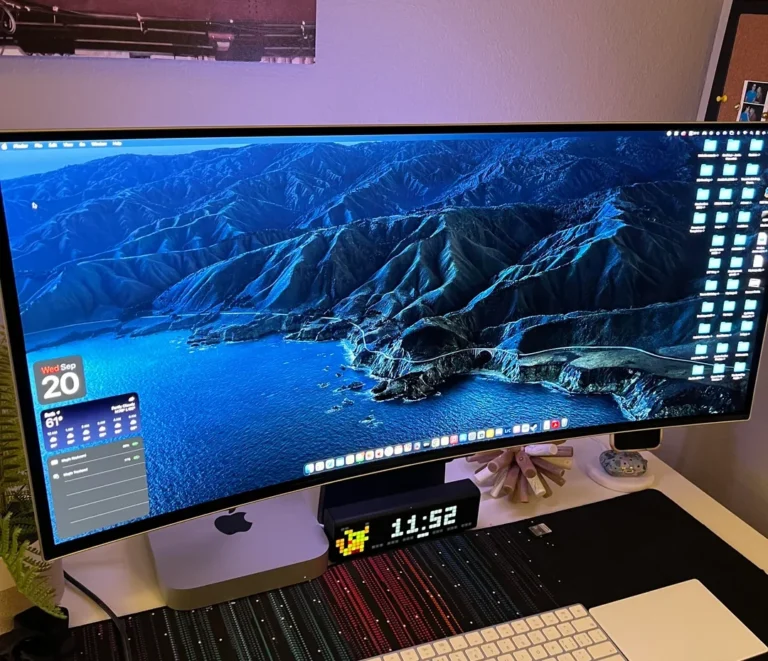
Mobile Pixels Crowdfunds $434,707 from 392 Backers for Prisma 40-inch Curved 5K Monitor
Mobile Pixels has introduced Prisma, a 40-inch curved 5K monitor featuring an integrated workspace hub designed for Apple...

As always-on AI wearables flood the consumer market, tech giants and startups are rolling out
As always-on AI wearables flood the consumer market, tech giants and startups are rolling out audio-recording pendants, smart...

Metro 4A Games updates Redux games with modern graphics options
Ukrainian developer 4A Games has rolled out a next-generation PC update for Metro 2033 Redux and Metro Last...

Berkshire Shares Hit New All-Time Highs Under Greg Abel
Berkshire Hathaway Class B shares reached $543.06 in New York, touching a fresh all-time high amid a broader...