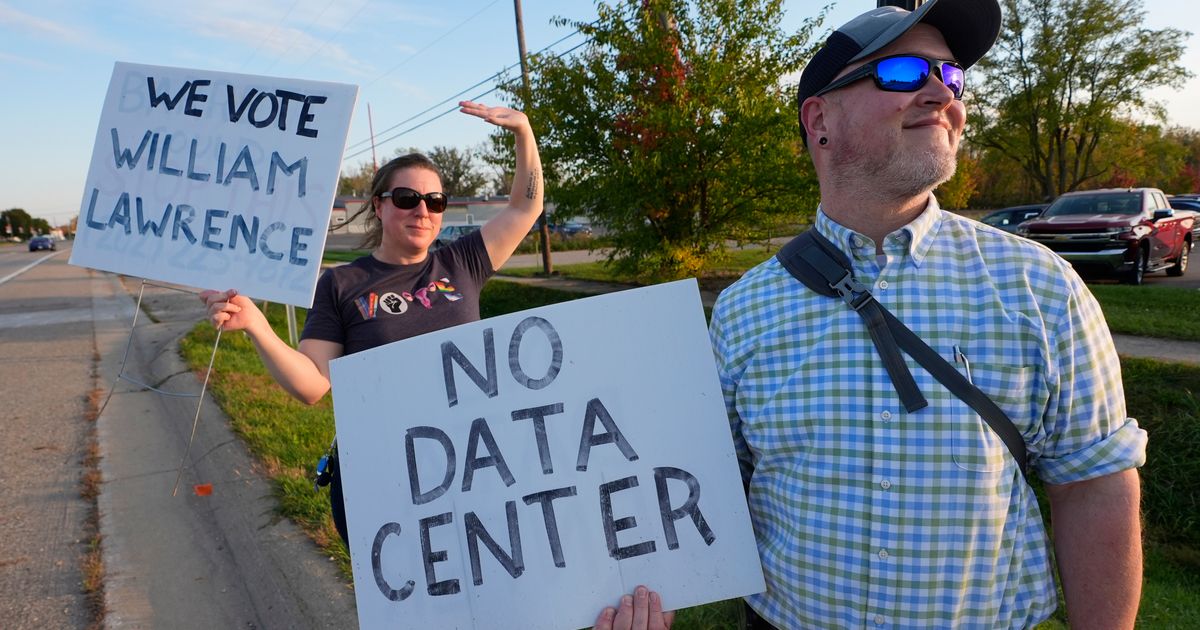
The recent midterm elections have delivered a sharp rebuke to the rapid expansion of artificial intelligence data centers across the United States. Following a campaign season defined by public frustration over energy consumption and infrastructure strain, a wave of newly elected officials, largely Democrats, have secured positions on platforms promising to place these server warehouses under stricter regulatory oversight. According to reporting by the Associated Press, this shift in political power suggests that even if federal-level efforts are stymied by a pro-industry administration, the landscape for developers is poised to become significantly more restrictive at the state and local levels.
While data center construction was not the primary issue driving most voters to the polls, it became a potent wedge issue in several key states. Candidates in Texas, Ohio, Georgia, Nevada, and Iowa—all major hubs for data center development—successfully challenged long-standing Republican incumbents by weaving anti-data center sentiment into broader messaging about affordability and utility costs. Data from the research firm AdImpact reveals that campaigns invested more than $380 million in television advertising mentioning data centers, with Democratic candidates outspending their opponents by a ratio of more than 3-to-1.
The Shift in State-Level Governance
The electoral outcomes have granted Democrats full control of state governments in Wisconsin, Minnesota, Pennsylvania, Nevada, and Michigan. Data Center Watch, a project of the AI security consultancy 10a Labs, tracked the platforms of winning candidates and found that a vast majority support either stronger regulatory frameworks or outright moratoriums on new construction. Of the 34 victorious gubernatorial candidates in races called by the Associated Press, 32 have expressed support for increased restrictions, with 12 explicitly backing bans or formal moratoriums.
In Wisconsin, Governor-elect David Crowley shifted his stance during the campaign under pressure from his Republican opponent, eventually committing to a potential moratorium and the repeal of sales tax exemptions for data center operators. Crowley told the Associated Press that his administration is now evaluating policies that would mandate greater transparency regarding water and energy usage, require community approval for new projects, and insulate local ratepayers from the costs associated with powering these facilities.
Local Referendums and Community Resistance
The opposition to data centers is not limited to statehouses. An analysis by the polling and data science firm Redbud Consulting found that voters in local referendums across the country have overwhelmingly supported restrictions on new developments. Out of 47 referendums tracked in 44 municipalities across 12 states—including significant activity in Ohio, Maine, Illinois, and Kansas—voters approved restrictive measures in 44 instances.
Public sentiment appears to be rooted in concerns over resource depletion, particularly water, which is a critical necessity for cooling server infrastructure. Clayton Tucker, the newly elected Democratic agriculture commissioner in Texas, noted that his campaign’s focus on the existential threat data centers pose to rural water supplies was a decisive factor in his victory. “You know, there’s an old saying around here that ‘whiskey’s for drinking and water’s for fighting,’” Tucker told the Associated Press. “And that’s exactly what happened.”
Industry Response and Economic Consequences
Tech giants are now moving to mitigate the political fallout. OpenAI released a new framework on Thursday outlining commitments to the communities hosting their data centers, calling on policymakers to establish clear, standardized rules for infrastructure development. The Data Center Coalition, an industry trade group, acknowledged the growing pressure but warned of potential economic repercussions. Dan Diorio, an official with the coalition, noted that while the industry understands the need to build trust, the fulfillment of these campaign promises could result in lost tax revenue and a slowdown in broader economic expansion linked to domestic manufacturing.

The financial markets have already begun to react to this uncertainty. On Thursday, the Nasdaq index, which includes many of the tech firms leading the AI boom, closed 11% below its all-time high. Analysts at Morgan Stanley have warned that the election of candidates skeptical of data center expansion could lead to a fragmented regulatory environment, effectively splitting the country into regions that are welcoming to tech infrastructure and those that are effectively closed to it. Morgan Stanley specifically highlighted the election of Democrat Gina Hinojosa as governor of Texas as a major risk factor for the industry, given her stated commitment to blocking projects that do not meet rigorous community and economic standards.
Despite the high-stakes rhetoric, the Associated Press Voter Poll suggests that data center regulation remained a secondary issue for the broader electorate, falling well behind concerns regarding government corruption and the rising cost of living. Nevertheless, in states like Texas—which is projected to surpass northern Virginia as the world’s largest data center market by 2030—the political cost of ignoring local opposition has proven to be substantial.

2024 Jeep Grand Cherokee 4xe Features Advanced Safety Technology
The 2024 Jeep Grand Cherokee 4xe Inventory at Bridgeland Auto Brokers For drivers in Central New York navigating...

NTSB: Wind Damage Caused Southwest Flight 746 Dutch Roll Incident
For the 175 passengers and six crew members aboard Southwest Airlines flight 746 on May 25, 2024, a...

Juneau Paratransit Reliability Issues Impact Seniors and Residents With Disabilities
The Cost of Lower Bids: Juneau Seniors Face Transit Barriers For the residents of Juneau’s Pioneer Home, a...

U.S. Bancorp to Resume Share Buybacks and Expand Capital Markets via BTIG Acquisition
U.S. Bancorp, the Minneapolis-based banking giant, is preparing to resume share buybacks as its capital markets division gains...