
When the founder of a government-funded Minneapolis violence intervention group saw his annual compensation nearly triple to $246,000, it laid bare a system of municipal spending operating without rigorous financial controls. The Center Square reported that Muhammad Abdul-Ahad, chief executive officer of T.O.U.C.H. Outreach, defended his 2024 earnings by pointing to the hazardous nature of his frontline work on the city’s south side. Yet that substantial payout coincided with a period when municipal overseers failed to properly verify contracted work or review invoices, leaving public dollars vulnerable.
The Financial Leap and City Oversight Failures
The funding trajectory for T.O.U.C.H., which stands for Teaching Our Urban Communities Hope, mirrors a dramatic expansion in municipal support. In 2021 and 2022, the nonprofit reported annual revenues of under $50,000. By 2023, backed by government grants, revenues climbed to about $881,000, and Abdul-Ahad’s compensation rose to $88,400. In 2024, as city funding approached $1.5 million, his salary surged to $246,000. That figure places his earnings above those of many top municipal officials, including the city attorney and chief financial officer.
For comparison, the leader of the Metro Youth Diversion Center, another nonprofit receiving city contracts for identical intervention work, was paid about $134,000 in 2024. Abdul-Ahad’s compensation package outpaced his peer by nearly double.
Administrative scrutiny over these funds has lagged behind the spending. A June audit by the Minneapolis city auditor’s office warned of significant vulnerabilities within the Neighborhood Safety Department, which oversees the contracts. Investigators cited deficiencies in verifying work and reviewing invoices, concluding plainly that the city faced an increased risk of fraud, waste, and abuse.
The audit followed a 2023 resident lawsuit alleging arbitrary contract procedures. That litigation ended in a 2024 settlement requiring violence interrupter groups to provide more detailed reports on how they spend taxpayer dollars. Jess Olstad, a spokesperson for the city, stated that independent entities determine employee pay within established reimbursement limits, though she declined to comment on Abdul-Ahad’s specific salary or whether the city cross-references public tax filings.
Street-Level Realities Versus Executive Pay
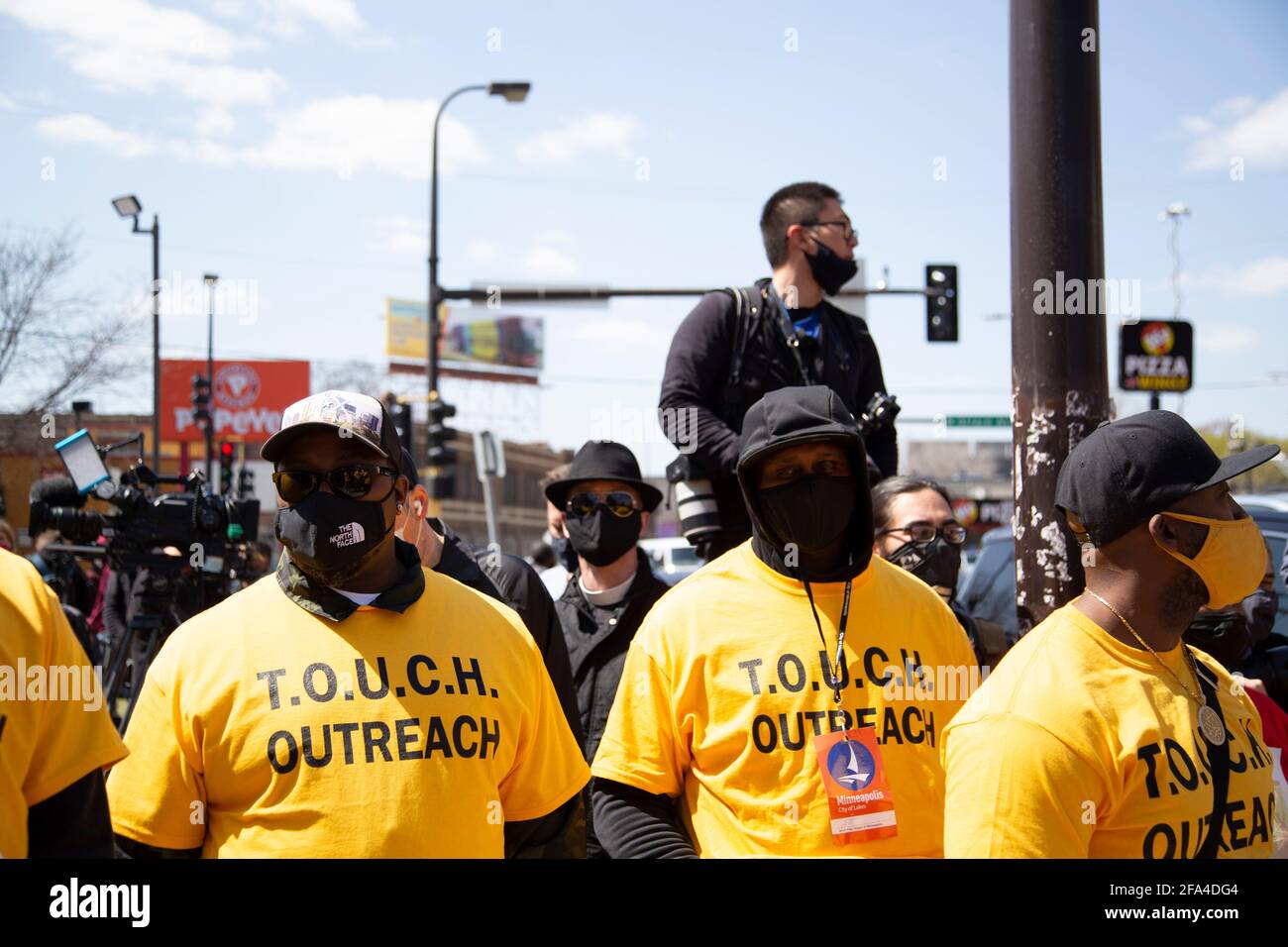
T.O.U.C.H. deploys workers in bright yellow shirts five days a week to walk streets, alleys, and parking lots south of downtown Minneapolis. Their primary tactic involves occupying public spaces to make drug dealers and users uncomfortable. While Abdul-Ahad credits this presence with temporarily displacing local drug trade, he acknowledges the limitations.
“The troublemakers just move elsewhere,” Abdul-Ahad told The Center Square.
Workers also log homeless individuals to connect them with public services and occasionally intervene in active disputes, such as a recent shoving match between coworkers at the Midtown Global Market. The work carries real hazards, including encounters with knives, firearms, and bear spray. Abdul-Ahad noted that his own past includes a federal sentence of up to 10 years handed down in 2009 for his role in a violent drug ring operated out of his family home.
Changes in municipal contracting have already altered staffing levels. New restrictions embedded in last year’s agreements effectively capped worker pay at roughly $20 per hour, down from the $30 hourly rate Abdul-Ahad previously offered. That reduction caused the nonprofit to lose numerous workers, leaving behind a core group of individuals intimately familiar with the patrol areas.
Questions of Outside Consulting and Nonprofit Accountability
Beyond the primary city contracts, questions have emerged regarding outside revenue streams and expense reporting. Abdul-Ahad stated that an unspecified portion of his 2024 compensation came from personal consulting work for other cities across the country, though those funds are not delineated in the nonprofit’s IRS filings. The organization also reported nearly $40,000 in unspecified travel expenses across 2023 and 2024.
“If a charity employee is performing consulting work while on the clock using charity time, the revenue such consulting generates should go to the charity, not the employee.”
said Laurie Styron, executive director of CharityWatch, a prominent nonprofit watchdog. Styron also pointed to the initial classification of Abdul-Ahad as an independent contractor during his first two years of earning a significant salary, noting that such misclassification can obscure executive compensation and allow organizations to avoid payroll tax obligations.
Chloe Jackson, an unpaid member of the nonprofit’s five-person board of directors, defended the compensation structure. She maintained that the salary was established within the parameters and requirements of the municipal contracts, adding that critics often fail to understand the daily dangers community workers face.
Shifting Strategies for Public Safety
City leaders are currently reevaluating the entire violence interrupter framework. While citywide reports of gunfire have dropped more than 50% since a 2021 peak, Mayor Jacob Frey has proposed cutting funding for the street-level interrupter program by more than 70% in the upcoming budget. The administration is shifting focus toward the Community Safety Ambassador program, which relies on city employees trained to disengage from unsafe situations and contact police.
Abdul-Ahad warned that cutting the funding will cause crime to rise. Meanwhile, municipal funding to T.O.U.H. Outreach was cut by about half in 2025, and Abdul-Ahad indicated his compensation for that year was likely lower than the previous peak, though complete tax filings for 2025 are not yet public.

Maryland Department of Agriculture reports spotted lanternfly spread
What started as a single accidental hitchhiker in a 2014 stone shipment to Berks County, Pennsylvania, has evolved...

Willamette University Expands Bearcat Pathway to Portland Community College
Portland Community College students aiming for a four-year degree now have a direct route to Willamette University, following...

Environmental Groups Urge Governor to Address Louisiana Orphan Wells
A coalition of environmental groups asked the governor on Monday to address the risks of thousands of abandoned...
Kentucky State University Appoints New Student Success Leaders
Kentucky State University has appointed Myiah Clemons and Jasmine Prince to key roles on its Student Success team,...