Portland State University offers a direct path to a master’s degree that lets computer science undergraduates bank graduate credits at undergraduate tuition rates, a financial lever most four-plus-one programs do not pull.
The Bachelor’s + Master’s track, detailed by the university and its Computer Science department, allows students who have cleared 16 upper-division credits with a 3.3 GPA to take up to 18 credits of 500-level coursework before they formally graduate, pdx.edu reported. Those credits count toward both degrees, and the graduate application fee and recommendation letters are waived for admitted students.
The math is blunt: 18 shared credits at undergraduate pricing instead of graduate pricing.
“The undergraduate advisor can assist with course enrollment and handle DARS exceptions for using 500-level courses toward your BS degree requirements,” the Department of Computer Science noted in its advising guide. “The graduate advisor can guide you on selecting 500-level courses that fulfill future MS requirements while keeping your undergraduate workload manageable.”
Advising is split. The undergraduate office maps the junior and senior years and clears the technical hurdles of applying graduate classes to a bachelor’s audit. The graduate office vets the B+M application — promising a two-week turnaround on a rolling basis — and ensures the 500-level picks actually satisfy master’s requirements. Both meet with students during the senior year to prevent overlap or credit loss.
Timing is the trap. Students must apply to the master’s program within one academic year of finishing the bachelor’s, or the shared credits expire for graduate purposes. They must also enroll in the 5xx version of any cross-listed 4/5xx course; the 4xx section will not count toward the MS.
The department publishes a five-year course plan that front-loads the shared credits in the fourth year. A typical senior fall includes CS 358, a math elective, and two 500-level electives; winter adds a capstone and two more 500-level courses; spring finishes the capstone and a final 500-level elective. That sequence delivers the 18 shared credits before the BS posts.
First-year students take First Year Inquiry, an approved lab science elective, and MTH 251Z in the fall for 14 credits; winter adds CS 161 and MTH 252Z for 18 credits; spring replaces the math course with CS 162 for 14 credits. Second-year fall includes the Race and Ethnic Studies requirement, MTH 253Z or MTH 261, CS 163, and a general elective for 15-16 credits; winter covers Sophomore Inquiry, CS 250, and a general elective for 12 credits; spring adds CS 205, CS 251, and a general elective for 16 credits.
Third-year fall comprises an Upper Division Cluster, CS 302, CS 350, and WR 227Z for 16 credits; winter adds CS 314, CS 333, and CS 305 or PHL 314U for 16 credits; spring includes an Upper Division Cluster, an Upper Division CS Security Elective, CS 486, and an Upper Division CS Elective for 16 credits, with the milestone to opt in to the major via the department during fall term prior to week 8.
Post-baccalaureate students — those who already hold a bachelor’s in another field — are explicitly excluded from the tuition break. PSU policy charges them graduate rates for any 500-level work, the university confirmed.
Portland State University traces its roots to the Vanport Extension Center, founded in June 1946 by Stephen Edward Epler to serve returning World War II veterans under the G.I. Bill. The first summer session enrolled 221 students at $50 tuition. After the devastating Vanport Flood of May 30, 1948, the college refused to close, earning the nickname “the college that wouldn’t die.”
It moved to downtown Portland in 1953, became Portland State College in 1955, and gained university status in 1969. Today it is one of two public universities in a major Oregon city, classified as an R2 doctoral research institution with approximately 21,000 students enrolled as of 2023.
Applications are reviewed on a rolling basis. Students typically apply by the end of winter term junior year to leave enough runway for six graduate courses before commencement.
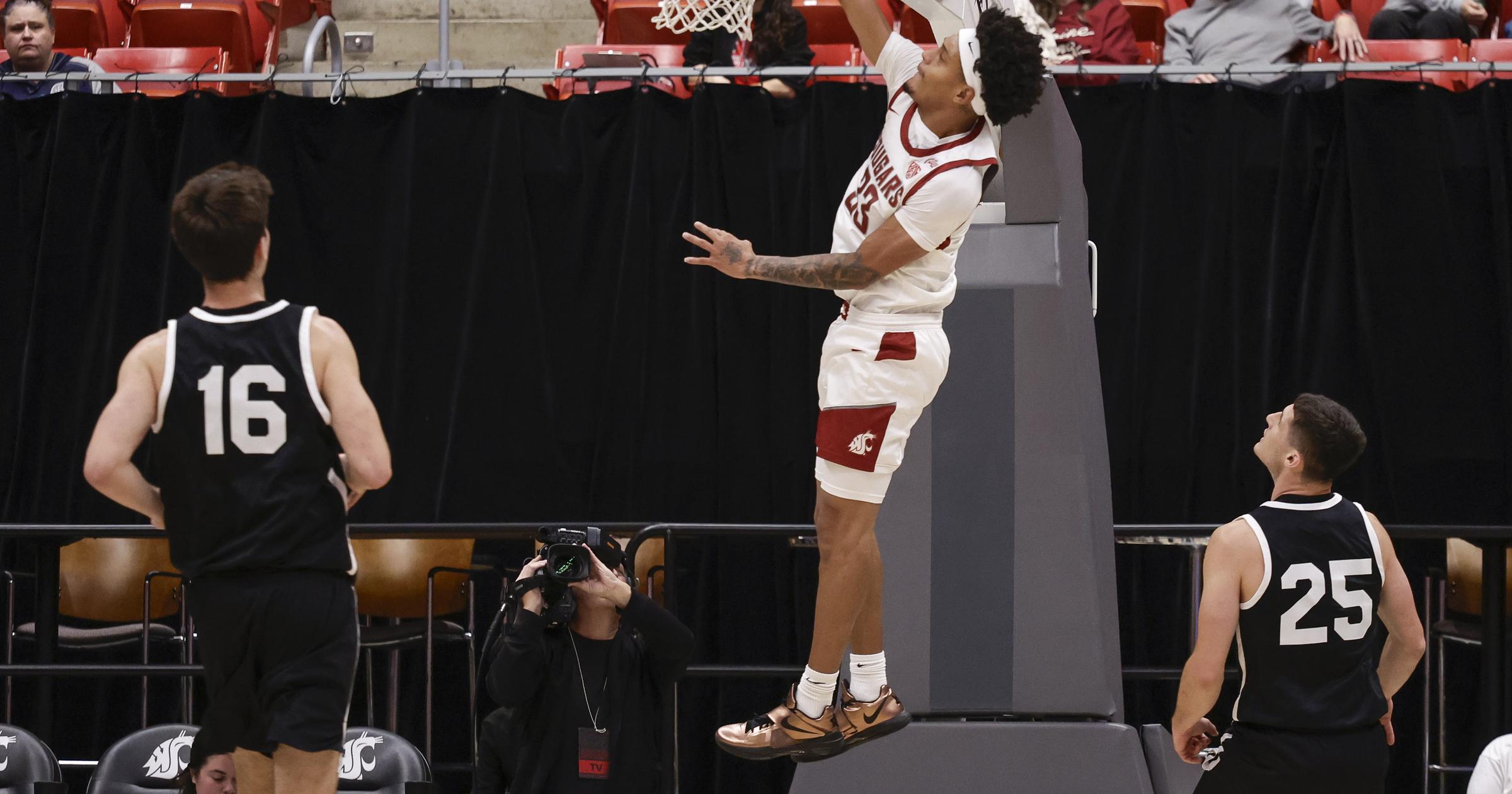
Washington State Beats Hawaii 79-63 for First Division I Win at Angel of the Winds Arena
Washington State beat Hawaii 79-63 Wednesday night at Angel of the Winds Arena in Everett, securing the program's...

Ky. AG, UofL Foundation Seek to Rewrite Dead Donors’ Wills; Judges Split on Race Restrictions
Kentucky Attorney General Russell Coleman and the University of Louisville Foundation asked judges to rewrite the wills of...

The Company Said the Core Problem for New York Businesses Is Rarely Too Little Marketing
The company said the core problem for New York businesses is rarely too little marketing; it is marketing...

Illinois Names Jennifer Soble First State Public Defender
Illinois named Jennifer Soble its first state trial-level public defender Wednesday, entrusting a veteran advocate who helped free...