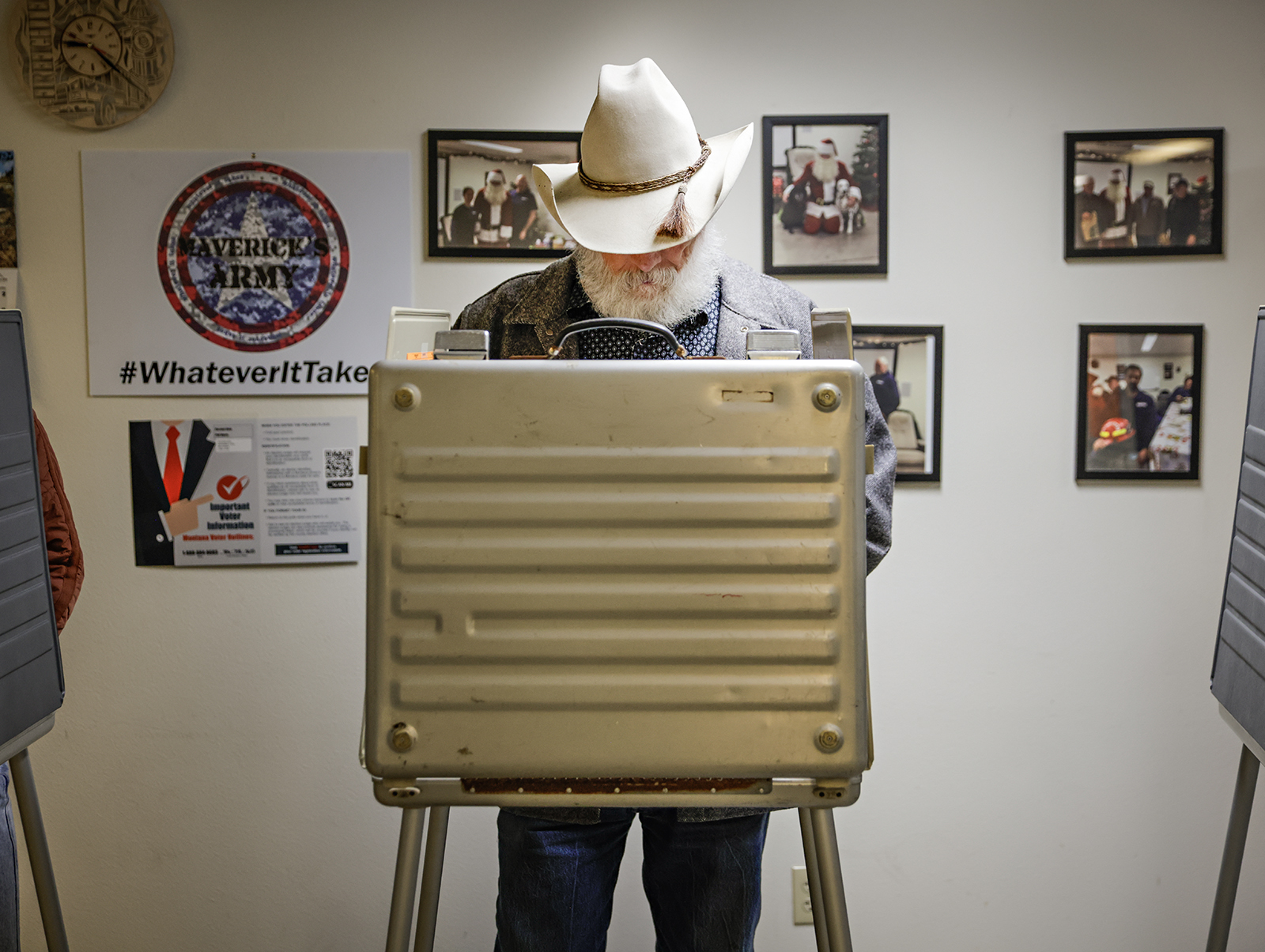
Montana’s general election takes place on Tuesday, Nov. 3, 2026, with polls open from 7 a.m. to 8 p.m. Voters in Northwest Montana can register in person through 8 p.m. on Election Day, provided they are in line by the deadline, according to reporting from the Flathead Beacon.
The 2026 election cycle has been defined by shifting political alliances and high-stakes contests in Montana’s western districts. As the deadline for absentee ballots approaches, voters face a crowded ballot featuring federal Senate and House races, state Supreme Court decisions, and several statewide constitutional initiatives. Because a 2025 state law attempting to restrict Election Day registration was blocked by a court order, the window for registration remains open until the polls close Tuesday night.
How do voters in Flathead County cast their ballots?
For those utilizing absentee ballots, the Flathead Beacon reports that these were mailed out starting Oct. 9. To ensure they are counted, voters should hand-deliver them to their designated polling place or to the Flathead County Elections Office at 290 B N. Main St. in Kalispell. Voters can use the official voter portal to confirm that their absentee ballots have been received by election officials.
In-person voters must present a valid photo ID. The Montana Secretary of State accepts several forms of identification, including:
- A valid Montana driver’s license or REAL ID
- A Montana state identification card
- A military ID or tribal photo ID
- A U.S. passport
- A Montana University System photo ID
- A concealed-carry permit
If a voter lacks one of these specific photo IDs, they must provide a photo ID alongside a supporting document, such as a utility bill, bank statement, paycheck, or other government document that verifies both their name and address. For those unsure of their current registration status, the Montana Secretary of State’s My Voter Page provides a way to check online.
Who are the candidates in the U.S. Senate race?
The race for Montana’s open U.S. Senate seat features a four-way contest that has seen significant tension regarding candidate viability. Republican Kurt Alme, a former U.S. attorney and state budget director, is campaigning on a platform of fiscal discipline and government fraud prevention. The U.S. Chamber of Commerce has endorsed Alme, noting his focus on cutting taxes and requiring a balanced federal budget.
The Democratic field has been a point of contention. Alani Bankhead, a retired Air Force lieutenant colonel, won the June 2 primary and has maintained her candidacy despite pressure to step aside for independent Seth Bodnar. The Flathead Beacon reports that a progressive PAC supporting Bankhead recently shifted its funding focus to Kansas, citing a lack of a “viable path” for a Democrat to win the seat in Montana. Meanwhile, Bodnar, a former Green Beret and University of Montana president, is running as an independent, arguing that a non-partisan approach is the only way to fix a “broken” Washington. Current polling suggests Bodnar trails Alme by 8 to 19 points.
Libertarian candidate Kyle Austin, a pharmacist and farmer from Havre, is also in the race. Although the Libertarian Party has disavowed his candidacy, Austin continues to campaign on the premise that voters are seeking a departure from the traditional two-party system.
Which races are shaping the Western Congressional District?
In Montana’s western congressional district, the race to succeed U.S. Rep. Ryan Zinke is described by the Flathead Beacon as a “dead heat.” Republican Aaron Flint and Democrat Sam Forstag are the primary contenders, with Libertarian Nick Sheedy also on the ballot. The contest has drawn significant national attention and resources.
The Flathead Beacon notes that while Flint maintains an advantage in cash on hand and outside spending, Forstag has outraised Flint by nearly $1 million. The race is expected to hinge on economic issues such as healthcare and the cost of living, though the President’s recent visit to Kalispell to support Flint suggests that national political figures are heavily invested in the outcome. The Democratic Congressional Campaign Committee has also provided backing to Forstag, a smokejumper and local union leader, signaling that national Democrats view this as a high-priority opportunity to flip the seat.
What else appears on the Montana ballot?
Beyond federal offices, the 2026 ballot includes several critical local and state positions. In the Flathead Valley, voters will decide between Amy Eddy and Dan Wilson for a seat on the Montana Supreme Court. Additionally, voters will choose a representative for the Public Service Commission’s District 5 and fill various state-level seats, including four state Senate seats, 13 state House seats, and a Flathead County commission seat.
The Montana Free Press notes that in addition to these candidate races, voters will weigh in on three specific statewide measures: Initiative 194 and Constitutional Initiatives 132 and 133. These measures represent significant shifts in state policy and will be decided alongside the legislative and judicial contests.
The next major milestone for these results will be the official reporting of counts via the state’s ElectMT software following the close of polls on Tuesday night.
Related reading
How to Track Election Results and Which House Races to Watch
To get an accurate read on election night, you should wait until at least 7:30 p.m. ET when...

Hagens Berman Investigates Lincoln Educational Services Class Action
Lincoln Educational Services faces class action lawsuit over student enrollment metrics Lincoln Educational Services Corporation (NASDAQ: LINC) is...
Varonis Systems (VRNS) Beats Q3 2026 Earnings Expectations With Strong Revenue Growth
Varonis Systems surpasses Q3 revenue and profit estimates Varonis Systems (NASDAQ:VRNS) outpaced Wall Street's expectations for the third...

Mississippi U.S. Senate Race: Record Absentee Ballots and Final Campaign Push
Mississippi voters head to the polls in high-stakes Senate race With only hours remaining before polls close, Mississippi...