
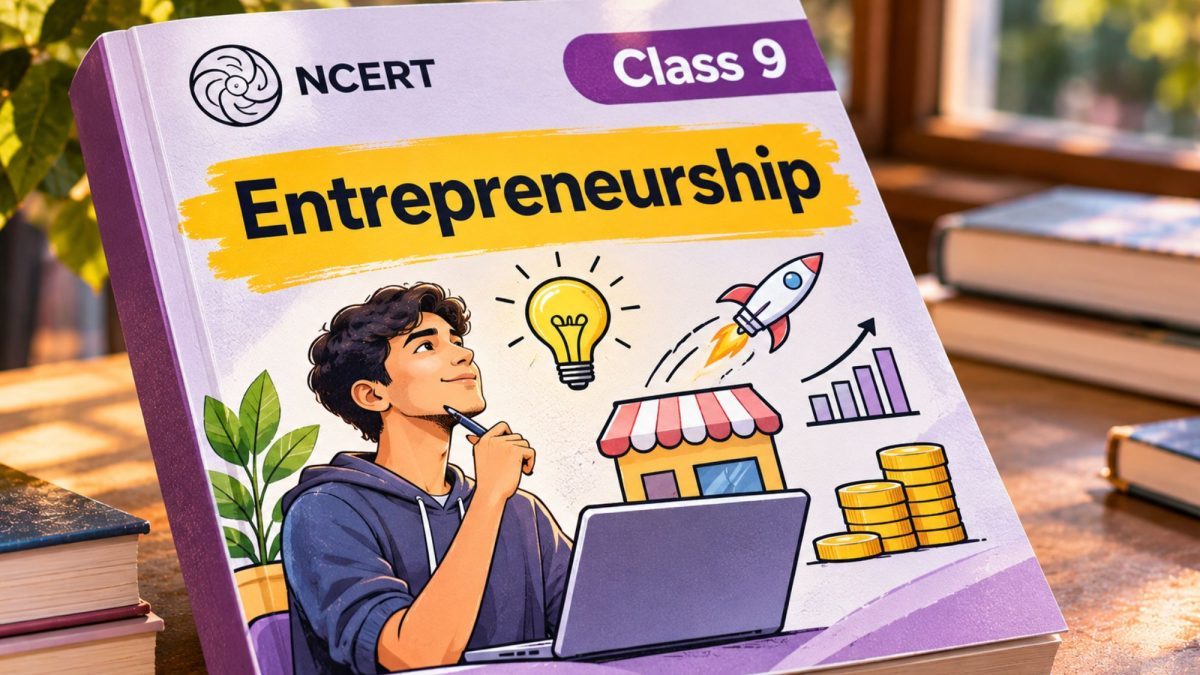
The two new chapters, titled ‘Managing Your Personal Finances’ and ‘From Ideas to Startups’, are part of the Class 9 Social Science Part 2 textbook. The personal finance chapter covers five key areas — income, budgeting, saving, investing, and protection and risk management.
Entrepreneurship Chapter Focuses on Business Basics
The entrepreneurship chapter uses examples from Indian businesses to explain how businesses develop. The material aims to equip students with practical financial knowledge and entrepreneurial skills at an early age, moving beyond traditional classroom discussions of economics.
Curriculum Changes Part of Broader NCERT Overhaul
Sanjeev Sanyal, member of the Economic Advisory Council to the Prime Minister, highlighted these additions in a post on X, stating the idea is to provide students with useful life skills and to present risk-taking, innovation and business as a positive activity.
Students Learn About Financial Planning and Taxes
The personal finance chapter encourages students to think about how they use pocket money or gifts they receive, introducing the difference between spending immediately, saving for future needs, and investing to generate returns. It also explains the concept of inflation and how rising prices reduce the purchasing power of money. The chapter details different investment options, such as savings accounts, fixed deposits, stocks, bonds, and mutual funds, and explains that investment decisions should depend on financial goals, risk tolerance, and the time available to achieve those goals. The textbook explains why governments collect taxes and how the money is used to finance public services and infrastructure, introducing the concept of progressive taxation.
More on Class
NCERT Adds Personal Finance, Entrepreneurship Chapters To Class 9 Textbookhttps://t.co/E4vf9sLSYq pic.twitter.com/W5MSPZJETR
"The National Council for Educational Research and Training (NCERT) has introduced dedicated chapters on personal finance and entrepreneurship in the Economics section of its new Class 9 Social Science textbook, bringing subjects such as mutual funds, income tax, loan repayments… https://t.co/GzG4nfUemp”
NCERT adds personal finance, entrepreneurship chapters to Class 9 textbookhttps://t.co/L2KQRQSTDG
NCERT Class 9 textbooks add personal finance, entrepreneurship chapters NCERT Class 9 Social Science textbooks now include chapters on personal finance and entrepreneurship, covering mutual funds, EMIs, taxes, and startup basics. Sanjeev Sanyal spotligh…… pic.twitter.com/F4J9DhcXeA
NCERT Class 9 Textbooks Add Chapters on Personal Finance, Entrepreneurship https://t.co/c1AczcLQ1z@ncert #NCERT #Class9 #FinancialLiteracy #Entrepreneurship #Education #SanjeevSanyal
Related reading

Wyoming Cave Systems Offer Unique Underground Exploration Opportunities
Wyoming's underground sites offer diverse geology and history Wyoming’s mountain ranges provide some of the most significant opportunities...

Democrats win Texas statewide offices and control Texas House
Texas Turns Blue, but for How Long? On an election night that delivered surprises across the nation, the...

Death Investigation Underway After Human Remains Found in Dorchester County
Life in a quiet Dorchester County neighborhood was abruptly Wednesday afternoon, as deputies responded to a scene that...

A $40,144.73 mortgage arrearage has pushed a Yelm family’s home toward a public foreclosure auction
A $40,144.73 mortgage arrearage has pushed a Yelm family's home toward a public foreclosure auction. The amount, detailed...