
Nevada cannabis establishments cannot let a single employee ring up a sale, check an ID at the door, or hand over a delivery until that person has completed mandatory training on state law, security, and emergency procedures, and Learn Brands reported that the state leaves the how—and the paperwork—entirely in the employer’s hands. Under NAC 678B.208, every cannabis establishment agent must receive training before beginning work, with three core topics for all staff and twelve additional topics for anyone working at a sales facility, including delivery drivers.
Since July 1, 2026, Nevada’s hemp limit counts total THC rather than delta-9 alone under NAC 557.011, the Cannabis Compliance Board’s regulations moved into the Nevada Administrative Code in June 2026, and the federal hemp definition continues to change. For the budtenders, inventory clerks, and drivers who staff Nevada’s adult-use and medical dispensaries, the training requirement is not abstract; it is a condition of employment backed by a five-year documentation rule that the Nevada Cannabis Compliance Board can audit on request.
The Training Clock Starts Before the First Shift
A cannabis establishment must make sure training is given to each agent before that person begins work. For every agent, that means covering the establishment’s own security measures and controls, its emergency procedures, and state and federal cannabis law. For agents at a cannabis sales facility—budtenders, front desk staff, inventory and receiving personnel, delivery drivers, leads, and managers—the rule adds twelve more topics, among them product knowledge, warnings handed to customers, checking identification and refusing a sale or entry, laws on public consumption, keeping cannabis away from people under 21, and handling disturbances.
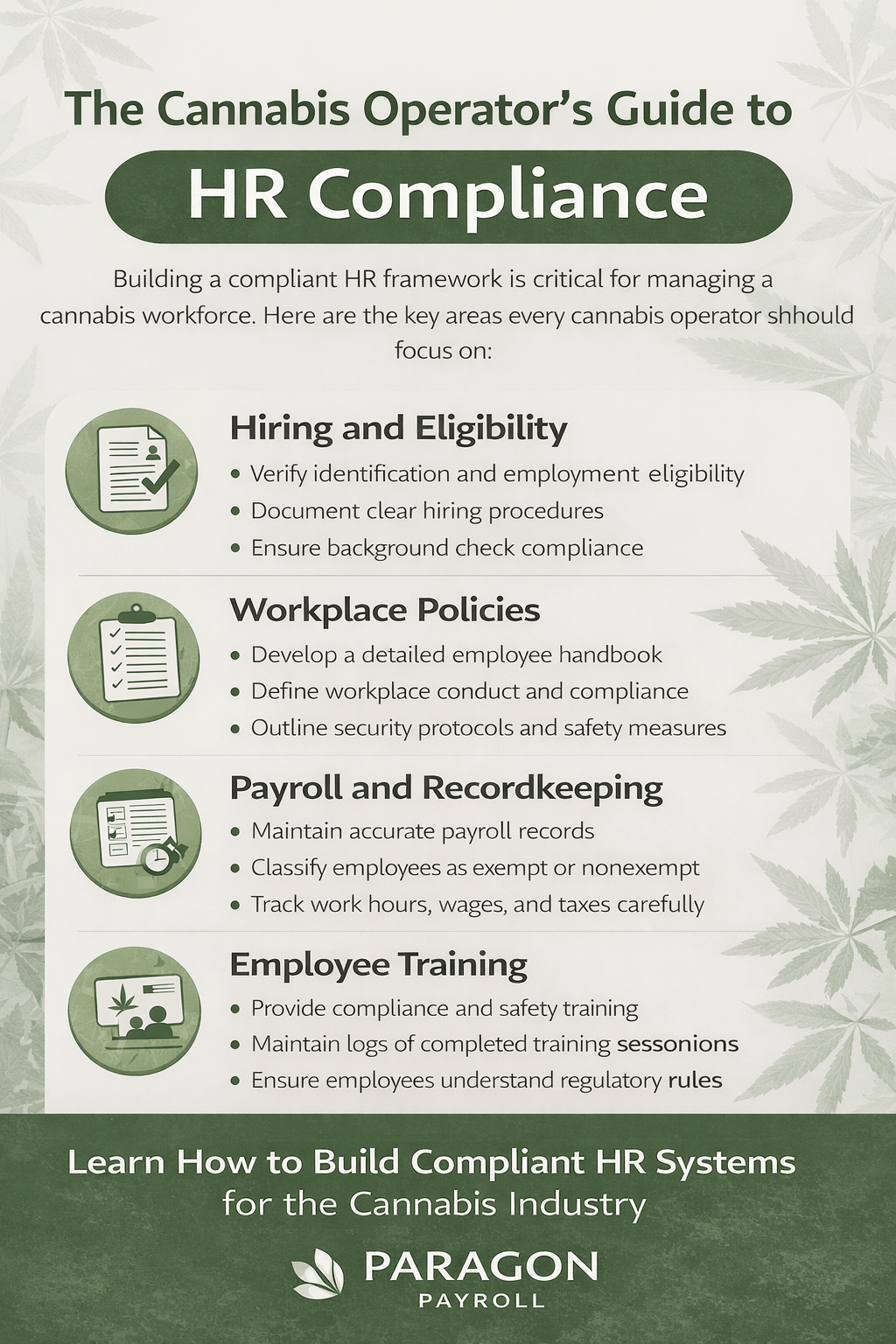
The duty belongs to the employer, not the state. Nevada approves no cannabis training course and sets no training hours for store staff. What the state does require is a paper trail: operating documents that include the establishment’s procedures for training its agents under NRS 678B.510, and documentation kept for at least five years and shown to the Nevada Cannabis Compliance Board on request under NAC 678B.259. Regular, documented training given before an investigation starts is also listed among the circumstances that may mitigate a violation under NRS 678A.647.
Fifteen Topics, Five Years of Records, and a Certificate That Is Not an Agent Card
Learn Brands offers a fully online, self-paced course that takes about four hours and runs through seven modules built on Nevada Revised Statutes chapters 678A to 678D and the Board’s regulations in the Nevada Administrative Code. The course covers federal and Nevada cannabis law, the agent card, purchase limits, ID scanning and refusal protocols, keeping minors out, customer and patient privacy, security and seed-to-sale tracking, delivery procedures, incident reporting, and emergency response. It closes with a final exam, and learners who finish receive a dated certificate valid for one year.
That certificate is a training record for the store’s file, not the cannabis establishment agent registration card. Only the CCB issues agent cards under NRS 678B.340, and no one may work or volunteer at a cannabis establishment without one. The course also does not replace the store’s own hands-on training on its security measures, emergency procedures, point-of-sale system, ID scanner, seed-to-sale tracking, or product knowledge such as strains, methods of use, and how cannabis affects the body. Nevada sets no training hours, so the four hours and the one-year certificate are Learn Brands’ own standards, not state requirements. A single seat costs $59, with volume pricing dropping to $49 per seat for ten or more, $39 for twenty-five or more, and $29 for fifty or more.
Total THC and a Moving Target for Workers
Module 7 of the course walks through Nevada’s hemp limit, which since July 1, 2026 counts total THC under NAC 557.011, alongside the June 2026 move of the CCB’s regulations into the Nevada Administrative Code and the changing federal hemp definition.
The strongest counterpoint to private training courses is built into the statute itself: because Nevada approves no course and mandates no hours, an employer could theoretically train in-house without buying any external program. But the five-year record-keeping duty and the mitigation provision under NRS 678A.647 call for documented, regular training given before an investigation starts. The CCB’s audit checklist asks stores for employee training records, and a dated certificate from a structured curriculum gives employers evidence that training occurred before an investigation began.
For Nevada’s cannabis workforce—the agents who check IDs at the door, stock the shelves, and drive deliveries across the state—the practical stakes are immediate. They must be trained before their first shift, their employers must keep proof of that training for five years, and the legal ground beneath them, from hemp limits to federal definitions, continues to shift.
Related reading

Infrastructure and Demand Constraints Limit Regional Through-Running
A train passes through New York Penn Station roughly every two and a quarter minutes, the Regional Plan...

Alan Mikhail’s book reframes the founding of New York via Anthony and Grietje
Before New York, There Was Anthony the Turk — and a New Book Asks What That Really Meant...

Democrats sweep NH Executive Council and Grab legislative majorities
Republicans drew New Hampshire's Executive Council districts in 2022 to lock in their advantage, and they have held...

Former Edmond Resident Among 9 Killed in Florida Jet Crash
Rachael Reed, a 2007 graduate of Edmond Santa Fe High School and a 2013 nursing graduate of the...