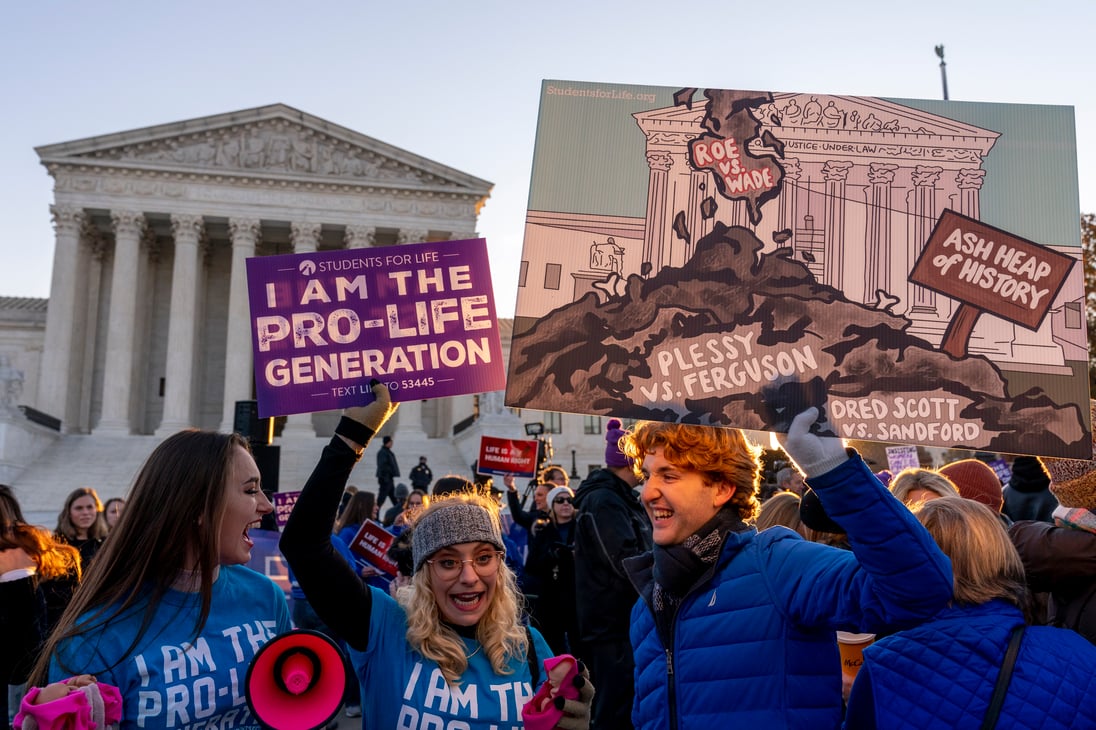
Ninth Circuit Freezes Injunction, Allowing Idaho to Enforce Abortion Ban in Health-Risk Cases
A divided federal appeals court cleared Idaho to enforce its strict abortion ban against doctors treating women whose pregnancies threaten serious health complications, overturning a lower court’s attempt to carve out medical exemptions.
The Ninth Circuit delivered a HUGE smackdown of the activist Idaho judge who tried to sidestep Dobbs today.In his opinion, Judge Wardlaw says Dobbs "closed the door" on abortion rights.Full breakdown below. 1/7 pic.twitter.com/HioYgPsIb8
In a 2-1 ruling, the Ninth Circuit panel put on hold a federal judge’s earlier order that had barred prosecutors from bringing charges against physicians performing abortions in non-life-threatening health crises, Courthouse News reported. The decision instantly restores the state’s ability to penalize doctors while the underlying legal battle moves forward through the appellate courts.
The core dispute centers on a lawsuit filed in 2024 by Dr. Stacy Seyb, a maternal-fetal medicine specialist in Idaho. Seyb sought legal protection to perform abortions when a pregnancy poses a non-negligible risk of serious and lasting physical harm to a patient, arguing that current state restrictions endanger women long before a crisis becomes explicitly life-threatening.
U.S. District Judge Lynn Winmill initially sided with the doctor following a bench trial. In an August ruling, Winmill wrote that history and tradition have long shielded health-preserving medical interventions, declaring that a pregnant woman’s health is not “a state resource to be allocated at the legislature’s whim.” Winmill blocked the enforcement of Idaho’s Defense of Life Act and Fetal Heartbeat Act in situations where a physician acts in good faith to prevent severe harm or suicide risk.
That protection is now frozen. Jackson Women’s Health Organization, which overturned federal abortion protections.
Weighing Legal Precedents and State Interests
The appellate majority wrote that it is unlikely Seyb can successfully reconcile the district court’s view of historical legal traditions with the high court’s expansive reading in Dobbs. Furthermore, the panel decided that Idaho’s interest in enforcing state statutes clearly outweighs the immediate compliance burden placed on the doctor during the appeal process.
When the panel heard oral arguments on September 22, Mathew Hoffmann of the Alliance Defending Freedom, representing the state, warned that allowing health-based exceptions would “create an abortion-on-demand regime.”
On the specific question of abortions sought due to potential suicide risks, the majority was direct in its assessment. “There are other methods for preventing suicide, and Idaho’s ‘profound interest’ in preserving fetal life reasonably supports the use of those means over the termination of pregnancy,” the judges wrote.
Judge Kim Wardlaw concurred with the outcome while writing separately to emphasize the constraints of an intermediate court. Wardlaw noted that the federal judiciary is strictly bound by Supreme Court precedent, though she acknowledged that appellate courts may eventually need to decide whether a state ban can become so restrictive that it breaches the minimal constitutional review remaining after Dobbs.
A Sharp Dissent Over Patient Stakes
Judge Marsha Berzon issued a sharp dissent, arguing that the majority misread the scope of the Dobbs decision. Berzon asserted that while Dobbs eliminated the constitutional right to an elective abortion, it did not address the separate, established right recognized under older precedents like Roe v. Wade and Planned Parenthood v. Casey to obtain medical care necessary to protect a woman’s life or health.
“Unless and until the Supreme Court says otherwise, the degree to which that holding survives Dobbs is an open question,” Berzon wrote, pointing directly to the immediate human toll on patients. “Some women with serious pregnancy complications will during the pendency of this appeal be required to continue their pregnancies at serious, permanent risk to their health.”
With the stay formally in place, the legal calendar is moving rapidly. The Ninth Circuit panel consolidated Idaho’s appeals with Seyb’s cross-appeal, setting the first brief deadline for December 18. The court’s order explicitly noted that it will strongly disfavor any requests for extensions.
Worth a look
DOJ Seeks to Isolate Alaska Ballots Amid Voter Confusion Probe and Senate Race
Federal Court Rejects Justice Department Ballot Segregation Bid in Alaska Senate Race Federal authorities pushed to isolate specific...

Montana’s 1st District Becomes Surprise Toss-Up as Political Divisions Split Families
Montana's 1st Congressional District Shifts to a Toss-Up A toss-up race in deep red Montana territory mirrors a...

Lincoln Secures $11.7 Million Federal Grant to Improve West O Street
Lincoln Secures $11.7 Million for West O Street Safety Overhaul The city of Lincoln has been awarded an...

Morning Keys: Tobin on recovering Amoris Laetitia – Where Peter Is
Cardinal Tobin Assesses Amoris Laetitia Recovery Amid Surgery Cardinal Joseph Tobin of Newark published a column declaring that...