
The remake debuted with a 96 Metascore and a user rating above 9.0, placing it among the highest-rated games of the year.
Several of the new negative reviews admit they have not played the Zelda remake. One reviewer called their zero score a “petty” response to alleged review bombing of GTA 6 by Zelda fans; others said they would keep posting low scores until that behavior stops, TwistedVoxel reported.
Remake Sales Exceed One Million Us Copies
Nintendo confirmed the 5.2 million global sales figure, including 810,000 units in Japan, and said no other Switch 2 title has matched that four-day start. Circana analyst Mat Piscatella added that the remake sold more than 1 million physical copies in the United States during its launch week ending November 7, the first game to cross that threshold since Tears of the Kingdom in 2023.
The critic Metascore sits at 95 after a single mixed review from Slant Magazine (70/100) pulled it down from 96, a move Notebookcheck documented as a source of fan frustration.
Reviewers broadly praised the remake’s visual overhaul, full voice acting in cutscenes, free-moving camera, and Zelda Notes smartphone integration. Eurogamer’s Christian Donlan contended that Nintendo struck the right balance, updating a timeless classic just enough while preserving the qualities that made the original so special for many players.

The remake reimagined visuals but kept the time-jumping gameplay, where Link switches between his child and adult selves. The atmosphere pulls players into an enchanting world that is at times magical, at times frightening and tense. The world is more detailed, more polished and more alive, with each NPC having their own personality.
Remake Removes Friction Improves Gameplay Controls
The remake removes friction from the 1998 original through clearer visual signposting for puzzles and clues, more explicit dialogue about next steps, level layout changes, and revamped and modernized controls. The gameplay works to make the user utilize the interesting tools collected throughout the adventure.
The Cucco Bird quest and the Empty Bottle are cited as examples where the reward seems unconnected to the activity until its later usefulness is realized. Subtly endearing touches include how Child Link adjusts his stance to walk up stairs. Nintendo resisted the temptation to clothe NPCs in “realism,” and wackier background characters are noted as being more faithful to the N64 release than the main cast.
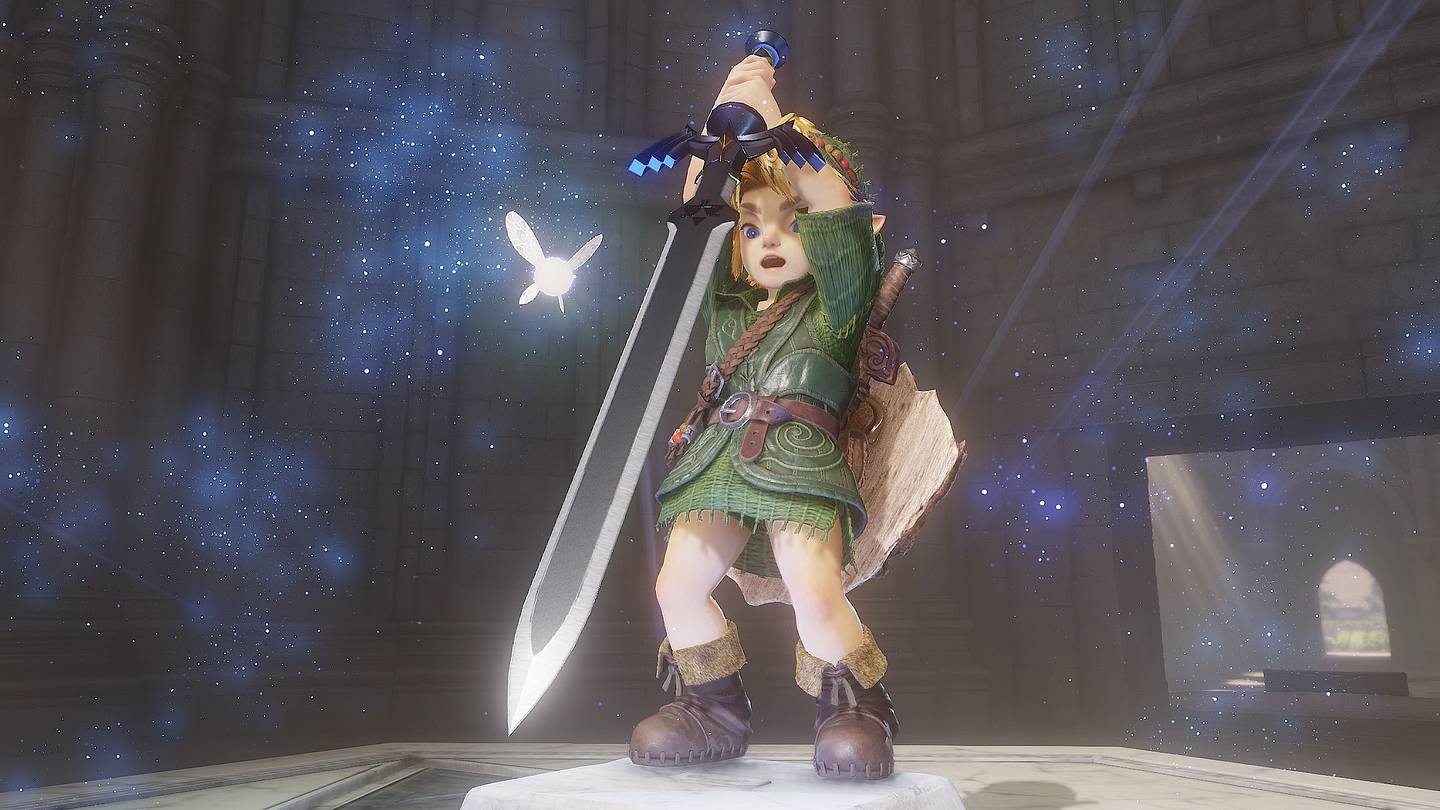
The original Ocarina of Time was released on the Nintendo 64 in 1998, from the first generation of consoles that supported 3-D graphics and enabled large, explorable worlds. The pathway to the Sacred Realm was locked within the Temple of Time behind a gate that opens with three Spiritual Stones, ensuring only those with good intentions could touch the Triforce. Ganondorf, the evil leader of the Gerudo, also sought this artifact.
Link eventually acquires the three Spiritual Stones and first wields the Master Sword, which now has a new cutscene providing context. The remake is simpler and easier than the original, as Nintendo removed friction from several angles, though some players note that the original’s spikiness was necessary for engagement.
The remake, however, kindly but firmly asks to keep hands inside the ride at all times, contrasting with Tears of the Kingdom and Echoes of Wisdom which encourage player autonomy.
Remake Feels Magical Like Original Game
Overall, it is impressive that playing the Ocarina of Time remake in 2026 feels as magical as it did in 1998, which is attributed to the small improvements Nintendo added and the expansion of the lore. The remake, which is a 1998 title, is regarded as one of the finest games in the series.

The remake is considered a pleasant overhaul of a true classic, although one reviewer noted it lacks the eerie vibe of the N64 version. The game’s iconic status contributes to its engagement, and for newcomers, the gameplay feels fresh despite being a remake of a Nintendo 64 game. The original game’s story and characters made it a blueprint for modern 3D adventure games, introducing “z-targeting” combat targeting.
The game was originally released in 1998. The remake offers the ability to travel through time using the ocarina and features an upgraded Ocarina system that allows humming or playing an instrument into the console’s microphone to play a song in-game without button presses.
The running and jumping options are more than welcome as essential actions in the game. For nostalgic players and newcomers, this remake is a real success, and it is considered one of 2026’s standout titles.
Related reading

Eat Dinner Earlier to Improve Blood Sugar Control and Lower Diabetes Risk
Eating dinner within two hours of bedtime impairs the body’s ability to regulate blood sugar, a finding that...

SC Declared RA 12021 Section 59 Unconstitutional on Seafarers’ Bond Rule
Associate Justice Maria Filomena D declared RA 12021 Section 59 unconstitutional regarding seafarers' bond rule. "They already lack...

7.2-Magnitude Earthquake Strikes Indonesia; No Tsunami Warning Issued – SANA
The Meteorology, Climatology, and Geophysics Agency (BMKG) initially recorded the quake at 7.2 magnitude at 16:42 local time,...

Ontario Liberal Party Names New Leader on Saturday in Toronto
Succession arrives today; the Ontario Liberal Party names its new leader on Saturday at a party event in...