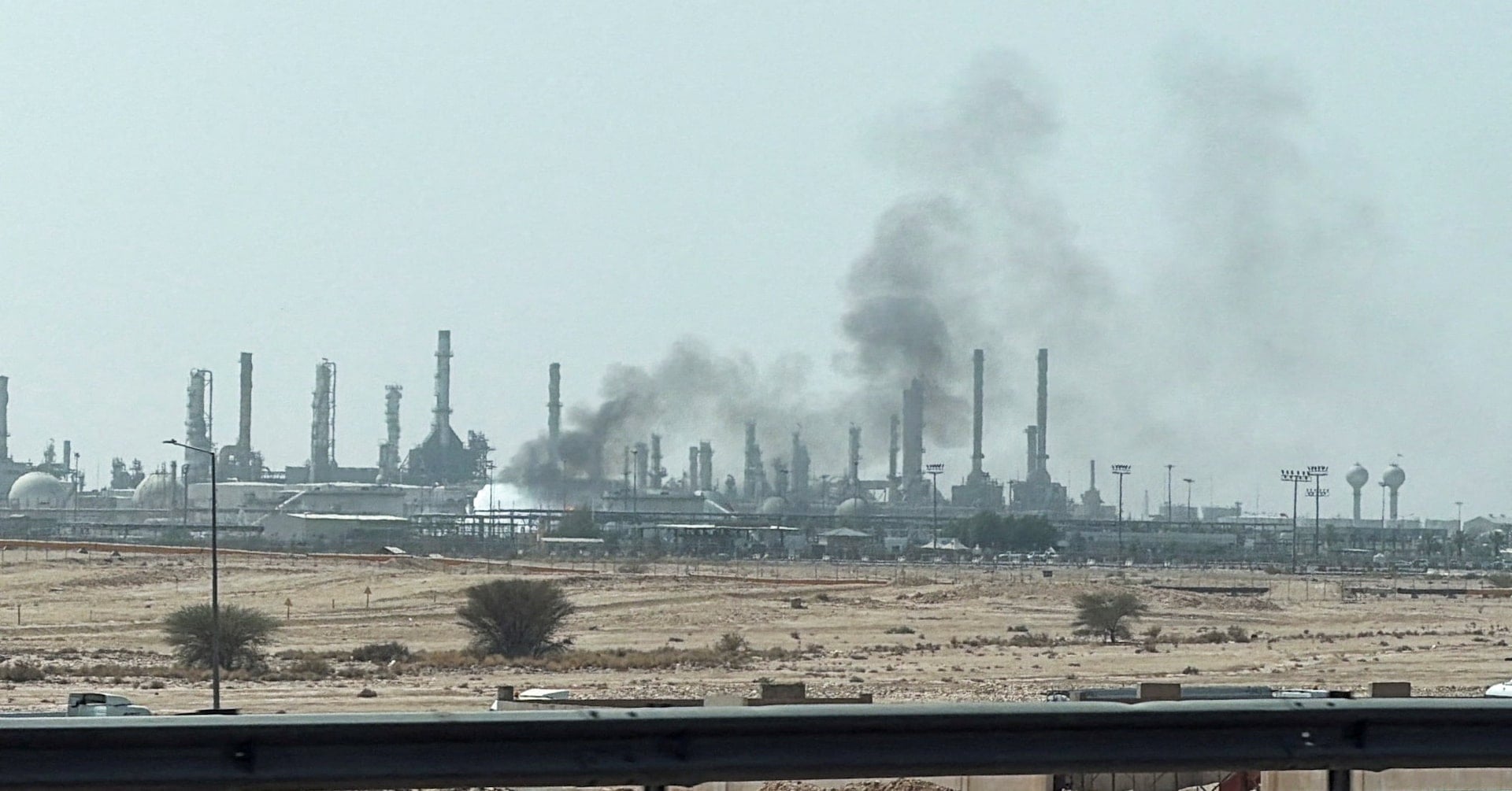
Global crude oil prices rose on Tuesday as the market weighed supply constraints from a forming Atlantic hurricane and ongoing Houthi strikes on Saudi Arabia against increased production flows from the Middle East, while the G7 pledged emergency stock releases to ease pressure.
Market Response to Middle Eastern Supply and Gulf Storm Threats
International oil benchmark Brent crude rose 93 cents, or 0.92%, to $101.51 a barrel by 0022 GMT on Tuesday, while U.S. West Texas Intermediate (WTI) crude climbed 1.26%, to $90.57 according to Reuters reporting from Perth. Traders balanced improving Middle Eastern crude availability against looming production threats in the United States and the Arabian Peninsula.
Forecasters warned that a storm forming in the Gulf of Mexico would become the first Atlantic hurricane of 2026 within two days and threaten offshore facilities as outlined by forecasters cited by Reuters. Those offshore areas produce 15% of U.S. crude oil and 5% of its natural gas, with the potential to affect up to six refineries across Gulf states that account for about half of the nation’s total refining capacity.
The storm was an unwelcome complication for crude, raising the prospect of production and refining disruptions at a time when the market already has enough supply-side headaches.
Tim Waterer, KCM Trade chief analyst
Market participants also tracked inventory figures released from the American Petroleum Institute, which showed U.S. crude stocks falling by 2.09 million barrels in the week ended October 2. Industry leaders noted that Saudi Aramco CEO Amin Nasser called the world’s supply cushion scarily thin at a recent conference, warning that inventories could take two years to fully replenish following emergency releases.
Pipeline Flows and Strait of Hormuz Routing Shifts
Despite persistent maritime security incidents, crude oil exports from the Middle East have recovered significantly. Provisional data from ship-tracking firm Kpler showed that Gulf oil flows, excluding Iran, recovered to more than 81 percent of pre-war levels in September. Maritime intelligence reports indicated that wider Middle East crude exports exceeded pre-war levels on 14 separate days during the month, rising to between 19.5 million and 22.5 million barrels per day during late-September peaks.

Producers have increasingly relied on alternative transport infrastructure to bypass the Strait of Hormuz, where traffic and shipping safety remain under severe pressure. Saudi Energy Minister Prince Abdulaziz bin Salman stated that oil pumped through the East-West Pipeline had reached 5.8 million barrels as of Tuesday morning, directing crude toward the Yanbu export hub on the Red Sea after drone attacks temporarily disrupted the 7-million-barrel-per-day capacity corridor earlier in September.
At the same time, traders utilized ship-to-ship transfers in the Gulf of Oman, where smaller shuttle boats carry oil past the strait before offloading cargoes onto larger tankers as detailed in Al Jazeera maritime tracking coverage.
Attacks on Saudi Infrastructure and Ongoing Geopolitical Pressures
Geopolitical risks remain elevated following attacks on Saudi energy and aviation targets.
Those strikes coincided with a major offensive by Saudi-backed Yemeni government forces seeking to retake territory following weeks of rebel advances according to reports published by Reuters. Analysts warn that Houthi capabilities to strike infrastructure hundreds of kilometers from the border keep the risk of large-scale supply disruptions high, with Naeem Aslam, chief investment officer at Zaye Capital Markets, stating that crude remains caught between improving physical supply and persistent geopolitical threats.
The sustained ability of the Houthis in Yemen to target oil facilities hundreds of kilometers from the border keeps the risks of a renewed large-scale crude supply disruption present and high, and these risks could worsen if the Houthis feel the need to apply more pressure as a result of losing more territory.
Samer Hasn, XS.com senior market analyst
Emergency Reserve Releases and Global Supply Projections
To counteract supply tightness and soaring fuel costs, Group of Seven major economies agreed to release a combined 100 million barrels of crude oil and diesel from emergency reserves following discussions on October 2 under pressure from U.S. President Donald Trump. European nations also discussed a French proposal to release additional diesel stockpiles to address record high pump prices.

However, industry experts questioned the lasting impact of the reserve releases. Andy Lipow, president of Lipow Oil Associates, noted that a release of that magnitude could temporarily reduce diesel prices by 25 cents per gallon but would do little to increase actual refinery capacity. U.S. officials also announced plans to deploy the USS Theodore Roosevelt carrier strike group to the Middle East command area to reinforce regional security.
Meanwhile, the U.S. Energy Information Administration projected that both production and consumption would rebound to record highs of 109.6 million bpd of production and 104.6 million bpd of consumption in 2027.
Daniel Richards, senior economist at Emirates NBD, noted that renewed U.S. military deployments to the region have kept the geopolitical risk premium firmly alive across international energy markets.
As shipping operations continue under heightened security measures, market observers emphasized that maritime transit through the Persian Gulf remains vulnerable to further disruptions as long as regional tensions persist.

U.S. distillate inventories stood 13% below their five-year average for the week ending September 25, while gasoline inventories were 7% below average, showing that refined product markets remain tight.
Energy analysts continue to monitor diplomatic channels for any signs of a lasting de-escalation that could permanently normalize crude and diesel transit through the contested waterways.
The interplay between recovering physical export volumes and sudden geopolitical flare-ups is expected to dictate price volatility across global petroleum benchmarks through the remainder of the fourth quarter.
Refining margins for motor gasoline, distillates, and jet fuel remained elevated in late September and early October, reflecting strong global demand for transportation fuels despite ongoing disruptions.
Market participants await further updates from shipping trackers and official ministerial statements regarding pipeline repair operations and regional security developments.
The ongoing adjustments in trade routes and ship-to-ship transfer networks demonstrate the remarkable adaptability of global oil supply chains under wartime conditions.
Nevertheless, traders remain acutely aware that unexpected supply shocks from weather events or regional hostilities could quickly erase recent gains in export normalization.
With emergency reserves serving as a temporary stopgap, long-term market stability will depend heavily on the full restoration of regional refining capacity and unhindered maritime passage.
Official bodies and energy analytics firms continue to publish updated inventory and flow metrics to help market participants manage the volatile trading environment.
Worth a look
- Arab Media Focuses on Gaza Destruction for October 7 Anniversary
- Asim Iftikhar Ahmad Leaves UN Role to Become Pakistan Foreign Secretary
- Yemen condemns Houthi attacks on Saudi airports and Mecca attempt (newsarchyuk.com)
- Cocoa Prices Crashed. Why Is Halloween Candy Still So Expensive? (daybreakwire.com)

Arab Media Focuses on Gaza Destruction for October 7 Anniversary
Three years after Hamas launched its October 7 invasion of Israel, Arab media coverage has focused heavily on...

Asim Iftikhar Ahmad Leaves UN Role to Become Pakistan Foreign Secretary
Ambassador Asim Iftikhar Ahmad concluded a consequential two-year tenure as Pakistan's permanent representative to the United Nations in...

AU Mediation Delegation Meets AFC/M23 Leaders in Goma
An African Union mediation delegation met the leadership of the AFC/M23 movement in Goma on Monday, October 5,...
Aid Groups: Israeli Restrictions and Funding Gaps Delay Gaza Shelter Aid
As winter approaches, 1.65 million displaced Palestinians in Gaza face a fourth season in worn tents and damaged...